 Kwame Mensah
The scenic way to do Homestead National Historical Park is to treat the whole 211 acre site as one slow loop rather than a museum with a walk attached: start at the Homestead Heritage Center for the story of the Homestead Act of 1862, cross the restored tallgrass prairie on foot to the Palmer Epard Cabin and the Freeman graves, drop down through the Cub Creek woodland, then finish at the Freeman School and the Education Center before basing the evening in Beatrice, four miles east. Admission is free, the Heritage Center is open 9 a.m. to 5 p.m. daily, and the trails are open from dawn to dusk, so the only real planning decisions are the order you walk the loop, the season you choose for the prairie, and how much time you give Beatrice itself. This guide settles all three.
Quick Facts
- Park: Homestead National Historical Park, 8523 West State Highway 4, Beatrice, Nebraska 68310
- Entrance fee: None. No entrance pass is required, per the National Park Service
- Heritage Center hours: 9 a.m. to 5 p.m. daily
- Trails: About 3 miles of trails through tallgrass prairie and woodland, open daily from dawn to dusk
- Prairie: 100 acres of restored tallgrass prairie, described by the Park Service as the oldest restoration in the National Park System
- Key buildings: Homestead Heritage Center, Education Center, Palmer Epard Cabin, Freeman School
- Base town: Beatrice, about 4 miles east of the park, roughly 40 miles south of Lincoln
- Contact: 402 223 3514 and nps.gov/home
- Last facts check: 16 November 2026, against nps.gov
Why should the prairie loop be the route, not the add on?
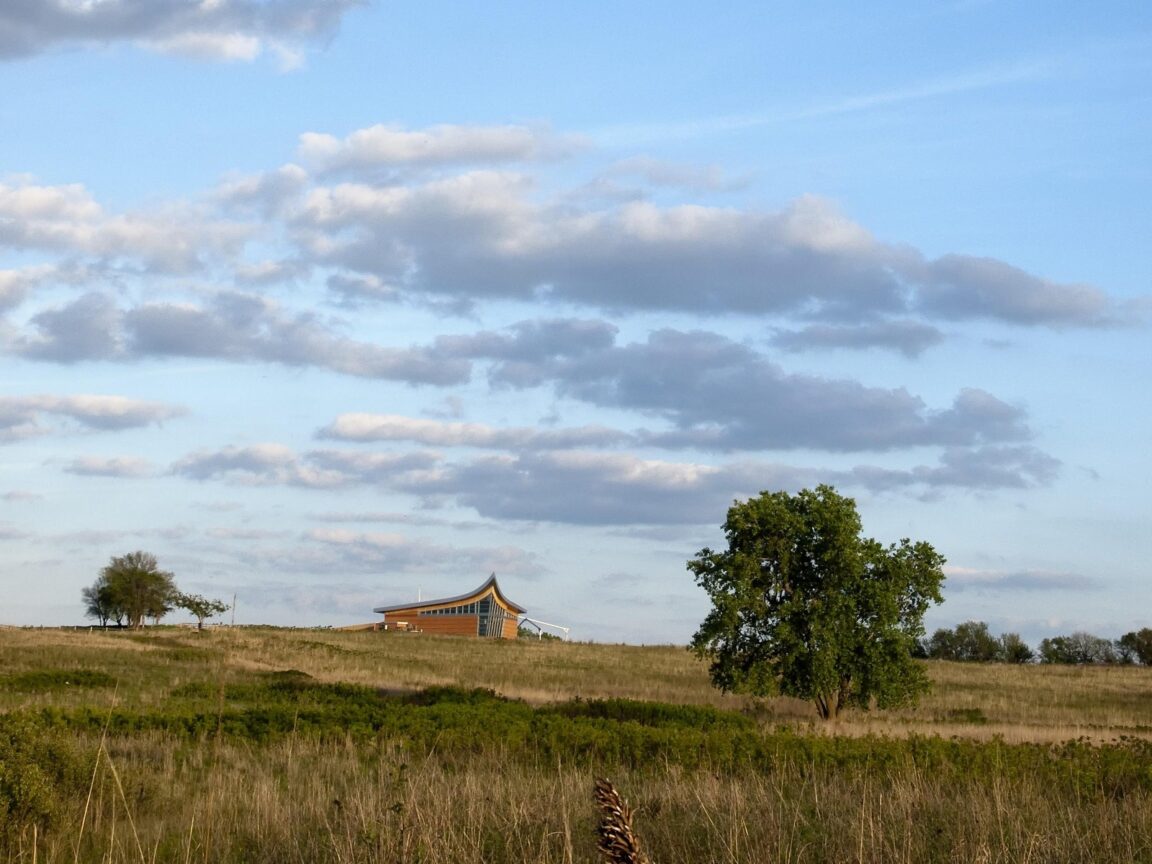
Most small historic sites are read from the inside out, exhibits first and grounds if time allows. Homestead rewards the opposite order. The claim that anchors the park is a piece of ground: the 160 acres Daniel Freeman filed on just after midnight on 1 January 1863, the day the Homestead Act of 1862 took effect, widely recognised as the first claim made under the law. The museum explains what that filing set in motion across the West. The prairie is what the filing actually looked like, waist high big bluestem, indiangrass and switchgrass running to the horizon, with almost nothing vertical in it except a cabin, a hedgerow and the sky. Walking the full loop between the two visitor buildings turns a one hour museum stop into a half day landscape, and it costs nothing but time.
The practical consequence is simple. Arrive at the Heritage Center when it opens, do the exhibits and the park film while the light is still flat, then walk the prairie in the better mid morning or late afternoon light, when the grass moves and the site photographs the way it deserves. If you only have an hour, reverse nothing: the Heritage Center alone still carries the story. If you have half a day, the loop below is the visit.
What is the best order to walk the Homestead loop?
Should you start at the Heritage Center or the Education Center?
Start at the Heritage Center, on the west side of the site off State Highway 4. It houses the National Homesteading Museum, with exhibits on the effect of the Homestead Act on immigration, agriculture, Native tribes, the tallgrass prairie ecosystem and federal land policy, plus the park film and the ranger desk where you can check the day program, any trail notices and whether a prescribed burn or haying has closed a section. The building itself is part of the route: its tall glass front overlooks the restored prairie, so you read the landscape from inside before you step into it. Research computers here also give access to homestead land entry records, which is the one genuinely personal thing this park offers. If your family homesteaded anywhere in the homesteading states, allow extra time and ask a ranger how the case file search works before you head out onto the trails.
What does the prairie crossing itself involve?
From the Heritage Center the trail system runs for about 3 miles in total through prairie and the woodland along Cub Creek, and the upland section is the heart of the scenic route. The restored prairie covers 100 acres and has been managed by the Park Service for more than 60 years with mowing, haying and prescribed burns, which is why it reads as a working ecosystem rather than a lawn. Expect big and little bluestem, indiangrass, switchgrass, goldenrod and leadplant in season, grassland birds over the open ground, and long views in every direction with the Heritage Center roofline on the horizon behind you. The trail passes the Palmer Epard Cabin, a small log cabin dating to 1867 that the Park Service presents as a reminder of how slight the first shelter on a claim could be, and the graves of Daniel and Agnes Freeman near the western edge of the original claim. Neither stop takes long. Both land harder after a mile of grass than they would from a car park.
Why does the Cub Creek woodland section matter?
Because it is the contrast the homesteaders themselves relied on. The loop drops from open prairie into bur oak woodland along Cub Creek, where shade, water and timber sat within walking distance of the claim. In summer the temperature change is immediate, and the woodland section is the natural pause point of the walk, with picnic areas available at both the Education Center and the Heritage Center ends of the site. Trails are open from dawn to dusk even though the buildings keep daytime hours, so an early or late loop in summer is legal and often the best wildlife window of the day. Wear proper walking shoes rather than sandals, carry water, and treat the prairie as exposed country: there is very little shade on the upland section and Nebraska summer heat builds fast.
What should you save for the end of the loop?
Save the Freeman School and the Education Center for the return leg. The Freeman School is the park one room schoolhouse, a short separate piece of the site that works best once the main story is in place, because it shows the community infrastructure that followed the first lonely claims: a school within reach meant families could stay. The Education Center is the second interpretive building and the usual home of hands on programming and school visits. Ending there puts you back near parking with the full sequence complete: law, land, shelter, community. That sequence is the argument of the park, and walking it in that order is what makes this a scenic route rather than a checklist.
How should Beatrice work as your base?
Beatrice, four miles east, is the only sensible base and it is a good one for a night. The park sits on State Highway 4 just west of town, so the drive in is a few minutes and parking at the park is free. Staying in Beatrice rather than pushing on to Lincoln, about 40 miles north, buys you two things: a dawn or dusk prairie walk without a highway drive attached, and an unhurried evening in a small county seat town with its own historic main street. The honest framing is that Homestead plus Beatrice is a one night stop on a Nebraska road trip, or a full day trip from Lincoln with an early start. Trying to do it as a two hour detour off Interstate 80 short changes the prairie, which is the part you will remember.
For wider context on how reservation and fee rules now vary across the park system, see our guide to US National Park reservations in 2026. Homestead sits at the easy end of that spectrum, with no pass and no booking window at all. If this stop is part of a longer plains and Badlands run, our Badlands National Park first timer guide pairs naturally with it, since the two sites bookend the homestead story, promise and hard country, within one road trip.
When is the prairie at its best?
Late spring through fall is the window the Park Service itself points to for the tallgrass and the trails. Late spring brings green growth and wildflowers, high summer brings the full height of the grasses along with heat and humidity, and early fall brings goldenrod colour, seed heads and cooler walking weather. Winter is stark and honest, with the Heritage Center open year round and the landscape reduced to grass stubble and sky, which some visitors will find the most evocative version of all. Two cautions apply in any season. First, the park uses prescribed fire as a management tool, and trail sections can close temporarily around a burn; the March 2026 burn notice closed the trail system briefly, so check the park alerts page on nps.gov on the morning of your visit. Second, buildings close on the major winter holidays, so confirm hours before a Thanksgiving, Christmas or New Year period trip.
What mistakes do first time visitors make at Homestead?
The first mistake is treating the park as a 30 minute photo stop, because the Heritage Center looks compact from the car park. The exhibits, the film, a records search and the full trail loop together want three to four hours. The second mistake is walking the prairie at midday in July with no water and no hat, on the assumption that a small park cannot be serious country. The third is skipping Beatrice entirely and rating the trip on the park alone; the town is part of the base strategy, not an afterthought. The fourth is assuming a fee or a pass is needed and wasting time looking for a pay station. There is none. Entry, trails, ranger programs and events are free.
Frequently Asked Questions
Is Homestead National Historical Park really free?
Yes. The National Park Service lists no entrance pass as required for Homestead, and trails, visitor centers, historic structures, ranger programs and events are all free. An interagency pass is not needed here, though it remains useful at fee charging parks elsewhere on the same trip.
How long do you need at Homestead National Historical Park?
Allow three to four hours for the Heritage Center exhibits and film plus the full trail loop to the cabin, the Freeman graves, the Cub Creek woodland and the Freeman School. A museum only visit takes about an hour. Add time if you plan to search homestead land records on the research computers.
How long are the trails and when are they open?
The park maintains about 3 miles of trails through tallgrass prairie and woodland. Trails are open daily from dawn to dusk, while the Heritage Center keeps 9 a.m. to 5 p.m. hours, so early and late walks are possible even outside building hours.
Can you research your own family homestead at the park?
Yes. The Heritage Center provides access to Homestead Land Entry Records and case files, and rangers can point you to the search process. Bring any names, states and approximate dates you have, since a focused search works far better than a general browse.
What is the best time of year to see the tallgrass prairie?
Late spring through fall, with early fall often the sweet spot for colour, seed heads and cooler walking temperatures. High summer shows the grasses at full height but brings heat and humidity, so walk early or late in the day.
Is the park suitable for visitors with limited mobility?
The Park Service notes trail access via all terrain wheelchair for the prairie and woodland route, and the visitor buildings are the most accessible part of the site. Contact the park accessibility coordinator on 402 223 3514 before your visit to confirm current arrangements for your needs.
Featured image: The Homestead Heritage Center seen across the restored tallgrass prairie at Homestead National Historical Park. Photo: National Park Service, via nps.gov.