 Camille Baptiste
A trip to Quba, Azerbaijan costs far less than most travelers expect once the line items are separated: the shared minibus from Baku runs about 5 dollars, a full guided day covering Quba, the Red Village of Qirmizi Qesebe and the mountain village of Khinalig sells from about 70 dollars per person with lunch and tickets included, and the sights that define the district, the synagogues of the Red Village, the apple orchards and the Khinalig road, charge little or nothing at the gate. The money in a Quba trip goes on transport and beds, not admissions, and a two night independent stay built around one tour day and one self guided day is the budget sweet spot.
Quick Facts
- Distance from Baku: About 170 kilometres, roughly 3 hours by car on the main highway, about 4 hours by shared minibus.
- Cheapest way in: Shared minibus from Baku at around 5 dollars per person, per the Quba visitor guidance checked for this article in November 2026.
- Guided day tours: Group day tours covering Quba, Qirmizi Qesebe and Khinalig from about 70 to 75 dollars per person including transport, guide, lunch and entrance tickets. Private versions of the same day run to about 200 dollars per person.
- The Red Village: Qirmizi Qesebe, across the Gudyalchay River from Quba town, home to the Mountain Jews, with 13 synagogues associated with the settlement and two still operating.
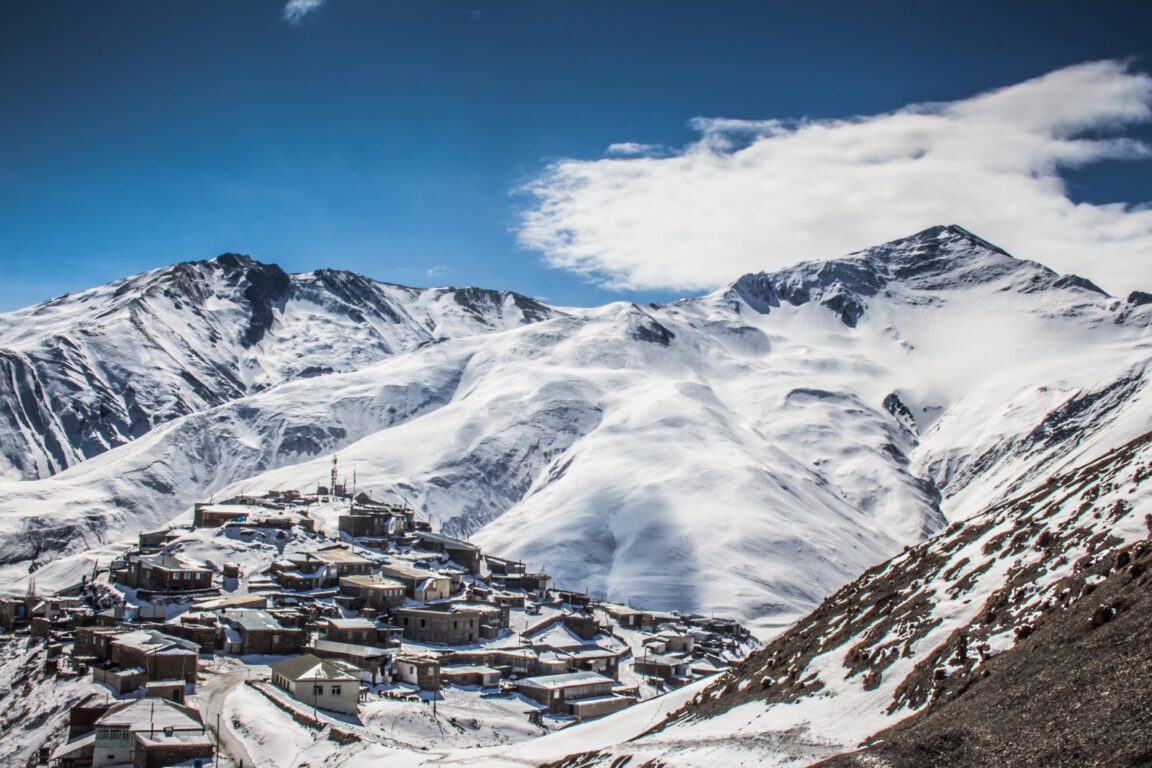
- Khinalig: One of the highest continuously inhabited villages in the Caucasus at about 2,300 metres, about 50 kilometres from Quba, inscribed by UNESCO in 2023 on the World Heritage List for its cultural landscape and transhumance route.
- Best base: Quba town itself, a calm district capital of mosques, carpet workshops and apple orchards, with guesthouses and hotels at well below Baku prices. Confirm current room rates on booking platforms at the time of travel, since small town stock changes often.
- When to go: May to October for green mountain roads. The last two weeks of September bring the apple harvest, and an apple festival has been held in Quba since 2012.
What does getting to Quba cost, line by line?
Transport is the first and largest line item, and it comes in three clear tiers. The budget tier is the shared minibus from Baku, priced at around 5 dollars in the current Quba visitor guidance, for a journey of about 4 hours. The middle tier is a car with a driver hired for the day or for a multi day stay, which buys you the Khinalig road, the Qechresh forest and the Candy Cane Mountains stops on your own schedule, and is priced per vehicle rather than per person, so it splits well for couples and groups. The top tier is the organized tour, and here the prices are unusually transparent because the same Baku to Quba to Khinalig circuit is sold by many operators. Group day tours checked in November 2026 cluster at about 70 to 75 dollars per person for a 12 hour day including pickup in Baku, an air conditioned vehicle, an English or Russian speaking guide, a sit down Azerbaijani lunch and all entrance tickets. A fully private version of the Khinalig day, with lunch in a local family home, was listed at about 200 dollars per person. The honest reading of those numbers is that the group tour is the value play for a first visit, and the private car only wins when you want more than the roughly two hours the group tours allow in Khinalig itself.
One seasonal extra belongs in the budget. In winter or after heavy rain, the final climb to Khinalig can require a Soviet era off road vehicle for the last section, and tour listings flag that transfer as an extra cost not included in the headline price. Travelers going independently in the October to April window should hold a contingency for that transfer, or be ready to drop Khinalig and spend the day in Quba town and the forest instead.
What will you actually pay for in Qirmizi Qesebe, the Red Village?
Very little, and that is part of the village significance. Qirmizi Qesebe, the Red Village or Red Settlement, sits directly across the Gudyalchay River from Quba town, a short walk or drive over the bridge, and it is widely described as the last surviving all Jewish town outside Israel and the United States, home to the Mountain Jews of the Caucasus for more than two centuries. Thirteen synagogues are associated with the settlement, of which two remain in operation, and the village also holds the museum devoted to Mountain Jewish history and the grand houses built by successful merchants, many painted in the red tones that give the village its name. Tour stops here typically run about 40 minutes and list admission as free, and independent visitors pay nothing to walk the streets. What you should budget is time and respect rather than money: this is a living religious community, synagogue interiors open only when the community is receiving visitors, and at least one major tour operator notes plainly that visitors are not always able to enter a synagogue, so no itinerary should be built on a guaranteed interior visit.
Pair the Red Village with Quba town own sights on the same half day, since they sit minutes apart: the Juma Mosque, the old bathhouse, the carpet workshops for which Quba is one of Azerbaijan seven historic weaving schools, and the bazaar for the apples and preserves the district is famous for. None of these carries a meaningful ticket cost for a budget traveler, and a carpet, bought in Quba rather than in a Baku showroom, is the one souvenir line item worth planning rather than improvising.
How much does the Khinalig day add to the budget?
Khinalig is the reason most travelers come, and its cost is almost entirely the road. The village stands at about 2,300 metres in the Greater Caucasus, around 50 kilometres from Quba on a mountain road that climbs through a gorge onto high pasture and takes well over an hour each way in good conditions. Entry to the village and its small ethnographic museum carries no significant ticket cost on tour listings, and the UNESCO inscription of 2023, which covers the cultural landscape of the Khinalig people and the Koch Yolu transhumance route their shepherds still walk, has not turned it into a ticketed attraction. What you pay for is the vehicle, the driver who knows the road, and, on organized days, the home cooked lunch in the village that most tours include. Independent travelers should note the 2026 guidance that shared taxis on the Quba to Khinalig leg have become hard to find as visitor numbers have thinned, and should expect to pay for a full car rather than a seat. That single change is the difference between a cheap mountain day and a moderately priced one, and it is the line item to confirm first when pricing the trip in Baku or Quba.
What does a sensible two night Quba budget look like?
Build it from the verified anchors rather than from a invented daily rate. Two minibus legs at about 5 dollars each frame the trip. One group tour day at about 70 to 75 dollars covers Khinalig, the Red Village, lunch and tickets with a guide. The second day, spent in Quba town, the Red Village on foot and the Qechresh forest, costs meals and local taxis only. Beds are the variable: Quba has everything from family guesthouses to resort style hotels in the orchards and forest, at prices well below the Baku market, but stock and rates in a small Azerbaijani town move enough that the only honest advice is to price your exact dates on the booking platforms when you plan, and to prefer a cancellable rate if your Khinalig day depends on mountain weather. Food is inexpensive by capital city standards, and the dishes to budget a appetite for are the district own: gutabs and kebabs in the forest restaurants of Qechresh, pakhlava and tea in Khinalig homes, and apples in every form during the September harvest.
Travelers comparing Quba with Georgia wine country on the same Caucasus trip will find the cost structures usefully different, and our guide to Tbilisi, Georgia is a good companion read for the other half of that itinerary. For a second comparison point on how a historic Caucasus and Balkan old town trip budgets out, see our Kotor, Montenegro guide.
When is Quba worth the money, and when is it not?
Quba earns its budget in the long green season, May to October, when the Khinalig road is reliable, the orchards and forest are at their best and the full circuit runs without the off road surcharge. September is the connoisseur month: the apple harvest fills the district, the festival crowds are local rather than international, and the mountain light is at its clearest. Winter changes the proposition rather than cancelling it: snow makes the district beautiful and puts the Shahdag ski area just over the district border in play, but Khinalig becomes weather dependent, and a traveler whose whole budget is justified by that one village should either pay for the proper off road transfer or rebook for spring. What Quba never requires is a large admissions budget, a reservation made months ahead, or a guide for the town itself. Save the money for the road, spend the time in the villages, and the district delivers the Caucasus at village prices.
Frequently asked questions about what a Quba trip costs
How much is the bus or minibus from Baku to Quba?
Current Quba visitor guidance puts the shared minibus at around 5 dollars per person for a journey of about 4 hours. Driving yourself or hiring a car takes about 3 hours on the main highway for the roughly 170 kilometres from Baku.
How much does a Quba and Khinalig day tour cost?
Group day tours checked in November 2026 were priced at about 70 to 75 dollars per person for a 12 hour day including Baku pickup, guide, lunch and entrance tickets. A fully private Khinalig day with lunch in a local home was listed at about 200 dollars per person. In winter or heavy rain, an extra off road vehicle transfer to Khinalig may be charged on top.
Do you have to pay to enter Qirmizi Qesebe or Khinalig?
No meaningful gate fee applies to either village on current tour listings, which show admission as free at both stops. Synagogue interiors in the Red Village open only when the community is receiving visitors, so treat any interior visit as a privilege confirmed on the day, not a ticketed certainty.
How many nights should you budget for in Quba?
Two nights is the sweet spot: one day for a guided or hired car circuit to Khinalig and the Red Village, and one slower day for Quba town, its mosques, carpet workshops and bazaar, and the Qechresh forest. A Baku day trip is possible but spends about 8 hours of its 12 on the road.
When is the cheapest and best time to visit Quba?
Late spring and September offer the best balance: reliable mountain roads without winter transfer surcharges, green orchards, and, in the last two weeks of September, the apple harvest and festival season the district is known for.
Prices checked on 16 November 2026 against current tour operator listings for the Baku, Quba and Khinalig circuit and current Quba visitor guidance. Tour and transfer prices are operator set and change by season, so confirm the exact price for your date before you travel.