 Hana Kim
For a first visit to Walnut Canyon National Monument, do one thing before anything else: walk the Island Trail in the morning. This 0.9 mile round trip descends 185 feet and 736 stairs into the canyon and loops past about 25 cliff dwelling rooms at arm length, and it is the experience the monument exists for. The park, about 10 miles east of Flagstaff, Arizona, is open daily from 9:00 a.m. to 5:00 p.m., entry costs 25 dollars per private vehicle for up to seven days, and Island Trail entry closes at 4:00 p.m., so a first timer who starts with the visitor center film, the museum and the Island Trail, then finishes on the easy Rim Trail, will have sequenced the day exactly right.
Quick Facts
- Hours: Open daily 9:00 a.m. to 5:00 p.m. Island Trail entry closes at 4:00 p.m. Start the Rim Trail by 4:30 p.m. Closed on December 25 and January 1, with an early closure on Thanksgiving.
- Entrance fee: 25 dollars per private vehicle, 20 dollars per motorcycle, or 15 dollars per person on foot or bicycle age 16 and over, each valid 1 to 7 days. Children 15 and under are free.
- Payment: Card only. The park does not accept cash for entrance fees. America the Beautiful passes are accepted.
- Best value pass: The 45 dollar Flagstaff Area National Monuments annual pass covers Walnut Canyon, Sunset Crater Volcano and Wupatki for a year.
- Island Trail: 0.9 mile round trip, strenuous, 736 stairs, about 185 feet of descent, passing about 25 cliff dwelling rooms. Allow about an hour.
- Rim Trail: 0.7 mile round trip, easy, paved and fairly flat, with two canyon overlooks.
- Getting there: About 10 miles east of Flagstaff via Interstate 40, Exit 204, then about 3 miles south on the monument road.
What should a first time visitor do first at Walnut Canyon?
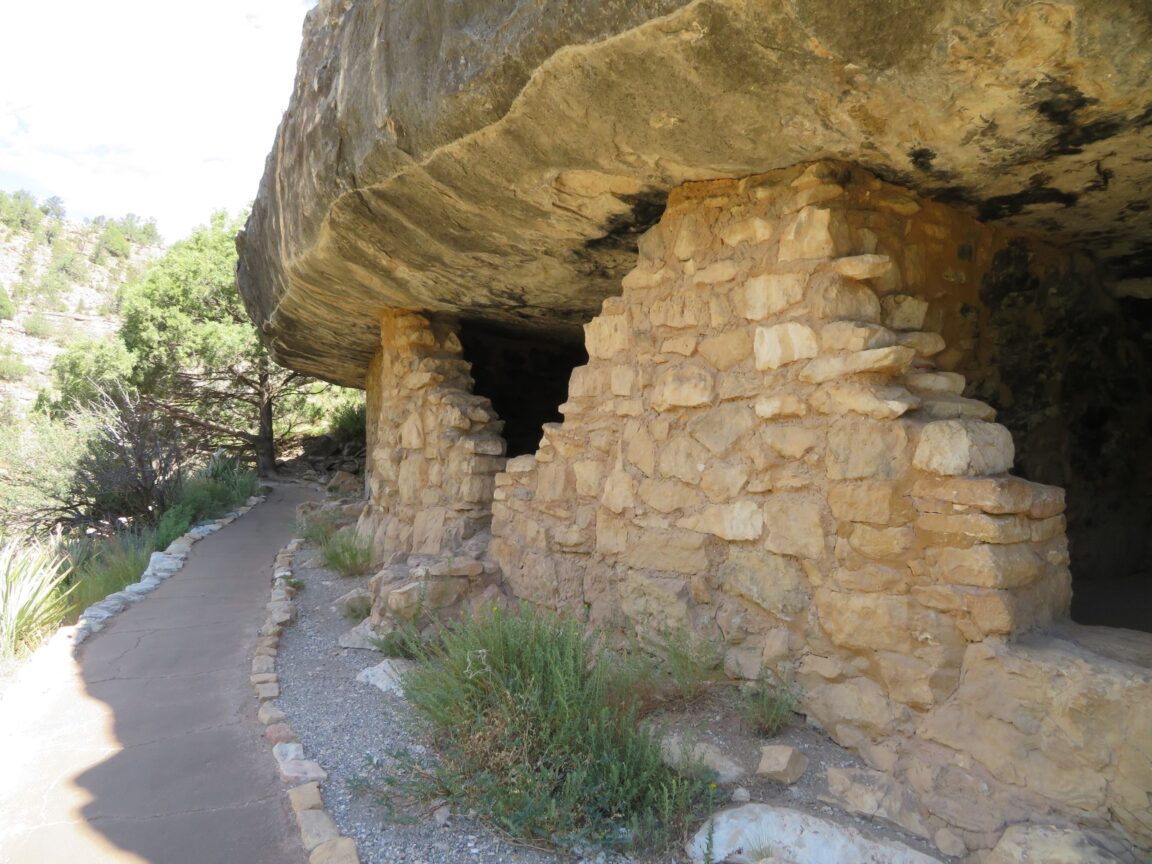
Start at the visitor center, but keep it brief: pick up the trail information, check the day conditions, look at the museum exhibits that explain who built the dwellings, and then go straight to the Island Trail while your legs and the light are fresh. The dwellings were built by the Northern Sinagua people, ancestors connected to the modern Pueblo communities of the region, who farmed the canyon rim and built their homes into the limestone alcoves of the canyon walls, where the overhangs shelter rooms from summer sun and winter storm alike. The Park Service preserves more than 80 known cliff dwelling sites in the canyon system, and the Island Trail cluster is the one place where visitors walk directly beside the rooms, close enough to see doorways, soot staining and the plaster lines of individual homes.
The order matters because of the clock the park runs on. Island Trail access ends at 4:00 p.m., an hour before the monument closes, and the descent you make happily in the morning becomes a negotiation in the last hour of a tiring day. First timers who reverse the order, Rim Trail and museum first, Island Trail last, are the ones who meet the 4:00 p.m. cutoff or climb the 736 stairs in the hottest, thinnest air of the afternoon. Do the hard thing first is simple advice, but at Walnut Canyon it is the whole strategy.
How hard is the Island Trail, honestly?
The Park Service rates the Island Trail strenuous, and the numbers explain why: 0.9 mile round trip, 736 stairs in total, and about 185 vertical feet down into the canyon, all of which you climb back up on the same staircase. The trail is paved, which helps footing, but the monument sits at high elevation on the Colorado Plateau above Flagstaff, where the air is noticeably thinner than most visitors home altitude, and the climb out deserves respect from anyone with knee, heart or breathing concerns. A steady pace with pauses at the rooms takes about an hour, and the park design helps you: the loop around the island, the rocky peninsula the trail circles, is flat, shaded in places and lined with the dwellings themselves, so the effort concentrates in two stair sections, down at the start and up at the end.
There is no water on the trail, so carry your own, and there is no shame in the alternative the park provides. The Rim Trail and the visitor center overlook deliver the canyon, the geology and dwellings visible across the canyon without a single stair, and rangers are clear that a Rim Trail visit is a complete visit. What the Island Trail adds is proximity: standing in the doorway line of a home built centuries ago, at the level its builders lived, with the canyon dropping away below the alcove exactly as it did for them.
What should first timers wear and bring for the Island Trail?
Bring water, sun protection and shoes with closed toes and real grip, and in winter add layers and be ready for the park other condition: the trails may close during periods of snow cover, when ice on the stairs and exposure near the high cliffs make the descent unsafe. Flagstaff winters are serious, and a Walnut Canyon morning after snow is beautiful from the rim even when the Island Trail is shut. Check the park alerts and current conditions before you leave Flagstaff, because the 20 minute drive is short enough that there is no excuse for arriving uninformed, and if the Island Trail is closed, the Rim Trail, museum and film still make the trip worthwhile while Sunset Crater Volcano and Wupatki, covered by the same area pass, sit within easy reach north of the city.
How do the fees and passes work at Walnut Canyon?
Walnut Canyon is a fee park, unlike some of its New Mexico neighbors, and the Park Service fee schedule checked for this guide in November 2026 is straightforward. A private vehicle pass costs 25 dollars and covers everyone in the car for 1 to 7 days. Motorcycles pay 20 dollars, and visitors arriving on foot or by bicycle pay 15 dollars per person age 16 and over, with children 15 and under free. Payment at the park is by credit or debit card only, a detail that still catches visitors out, since the park does not accept cash for entrance. America the Beautiful interagency passes cover the fee, and for anyone planning to visit the other two Flagstaff area monuments, the math of the 45 dollar Flagstaff Area annual pass is easy: it covers Walnut Canyon, Sunset Crater Volcano and Wupatki National Monuments for a full year, so a single weekend that takes in all three more than justifies it. Our wider explainer on park reservations and passes in 2026 sets out where passes like this one pay off across a longer Southwest trip.
No reservation or timed entry is required at Walnut Canyon. You buy the pass at the visitor center on arrival, which makes the monument an easy spontaneous half day out of Flagstaff, and an easy pairing with a morning or afternoon in the city itself.
What does the Rim Trail add, and who is it for?
The Rim Trail is the monument gentle half: a 0.7 mile round trip, paved, fairly flat, with two overlooks into the canyon, an accessible viewpoint by the visitor center, and interpretive stops that include a reconstructed pithouse and the story of rim top farming. It takes about half an hour at a stroll, dogs on leash are part of the rim scene in a way they cannot be on the Island Trail, where pets are not allowed, and it is the right walk for grandparents, small children, anyone acclimatizing to the altitude, and every visitor in the last hour of the day, since the park asks you to begin it by 4:30 p.m. to finish by the 5:00 p.m. closing. Do not treat it as a consolation prize. From the overlooks you see the canyon as a system, dwelling clusters in alcoves across the walls, the meander of Walnut Creek far below, and the relationship between the rim farms and the cliff homes that the Island Trail, for all its intimacy, never quite shows you.
How does Walnut Canyon pair with Flagstaff and the other monuments?
Flagstaff is the natural base: a mountain town with the hotels, restaurants and gear shops the monument itself does not have, about 10 miles west of the park entrance. A classic first timer day runs Walnut Canyon in the morning, lunch and the historic downtown in Flagstaff, and then, if energy holds, the drive north to Sunset Crater Volcano and Wupatki, where lava flows and a very different style of pueblo ruin complete the story the same annual pass covers. In winter, reverse the emphasis: Walnut Canyon rim and museum in the late morning sun, then Flagstaff museums and cafes, with the Arizona Snowbowl ski area setting the town winter rhythm. However you sequence it, keep the monument visit inside its 9:00 a.m. to 5:00 p.m. frame, because there is no access to trails or viewpoints outside operating hours, and the gates close at 5:00 p.m. sharp.
First timers often ask whether Walnut Canyon is a detour or a destination on a Grand Canyon trip. It is both, and happily so: it sits just off the Interstate 40 corridor that most Grand Canyon South Rim itineraries use, it needs only two to three hours for the full first timer sequence of visitor center, Island Trail and Rim Trail, and it teaches the ancestral Pueblo story of the plateau in a single intimate canyon before the scale of the Grand Canyon overwhelms the detail. Travelers building that bigger loop will find the booking and pass context in our 2026 park reservations guide worth reading alongside this one.
For another ancient site where tickets, entry gates and walking order decide the day, see our guide to visiting the Acropolis of Athens, a useful companion read before a Walnut Canyon morning.
Frequently asked questions about Walnut Canyon for first time visitors
How much does Walnut Canyon National Monument cost?
Entry is 25 dollars per private vehicle, 20 dollars per motorcycle, or 15 dollars per person on foot or bicycle age 16 and over, valid for 1 to 7 days. Payment is by card only. America the Beautiful passes are accepted, and the 45 dollar Flagstaff Area annual pass covers this park plus Sunset Crater Volcano and Wupatki for a year.
What are the opening hours and trail cutoffs?
The monument is open daily from 9:00 a.m. to 5:00 p.m. Island Trail entry closes at 4:00 p.m. and the park asks visitors to begin the Rim Trail by 4:30 p.m. The park is closed on December 25 and January 1, with an early closure on Thanksgiving, and trails can close in snow or icy conditions.
How difficult is the Island Trail?
The Park Service rates it strenuous: 0.9 mile round trip with 736 stairs and about 185 feet of descent, all climbed again on the return, at high elevation. Allow about an hour, carry water, and take the stairs slowly. The 0.7 mile Rim Trail is the easy, paved alternative with canyon overlooks.
Can you go inside the cliff dwellings at Walnut Canyon?
The Island Trail passes directly beside about 25 cliff dwelling rooms, and you can look into the rooms and stand in some doorways along the trail, but visitors must stay on the trail and not enter or touch the fragile structures. Dwellings across the canyon are viewed from the trail and the rim overlooks.
How long should a first visit to Walnut Canyon take?
Allow two to three hours for the complete first timer sequence: visitor center and museum, the Island Trail at about an hour, and the Rim Trail at about half an hour, with time for the overlooks. A Rim Trail only visit takes about an hour.
Are dogs allowed at Walnut Canyon?
Dogs are not allowed on the Island Trail or inside the visitor center. The Rim Trail area and the visitor center patio are the parts of the monument where leashed dogs are part of the scene, but check the current pet rules at the visitor center on arrival, since trail rules are set by the park compendium and can change.
Hours, fees and trail details checked against National Park Service pages for Walnut Canyon National Monument on 16 November 2026. Recheck park alerts before a winter visit, since snow cover can close the trails.