 Sofia Rossi
Kravice, spelled Kravica on its own official site, is done properly like this: arrive early, pay the 20 KM adult ticket charged to visitors from outside Bosnia and Herzegovina, walk down to the 120 metre wide amphitheatre pool while the light is on the water, and swim only in summer, inside the designated area, knowing the water is cold and swimming is at your own risk. The falls drop about 28 metres off a travertine shelf on the Trebižat River near Ljubuški, the same ticket also covers the nearby Koćuša waterfall and the Franciscan museum at Humac, and the whole place works best as a morning swim stop paired with Mostar or the hill town of Počitelj.
Quick Facts
- Where: Kravica Waterfall, on the Trebižat River near Studenci, about 7 kilometres from Ljubuški in Herzegovina, Bosnia and Herzegovina.
- Height and width: About 28 metres high, forming a semicircular amphitheatre about 120 metres across, per the official Kravica site.
- Tickets: 20 KM for adult visitors from outside Bosnia and Herzegovina, 10 KM for residents of Bosnia and Herzegovina, with reduced child rates and free entry for children under 7, per the official site and its published price reporting. One ticket also covers Koćuša Waterfall and the monastery museum at Humac.
- Hours: Long summer hours, listed on the official site as 7 a.m. to 10 p.m. from June to September, with shorter hours outside summer. Confirm on kravica.ba before you go.
- Swimming: Permitted in summer in the pool below the falls, at your own risk. There is no lifeguard service to rely on.
- Currency: Pay in convertible marks (KM). Carry cash, because card acceptance at rural ticket points can never be assumed.
- Prices checked: 16 November 2026, on kravica.ba.
What makes Kravice different from other Balkan waterfalls?
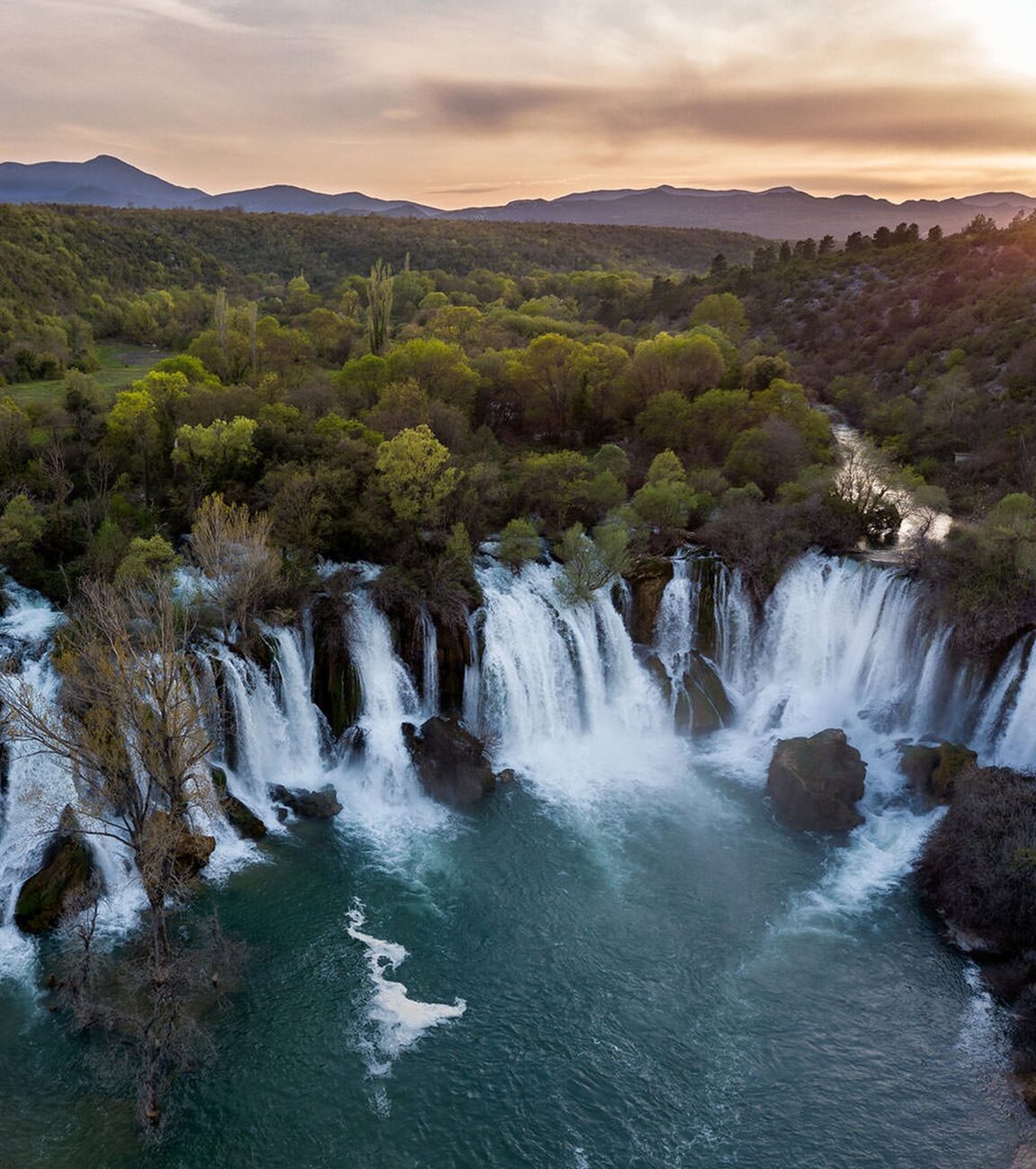
Scale and permission. Many famous waterfalls in this region are look only sights, fenced and photographed from platforms. Kravica is a wide, low, theatrical curtain of water pouring over travertine into a natural amphitheatre pool, and in summer visitors are allowed into that pool. The official site describes a waterfall about 28 metres high, depending on water level, with the amphitheatre below it measuring about 120 metres in diameter. The Trebižat River built the whole scene by flowing through limestone country and depositing tufa, the porous rock that forms the falls’ distinctive terraced lip.
That travertine is alive and changing. The official site notes that the falls offer a different experience in every season because water levels and vegetation shift so much across the year. Spring brings the heaviest flow and the loudest falls. High summer brings lower, clearer water and the swimming season. Autumn and winter bring solitude and a wilder river. There is no single best month, only a best month for the visit you want, which is either a swim visit in summer or a scenery visit in the shoulder seasons.
What are the swimming season rules?
Swimming is a summer activity here, in the designated pool below the falls, and it is at your own risk. The operator’s rules, as published for visitors, prohibit open fires and littering, bar pets from the bathing areas, and warn of landslide risk on the paths. The water is fed by karst springs and stays cold even in August, so expect a short, bracing swim rather than a lazy float, and expect the current to strengthen near the falls themselves. Swim in the calmer parts of the pool, supervise children closely, and wear water shoes, because the travertine and river stones are slippery.
Facilities follow the season. In summer the site runs its full operation, with places to eat and drink near the pool and long opening hours to 10 p.m. Outside summer the visit becomes simpler and quieter, with fewer services, so bring what you need. Steps and paths down to the pool are steep in places and can be slick after rain or with wet feet, so proper footwear matters more here than at a beach. Anyone unsteady on their feet should take the descent slowly and use the handrails where they exist.
How do the tickets and tiers work?
The pricing is tiered by residency, which is standard at major sights in Bosnia and Herzegovina. Visitors from outside the country pay 20 KM per adult. Residents of Bosnia and Herzegovina pay half, 10 KM, with identification. Children pay reduced rates, and children under 7 enter free. The value is in the bundle, because the same ticket also covers Koćuša, a second and quieter waterfall in the same river system, and the museum of the Franciscan monastery at Humac, one of the oldest museums in the country. Keep your ticket if you plan to use those inclusions on the same trip.
Parking is charged separately by the hour or the day, and small extras at the site, from sunbeds to boat rides, are pay as you go. None of those secondary prices is stable enough to print responsibly here, so budget a modest cash cushion in convertible marks and confirm extras on arrival. Euros are sometimes accepted informally in Herzegovina, but the convertible mark is the official currency and the safe assumption at the gate.
When should you arrive, and how long should you stay?
Arrive at opening in summer if swimming is the point. The pool is at its calmest, the travertine terraces are at their most photogenic, and you will have the amphitheatre largely to yourself for the first hour. By early afternoon on hot days the site fills with day trips from Mostar and the Croatian coast, and the atmosphere shifts from nature reserve to busy beach. Two to three hours covers the falls, a swim and a drink. Add Koćuša and Humac and the outing becomes a half day. Our guide to Mostar covers the obvious overnight base, 45 minutes or so away by road, and Kravica pairs naturally with Mostar’s old bridge town on a two day Herzegovina loop.
Photographers should think about the sun’s angle on a west facing curtain of water and about spray. The pool throws up constant mist in high flow, so bring a cloth for the lens and a dry bag for anything that cannot get wet. Drone rules are not published clearly enough to state here, so ask at the gate rather than launching and hoping.
What pairs with Kravice on the same trip?
The classic Herzegovina circuit runs Mostar, Blagaj, Počitelj and Kravica. Blagaj pairs a Dervish monastery with the great spring of the Buna River. Počitelj is a fortified hill town of stone towers above the Neretva. Kravica supplies the swim. Done in that order from Mostar, the day has a clean rhythm of town, spring, fortress and water. Readers who like float and soak travel in warm climates will also enjoy our guide to the Dead Sea on the Jordan side, another place where the rules of the water matter as much as the view.
Trebinje, named in many itineraries, sits further south and works better as its own overnight than as a same day add on from the falls. Herzegovina rewards slow routing. Pick two stops a day, swim in the morning, and let the stone towns take the afternoons, when the light on the Neretva valley is at its best and the day trip buses have gone.
Frequently Asked Questions
How much does Kravice Waterfall cost?
Adult visitors from outside Bosnia and Herzegovina pay 20 KM. Residents pay 10 KM with identification, children pay reduced rates, and children under 7 are free, per the official Kravica site checked on 16 November 2026. The ticket also covers Koćuša Waterfall and the Humac monastery museum.
Can you swim at Kravice Waterfalls?
Yes, in summer, in the designated pool below the falls. Swimming is at your own risk, there is no lifeguard cover to rely on, pets are barred from the bathing areas, and the spring fed water is cold even in August.
What are the opening hours at Kravica?
The official site lists summer hours from 7 a.m. to 10 p.m. for June to September, with shorter hours in other months. Hours change across the year, so confirm on kravica.ba before travelling.
How do you get to Kravice Waterfalls?
The falls sit near Studenci, about 7 kilometres from Ljubuški. Most visitors drive, join a day tour from Mostar, or come on a coastal excursion from Croatia. Carry cash in convertible marks for the ticket and parking.
Is Kravice suitable for children?
Families swim here all summer and children under 7 enter free, but the pool is a natural river pool with no lifeguard, slippery rock and cold water. Close supervision and water shoes are essential.
Kravica or Kravice, which name is right?
Both refer to the same falls. The operator and its official site use Kravica, while Kravice is the common form in tour listings and older writing. Search both spellings when checking hours and tickets.