 Wei Chen
A Bhutanese hot stone bath, called a dotsho, is a wooden tub of cold river water heated the slow way: smooth river stones are roasted in a wood fire until they glow, then lowered into a screened off corner of the tub, where they hiss, crack and bring the water up to soaking heat, usually with a handful of khempa, a local artemisia, scattered in for scent. There is no boiler, no thermostat and no shortcut, which is exactly why the booking rule matters more than anything else in this guide: ask in the morning, or the day before, because the fire needs hours. Booked that way, a dotsho is the single best paced hour in a Bhutan itinerary, ideally on the evening after the climb to Paro Taktsang, when legs that have been up to about 3,120 metres and back have earned hot water and an early night. Booked late, it is a polite no, and a cold farmhouse yard.
Quick Facts
- What it is: A dotsho, a traditional Bhutanese hot stone bath in a wooden tub, heated by fire roasted river stones rather than plumbing.
- How it heats: Stones heat in an open wood fire, then sit behind a wooden partition at one end of the tub, so the bather never touches them directly.
- The green addition: Khempa, a local artemisia, is commonly added to the water for scent, and other medicinal herbs are used in some farmhouses and spas.
- Where to take one: Farmhouses around Paro and in the Punakha valley, including the farmhouses near Chimi Lhakhang, plus hotel spas in Paro such as COMO Uma Paro and Zhiwa Ling Heritage.
- Booking lead time: Same morning at the latest for a farmhouse bath; Zhiwa Ling asks guests to book its traditional medicinal bath 2 hours in advance just to heat the stones, and a farmhouse fire takes longer.
- How long to allow: Plan on about an hour in and around the water, plus changing time, and keep the rest of the evening empty.
- Best evening for it: After the Paro Taktsang hike, a walk of roughly 4 to 6 hours return to a monastery at about 3,120 metres.
- Trip costs around it: Bhutan charges most international visitors a Sustainable Development Fee of USD 100 per person per night, plus a one off USD 40 visa fee, per the Department of Tourism. The bath itself is priced by each farmhouse or hotel, so confirm the price when you book.
- Who should skip it: Anyone a doctor has told to avoid very hot baths, and anyone wiped out by altitude or the day, for whom an early dinner is the better prescription.
How does a dotsho actually work, stone by stone?
The method has not changed because it does not need to. A wooden tub, often oak or pine, is filled with cold water, frequently river water carried or piped in that day. Beside it, a fire is built and smooth river stones are set into the flames. River stones are used because they hold heat and, crucially, because they tend to crack and split in the water rather than explode, releasing their stored heat in a long, steaming hiss. COMO Shambhala at COMO Uma Paro, which runs the bath as its Bhutanese Traditional Hot Stone Bath treatment, describes it plainly: when the hot stones are placed in water they crack and steam, releasing minerals, and the treatment is then finished with a massage.
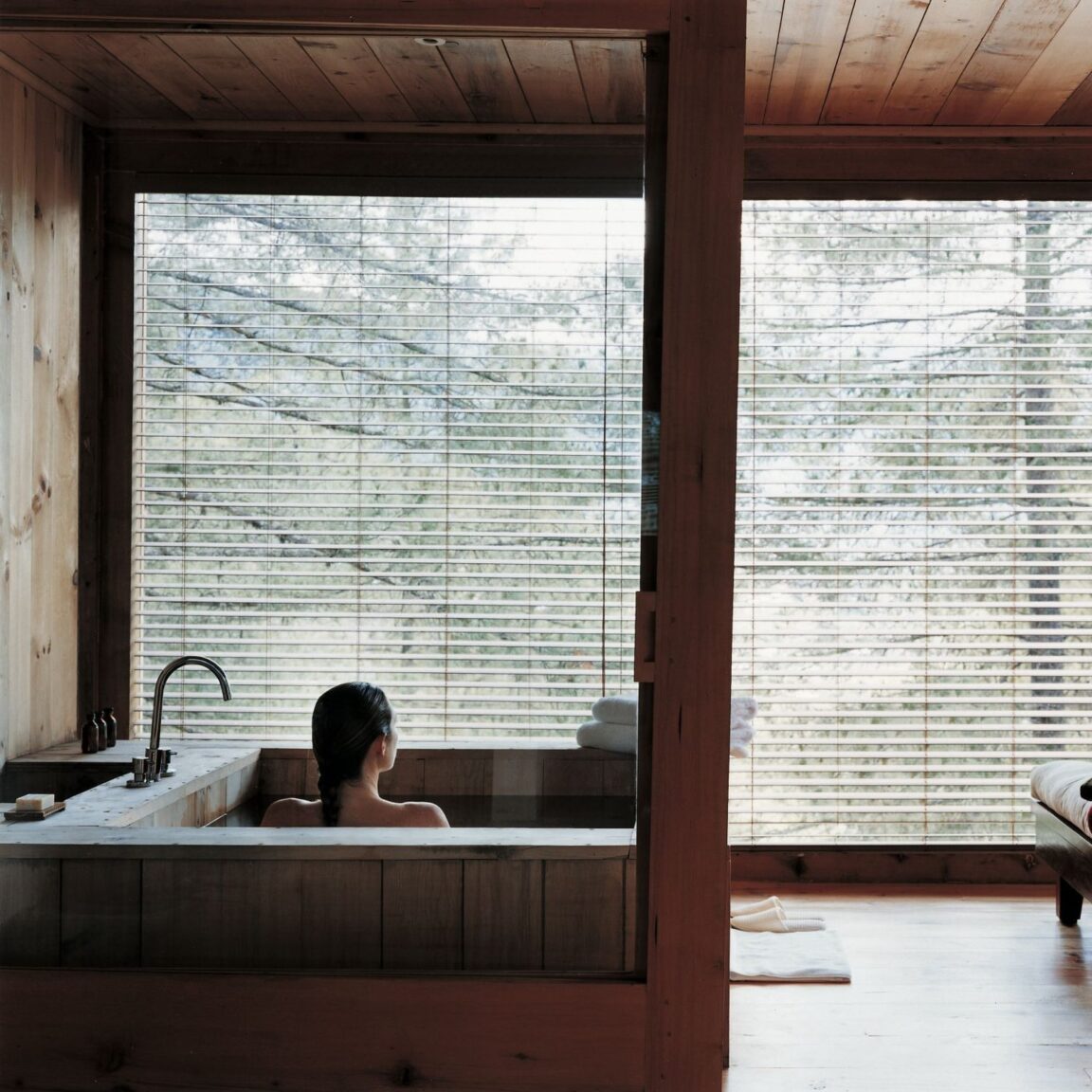
The stones do not share the tub with you. They are lowered into a compartment at one end, separated from the bathing space by a wooden slatted partition. That one detail explains the whole etiquette of the bath. You sit at the far end, away from the stone chamber, and the heat reaches you as warmed water rather than as a scalding current. As the soak goes on, attendants can add more hot stones, so the water often gets hotter the longer you stay rather than cooling like a normal bath. The sensible response is to move slowly, say so if it is too hot, and treat the rising heat as part of the pacing rather than a test.
Khempa is the finishing touch most visitors remember by smell. The artemisia leaves give the water a green, herbal scent that clings lightly to the skin afterwards. In Bhutanese traditional medicine, the wider system often called Sowa Rigpa, hot stone bathing sits alongside herbal remedies as a treatment for aches and stiff joints. A traveller does not need to take a position on the medicine to enjoy the bath, but it helps to understand that a farmhouse dotsho is not a spa gimmick imported for tourists. It is a household remedy that visitors are being invited into, and it is run on household logic: one fire, one tub, one group at a time.
Farmhouse bath or hotel spa, which one should you choose?
The farmhouse version is the original. Around Paro, and in the warmer Punakha valley at about 1,250 metres, families offer the bath in a small wooden bathhouse or a sheltered corner of the yard, with the fire smoking beside it and dinner afterwards in the farmhouse kitchen. The farmhouses near Chimi Lhakhang in Punakha are a well known cluster, set among rice fields, and a bath there pairs naturally with a valley day rather than a hiking day. In the Phobjikha valley, farmhouse baths are a winter pleasure, taken against frosty air in one of the coldest inhabited valleys in Bhutan. What you get is atmosphere and hospitality. What you give up is control: the temperature is managed by stone count, the timing is managed by the fire, and the changing space may be a simple room with a bench.
The hotel version keeps the ritual and adds the trimmings. COMO Uma Paro pairs the bath with its signature massage in a dedicated bathhouse setting above the Paro valley. Zhiwa Ling Heritage in Paro runs a traditional Bhutanese medicinal bath at its Menlha spa, using stones gathered from the Paro Chhu river, and asks for 2 hours of notice so the stones can be heated. Six Senses Bhutan lists hot stone baths among the spa offerings across its lodge circuit, which runs through Thimphu, Paro, Punakha, Gangtey and Bumthang; our guide to Six Senses Thimphu sets out how that circuit is usually travelled. If a private tub, a treatment room and a therapist matter more than a farmyard, the hotel bath is the right call, and there is no wrong answer here. If the point of the trip is Bhutan itself rather than wellness in the abstract, choose the farmhouse at least once.
When should you book, and how does the bath fit a trek day?
Book in the morning for that evening. That is the rule every farmhouse account agrees on, because the constraint is physical: stones take hours to heat through, and a fire lit at dusk will not be ready before dinner. The smoothest version runs through your guide. On a Taktsang day, guides commonly phone ahead from the trail or the halfway cafeteria on the way down, so the fire is lit before you reach the car park, and the stones are ready soon after you get back, shower off the dust and change. If you are travelling without a guide on a given day, ask your hotel reception or farmhouse host at breakfast, in person, and confirm a time rather than assuming the evening will arrange itself.
The pacing case for the Taktsang evening is simple. The monastery sits at about 3,120 metres, roughly 900 metres above the Paro valley floor, and the return walk takes most travellers 4 to 6 hours with stops. That is a genuine mountain day at altitude, the kind that leaves calves tight and shoulders sore from a daypack. An hour in hot water, followed by dinner and nothing else, converts that soreness into sleep instead of carrying it into the next morning. Resist the urge to stack anything after the bath: no night drive to Thimphu, no late sightseeing, no second activity. The bath is the evening.
On a non hiking day, the bath works best as the anchor of a slow afternoon. In Punakha, pair it with the dzong and a valley walk in the morning, then let the day end at the farmhouse. Travellers combining Bhutan with Nepal will find the rhythm familiar from a first Kathmandu base; our 3 day Kathmandu itinerary plans around the same principle of one big effort per day. And if hot water outdoors is your idea of a holiday in any hemisphere, the contrast with Banff in winter, where the soak is a mineral spring under snow, shows how differently two mountain cultures can arrive at the same good idea.
What should you expect in the tub, minute by minute?
You change first, usually into swimwear or the wrap the farmhouse provides, and rinse off if a shower or a jug of water is offered. The tub will already be steaming, the stone end screened off, the surface scattered with green khempa. Lower yourself in at the far end and give your body a few minutes before judging the temperature, because the first impression is always the hottest. Attendants may appear with tongs and another glowing stone, which drops into the chamber with a hiss and a burst of steam; the water around you warms a degree or two in the minutes after. That is normal, and it is also your cue to shuffle a little further from the stone end if you need to.
Most people soak for somewhere between half an hour and an hour, getting out in stages to cool off on the edge of the tub. Drink water. Bhutanese hosts often bring tea. If dinner follows at the farmhouse, expect it to be unhurried and home cooked, red rice and seasonal vegetables and a chilli laden cheese dish if the kitchen is feeling traditional, served while you are still pleasantly drowsy from the heat. Photographs of the fire and the bathhouse are usually welcome. Photographs of other bathers are not, and in a shared farmhouse setting the tub may be used by your own group only, one sitting at a time, so confirm who is in your session when you book.
Who should skip the hot stone bath?
Hot water at altitude deserves respect. Anyone who has been told by a doctor to avoid very hot baths, including people with cardiovascular or respiratory conditions and anyone who is pregnant, should sit this one out and take the farmhouse dinner instead; COMO and other operators carry the same caution, and no soak is worth a fainting episode in a wooden tub far from a hospital. The same goes for a traveller who has come down from Taktsang genuinely exhausted or headachy from the altitude. Heat dilates blood vessels and can turn a manageable headache into a miserable evening. The honest alternative, an early dinner by the wood stove and an early bed, is not a consolation prize. It is what the farmhouse would prescribe for its own family.
Children need a judgement call rather than a rule. Ask for a milder bath with fewer stones, keep the session short, and never leave a child in the tub unattended. Alcohol and a hot stone bath are also poor partners; save any local ara, the Bhutanese rice wine sometimes offered to guests, for after dinner.
How much does a Bhutan trip around the bath cost?
The bath is the cheap part of a Bhutan day. Farmhouse and hotel prices for a dotsho vary by property and by whether a massage is bundled, and they change often enough that the only honest figure is the one quoted when you book, so ask for it in the same conversation as the booking itself and confirm whether it is per person or per tub. The costs that frame it are fixed by the government and worth knowing before any itinerary maths: the Sustainable Development Fee is USD 100 per adult per night for most international visitors, with a one off visa fee of USD 40, both set by the Department of Tourism and paid in advance with the visa application. Indian visitors pay a separate rate in ngultrum. None of that buys the bath, the guide or the room; it is a national levy that funds, among other things, the free healthcare and education Bhutan is known for, and it is the reason the valleys you are soaking in remain as quiet as they are.
Frequently Asked Questions
How hot does a dotsho get, and can it be adjusted?
It gets properly hot, comparable to a hot bath at home at its upper end, and it is adjusted the analogue way: more stones for more heat, fewer for less, and time for cooling. Tell your host before you get in if you like a gentler bath, because cooling a full tub is slower than heating one.
Do you share the bath with strangers?
At a farmhouse, the tub is normally prepared for one party at a time, your own group, and hotel spas run private bathhouses or tubs for one or two guests. Confirm the arrangement when you book if privacy matters to you, especially in high season.
What should you wear in a Bhutanese hot stone bath?
Swimwear is the standard choice for visitors, and some farmhouses provide a wrap. Bring a change of dry clothes for afterwards, because the walk back across a cold yard in a damp swimsuit is the one part of the ritual nobody romanticises.
Is the hot stone bath available year round?
Yes. It is offered in every season, and it is arguably at its best in the cold months, when the contrast between frosty air and hot water is sharpest. In the monsoon months, roughly June to September, the draw is the same even if the valley views are greener and cloudier.
Can you book a dotsho without staying at the farmhouse or hotel?
Often, yes, through your guide or by asking the property directly, since the bath is sold as an experience as well as a guest amenity. The lead time rule still applies, so a walk in request in the evening is the one most likely to fail.
Is a hot stone bath the same as Bhutans natural hot springs?
No. Natural hot springs, called tshachu, are geothermal pools in fixed locations such as Gasa, and locals travel to them for extended soaking cures. A dotsho is made anywhere there is a tub, a fire and river stones, which is why it can appear in a farmhouse yard in Paro or Punakha on the evening you ask for it, provided you asked in time.
Photo: COMO Shambhala at COMO Uma Paro, via the official COMO Shambhala website (comoshambhala.com), showing the wooden soaking tub in the property’s bathhouse in Paro, Bhutan.