 James Wolfe
The strangest house museum in London is also one of its smallest national museums, and the way to see it at its best is after dark, when the rooms at 13 Lincoln’s Inn Fields are lit by candlelight for the museum’s evening openings. By day, Sir John Soane’s Museum is free, walk-in and open Wednesday to Sunday from 10am to 5pm. By night, at the ticketed Soane Lates and the candlelit openings the museum has long held on the first Tuesday of the month, the same rooms turn theatrical: mirrors multiply the candle flames, coloured light falls through hidden skylights, and the alabaster sarcophagus of an Egyptian pharaoh glows in the basement crypt. If you only have time for one small museum in London, make it this one, and time it for an evening if you possibly can.
Quick Facts
- Address: 13 Lincoln’s Inn Fields, London WC2A 3BP, a five minute walk from Holborn station
- Opening hours: Wednesday to Sunday, 10am to 5pm, last admission usually 4.30pm, closed Monday and Tuesday except bank holidays
- Admission: Free, with no booking needed for general entry; you simply walk in on the day
- Evenings: Soane Lates run on selected dates with timed arrival slots and a ticket price; the museum’s candlelit tradition centres on first Tuesday evenings
- Do not miss: The sarcophagus of Seti I in the Sepulchral Chamber, Hogarth’s A Rake’s Progress in the Picture Room, and the Picture Room panel openings at set times
- Rules: No large bags or luggage, no flash photography, no tripods or selfie sticks, and clear plastic bags are provided for small items
- Prices checked: 21 November 2026, against the museum’s own website
What exactly did Soane build here?
Sir John Soane (1753 to 1837) was one of the most original architects of his age, the designer of the Bank of England and Dulwich Picture Gallery, and the son of a bricklayer who rose to the top of his profession. Between 1792 and 1824 he bought, demolished and rebuilt three houses on the north side of Lincoln’s Inn Fields, numbers 12, 13 and 14, turning them into a single interlocking home, office and private museum. Number 13, entered through his original front door, is the heart of it.
What makes the house extraordinary is not scale but density and invention. Soane packed the rooms with antiquities, architectural models, plaster casts, paintings and curiosities, then manipulated light and space so that small rooms feel endless. Convex mirrors, domed ceilings, folding walls and views through one room into the next mean you are constantly surprised by what appears behind a panel or below a floor. In 1833 he negotiated an Act of Parliament to preserve the house exactly as it stood at his death, for the benefit of students and the public, and it has been kept that way since he died in 1837. The museum describes itself as the smallest of the national museums, and it still displays the collection much as Soane arranged it.
Why does everyone talk about a pharaoh in the basement?
The single most famous object is the sarcophagus of Seti I, the Egyptian pharaoh who reigned around 3,000 years ago and fathered Ramesses II. Carved from a single block of translucent alabaster and covered inside and out with hieroglyphs from the Book of Gates, it sits in the Sepulchral Chamber in the basement, lit so that the stone itself seems to hold light. Soane bought it in 1824 after the British Museum declined to pay the asking price, and he celebrated its arrival with a three night party to which more than 800 guests were invited, with lamps burning around the house. Standing in that low crypt, looking at a king’s coffin in an architect’s cellar, is the moment most visitors remember.
Around it, the basement and ground floor unfold as a cabinet of wonders: the Monk’s Parlour and Yard, a Gothic joke at the expense of medieval romance; the crypt-like chambers of casts and fragments; and room after room where Roman marbles, Greek vases and architectural models compete for wall space. Nothing is labelled in the modern museum sense, which is precisely the point. Soane wanted visitors to look, compare and feel, and the free Bloomberg Connects digital guide and the room cards now do the explaining without disturbing the spell.
What will you see in the Picture Room?
The Picture Room is Soane’s cleverest trick. It is a small room whose walls are hung with hinged panels, so that far more paintings fit than the wall space should allow. At set times each day, staff swing the panels open to reveal layer after layer. The museum publishes the opening times: the Picture Room Recess panels on the south wall open at 11am, 3pm and 4pm, and Hogarth’s A Rake’s Progress on the north wall is revealed at 2pm. Plan your visit around at least one of these moments.
The star is Hogarth. Soane owned the original paintings for A Rake’s Progress, the eight scene moral story of a young heir who wastes his fortune and ends in Bedlam, and also A Humours of an Election. Seeing the Rake’s Progress panels fold out in a lamplit room, close enough to read every face, is a different experience from meeting the prints in a textbook. Canaletto and Turner are also in the collection, along with Soane’s own architectural drawings; the museum holds more than 30,000 drawings in total, and the recently restored Drawing Office, the oldest surviving example of its kind, now opens on free tours on Thursdays and Saturdays at 2.30pm for groups of up to six.
How do the candlelit evenings actually work?
Soane designed the house to be read by changing light, and he entertained in it after dark, so an evening visit is not a gimmick; it is the house used as its maker intended. The museum’s long standing tradition is a candlelit opening on the first Tuesday evening of the month, when candles are lit throughout the house and entry runs into the evening. Alongside that tradition, the museum now programmes ticketed Soane Late evenings on selected dates, with timed arrival slots across the evening, spotlight talks by guides on individual objects, and a drink included in the Library-Dining Room. The museum’s own listings showed a Soane Late on 27 November 2026, priced at 25 pounds, and such evenings regularly sell out.
Practical advice follows from the format. Book a Late as soon as dates appear, because capacity is tiny. For a first Tuesday candlelit opening, arrive well before the doors open and expect a queue on the pavement; numbers inside are strictly limited, and when the house fills, later arrivals wait or miss out. Wear flat shoes: the museum does not allow stiletto heels at Lates because of the historic floors and metal grilles, and staff may ask guests to wear covers or remove them. Under 18s can attend Lates, but the atmosphere, all shadow and whisper, rewards adults and older children most.
How should you plan a daytime visit?
Daytime entry could hardly be simpler: it is free, there is no timed ticket, and you walk in. The catches are capacity and pace. The museum restricts numbers to protect the rooms, so on busy afternoons you may queue outside and admission can close before the usual 4.30pm last entry if the house is full. Arrive near the 10am opening for the calmest circuit, and allow 90 minutes to two hours.
Two free extras are worth building in. The Private Apartments, Soane’s intimate family rooms on the second floor, are shown on free volunteer led tours on Wednesdays, Fridays and Sundays at 2pm, for a maximum of eight people, first come first served; put your name down in the South Drawing Room. The Drawing Office tours run Thursdays and Saturdays as described above. Groups of eight or more must book ahead, and anyone with access needs should call the museum in advance on 020 7405 2107, because this is a historic house of stairs, narrow passages and uneven surfaces rather than a step free museum.
Leave luggage elsewhere. The museum refuses suitcases, large rucksacks and bikes, offers only a very limited cloakroom, and hands you a clear plastic bag, roughly 375mm by 450mm, for the small items you carry through. Photography is allowed, but without flash, filming, tripods or selfie sticks.
Where does the Soane fit in a London museum day?
Pair it with its neighbours rather than treating it as a detour. The British Museum is a ten minute walk north, and the contrast is the lesson: one is an encyclopaedia, the other a single mind made into a building. Readers planning a culture heavy trip may also enjoy our guide to flamenco in Seville done respectfully and our inside account of the Palio di Siena from the inside, two more European traditions that reward visitors who learn the rules before they arrive.
Frequently Asked Questions
Is Sir John Soane’s Museum really free?
Yes. General admission is free and you do not need to book; you walk in on the day during opening hours, Wednesday to Sunday, 10am to 5pm. Paid extras are the guided tours and the ticketed Soane Late evenings.
When are the candlelit openings?
The museum’s candlelit tradition centres on the first Tuesday evening of the month, and it also runs ticketed Soane Late evenings on selected dates with timed entry slots. Check the museum’s What’s On pages before you travel, because evening dates and prices change by programme and the popular ones sell out.
What is the one thing I must not miss?
The sarcophagus of Seti I in the basement Sepulchral Chamber. After that, time your visit for a Picture Room panel opening so you can watch Hogarth’s A Rake’s Progress revealed at 2pm.
Can I take photographs inside?
Yes, photography is permitted, but flash, filming, tripods, selfie sticks, large cameras and phone calls are not. Staff may also ask visitors not to photograph in bottlenecks to keep people moving.
Can I bring a big bag or suitcase?
No. Luggage, large rucksacks and bikes are refused, and cloakroom space is very limited. You will be given a clear plastic bag for small essentials to carry through the house.
Is the museum accessible?
It is a Grade I listed historic house with stairs, narrow passages and uneven floors, so access is limited. The museum asks visitors with access requirements to contact them in advance on 020 7405 2107 so staff can help plan the visit.
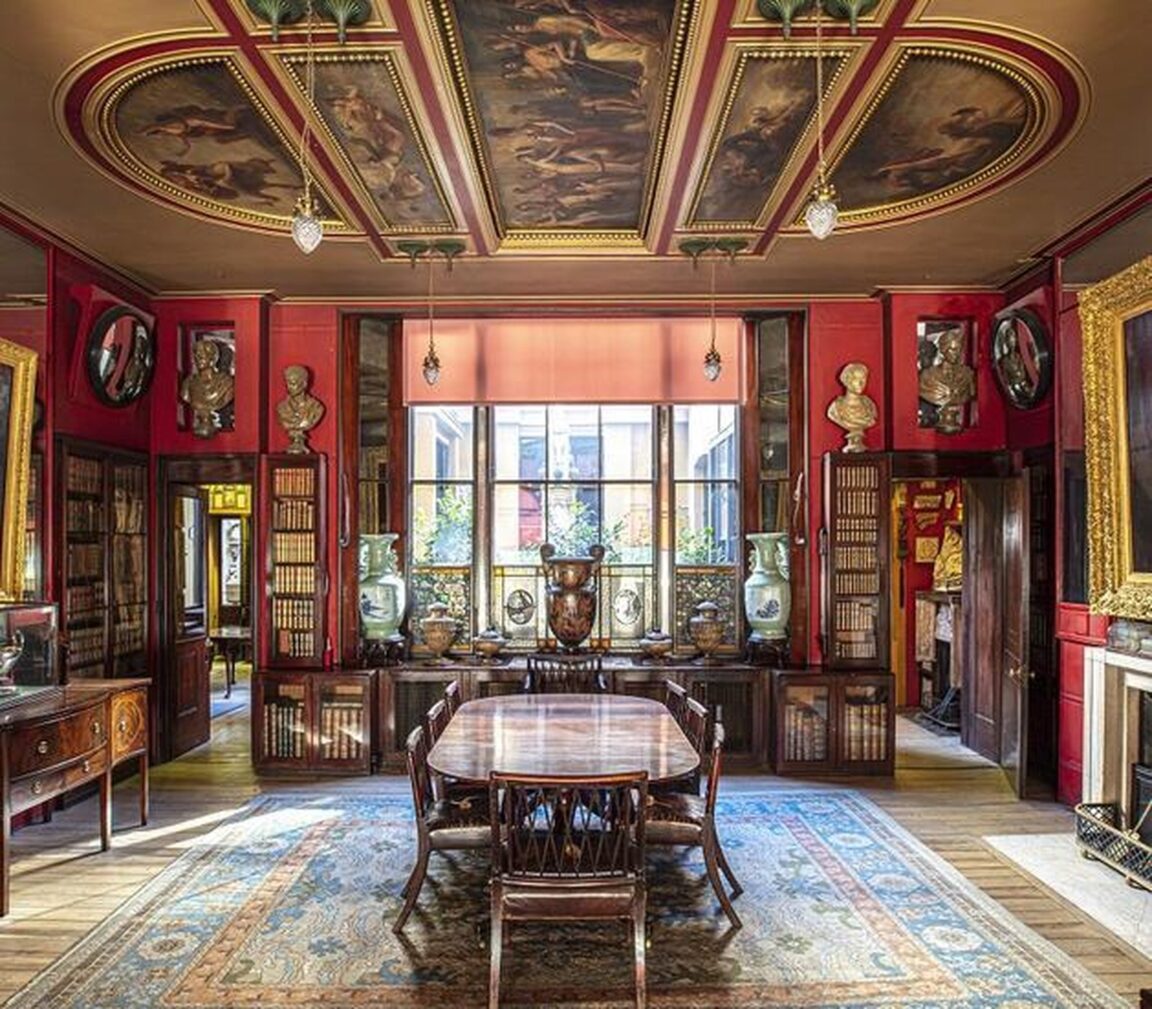
Featured image: The Library-Dining Room of Sir John Soane’s Museum. Photo: Sir John Soane’s Museum (soane.org), the museum’s own official website, used with credit.