 James Wolfe
Jeju black pork is not ordinary samgyeopsal with better marketing. The island’s native black pig, heukdwaeji, is a smaller, slower growing heritage breed whose skin on belly cut, ogyeopsal, grills into five distinct layers, and in Jeju City the whole ritual concentrates on one walkable strip: Black Pork Street in the Geonip dong and Gwandeok ro area near Dongmun Market, where specialist grill houses serve thick cut pork by the geun, a 600 gram unit, with one condiment that mainland barbecue never gives you, meljeot, a fermented anchovy sauce that is heated on the grill and used as the dip. Go to the street, order belly and neck together, let the staff grill, dip in the meljeot first and build lettuce wraps second. That order, street, cuts, sauce, wrap, is the whole meal decoded.
Quick Facts
- The pig: Heukdwaeji, Jeju’s native black pig, a smaller heritage breed preserved and repopulated from the 1980s onward after commercial pink pig farming nearly replaced it.
- The cut: Ogyeopsal, five layer pork belly with the skin left on, plus moksal, the neck or collar cut. Both are served thick, in the geungogi style.
- The unit: Meat is commonly sold by the geun, a traditional weight of 600 grams, rather than by the small mainland portion.
- The sauce: Meljeot, fermented anchovy sauce, served in a small dish and often heated on the grill until it bubbles. It contains fish, which matters for allergy sufferers.
- The street: Black Pork Street in Jeju City, a cluster of specialist restaurants near Dongmun Traditional Market and Tapdong, roughly 10 to 15 minutes on foot from the market.
- A named anchor: Dombedon, at 25 Gwandeok-ro 15-gil in old Jeju City, listed by Korea tourism channels at 11:00 to 23:00. Hours change, so confirm on the day.
- Before you fly: Entry rules for the island are their own topic; see Jeju’s visa free entry rules and how they differ from the mainland.
What makes Jeju black pork different from mainland pork?
The breed comes first. Jeju’s black pig is native to the island, smaller than a commercial mainland pig, with black hair, a firmer bite and fat that renders slowly rather than turning greasy on the grill. The breed nearly disappeared during the twentieth century as faster growing pink pigs took over Korean farming, and it was deliberately preserved and repopulated from the 1980s onward, first as a food heritage project and then as the island’s signature dish. One honest complication belongs in any guide: labelling rules allow a share of what is sold as heukdwaeji to be cross bred rather than pure heritage pig, so the name on the menu is a starting point, not a laboratory certificate. What you can judge at the table is the cut and the cooking, and both are distinctive.
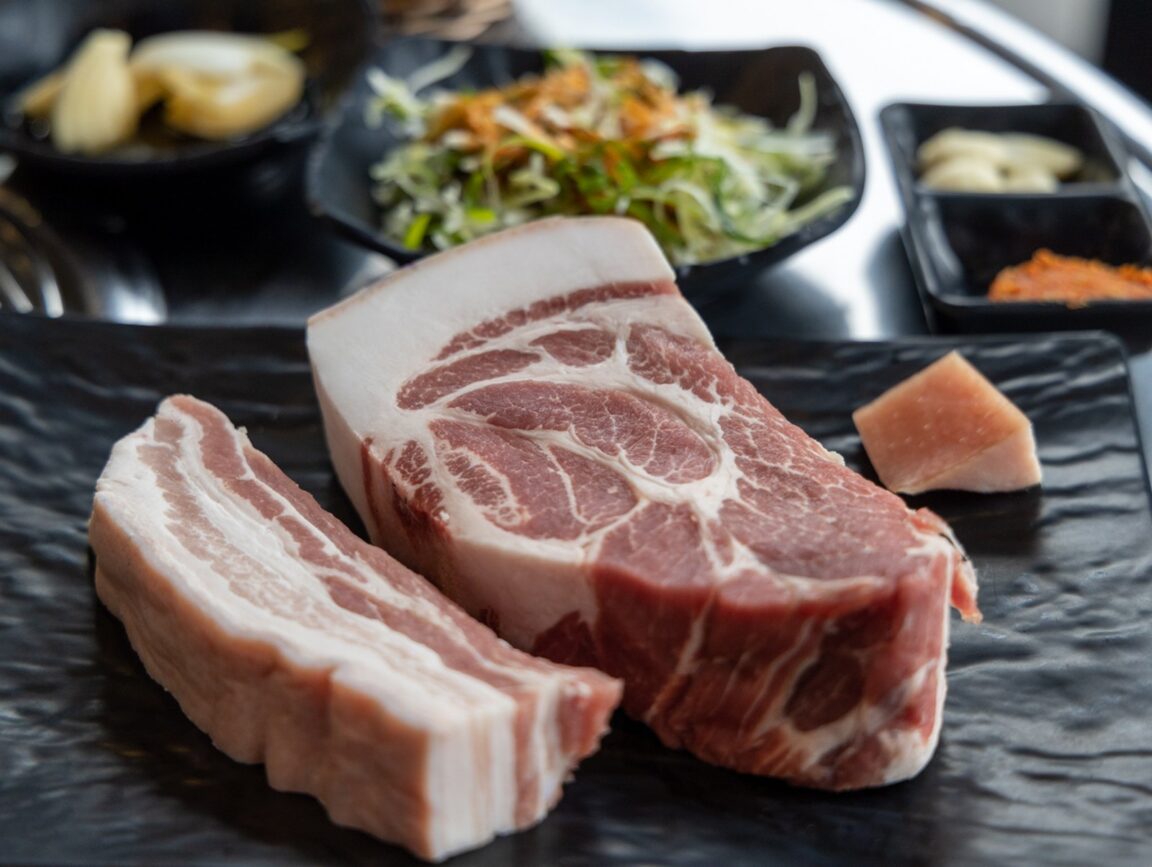
The cut is ogyeopsal. Mainland samgyeopsal is three layer belly, skin off. Jeju’s version keeps the skin on, which adds the skin itself and the fat layer beneath it to make five layers, and gives the grilled edge its chew and snap. Restaurants serve it thick, often as a single slab that the staff sear, rest and cut with scissors at the table, alongside moksal, the neck cut, which eats richer and less fatty. Ordering the two together is the standard first timer move, because the contrast teaches you more than either cut alone.
How does Black Pork Street work, and where do locals queue?
Black Pork Street, heukdwaeji geori, is a concentrated block of specialist grill houses in old Jeju City, in the Geonip dong area near Gwandeokjeong and Dongmun Market. The practical shape of an evening there is simple. The street’s restaurants offer a similar core set, thick cut geungogi pork, meljeot, kimchi and a finishing dish, so the local strategy is refreshingly unromantic: pick the house with the shortest wait whose price board clearly shows the price per geun, and sit down. Queues form early at the best known names, and weekend dinners are the pinch point, while weekday lunches are calmer.
Dombedon is the street’s most documented anchor, at 25 Gwandeok-ro 15-gil, combining grilled black pork with dombe gogi, steamed pork served on a wooden board, and doenjang jjigae. Across the city in Nohyeong, Donsadon is the other name travellers hear, famous for selling pork by the geun and grilling over briquettes with the staff handling the meat. Neither requires a pilgrimage if the street is full: the dish is the destination, and a busy room full of Jeju families is a better signal than any ranking. For a wider sense of how Korean market and street food districts reward this kind of wandering, compare Porto’s francesinha tribunal, a very different city’s argument about its signature dish.
What is meljeot, and how do you use it?
Meljeot is the flavour that makes the meal Jeju’s rather than Seoul’s. It is a fermented anchovy sauce, deeply savoury and frankly fishy in the dish, and restaurants serve it in a small metal bowl that often goes directly onto the grill or its edge, so the sauce heats, bubbles and mellows while the pork cooks. The technique is to dip a piece of grilled pork into the warm meljeot before anything else touches it, at least for the first few pieces, so you learn what it does: it salts, it adds fermented depth, and it cuts the fat in a way that sweet ssamjang never will.
After the plain dip, build the wrap. Take a lettuce or perilla leaf, add rice if you want it, a piece of pork, a dab of meljeot or ssamjang, a slice of raw garlic and a green chilli, then eat it in one bite. Banchan, the small side dishes, arrive as part of the table, and kimchi often goes onto the grill beside the meat to fry in the rendered fat. Two cautions. Meljeot is a fish product, so a pork order is not a fish free meal, and anyone with a fish allergy should raise it before ordering. And the sauce divides people honestly: some diners convert for life, others retreat to salt and sesame oil, which every table also provides.
What about the straw fire finish?
Some Jeju houses finish grilled pork over burning straw, a quick pass of clean flame and smoke that perfumes the meat at the end of cooking. It is the island style detail most often repeated about black pork, and it is real, but it is a house technique rather than a street wide rule, so treat it as a bonus to ask about, not a test of authenticity. The same applies to fuel: houses variously grill over charcoal, briquettes or gas, and the staff’s control of the grill matters more than the fuel on the sign. At most specialist restaurants the staff grill for you, turning and cutting the thick slabs, which removes the usual foreign visitor anxiety about ruining expensive meat. Watch the first round, because the cutting order, sear the slab, rest it, cut it, then crisp the pieces cut side down, is the part worth copying at any Korean barbecue afterwards.
How do you order without overordering?
Think in geun. One geun is 600 grams of pork, and for two people with side dishes, stew and rice it is a full meal, not a starter. Menus price by the geun or by the portion depending on the house, and prices across the street move within a band rather than a single figure, so read the board before sitting and confirm what the set includes. A sensible first order is one geun split between belly and neck, a doenjang jjigae to share, and the fried rice finish that many houses cook on the grill in the pork fat once the meat is gone. Add a second half portion only if the table is still hungry. Finish the evening the Jeju City way, with a walk through Dongmun Market’s night stalls for something sweet, and read the island’s other great food argument, its seafood, with fresh eyes in the morning. Travellers who love a single dish city ritual will also enjoy Lima’s Nikkei cuisine and the tiradito trail.
Frequently Asked Questions
What is the difference between ogyeopsal and samgyeopsal?
Samgyeopsal is three layer pork belly, usually skin off. Jeju’s ogyeopsal keeps the skin on, giving five layers including skin and subcutaneous fat, which grills chewier and crisper at the edges.
What is meljeot?
A fermented anchovy sauce served as the dip for Jeju black pork, often heated in a small dish on the grill until it bubbles. It is intensely savoury, and it means the meal is not fish free.
How much pork should two people order?
Start with one geun, 600 grams, split between belly and neck, plus shared stew and rice. It is a full meal for two in most houses. Order more only if you are still hungry.
Where exactly is Black Pork Street?
In old Jeju City, in the Geonip dong and Gwandeok ro area near Dongmun Traditional Market and Tapdong Square, about 10 to 15 minutes on foot from the market. Dombedon, at 25 Gwandeok-ro 15-gil, is a reliable anchor address.
Do the staff grill the meat for you?
At most specialist black pork houses, yes. Staff typically sear the thick slab, rest it, cut it with scissors and finish the pieces on the grill. It is normal to let them lead.
Photo: Thick cut raw Jeju black pork, skin on belly and marbled neck, served on a slate with scallion salad and side dishes, ready for the grill. Credit: VisitJeju, via visitjeju.net, Jeju’s official tourism portal.