 Jonas Lindqvist
Schoneberg is where Berlin’s LGBTQ+ life began and where it still centres: the streets around Nollendorfplatz, known as the Rainbow Quarter, have been queer since the 1920s and hold the densest cluster of gay bars in the city, a pink triangle memorial at the station, and the Lesbian and Gay City Festival every July. Start at the Nollendorfplatz U-Bahn, whose glass dome has been lit in rainbow colours since 2013, walk Motzstrasse and Fuggerstrasse for the bars, and use the quarter as your base for a city where same sex marriage has been legal since 2017 and the scene runs from bookshops to some of the most famous clubs on earth.
Quick Facts
- Quarter: The Rainbow Quarter (Regenbogenkiez) around Nollendorfplatz in Schoneberg
- Station: Nollendorfplatz, served by the U1, U2, U3 and U4 lines
- Landmark: The station dome, lit in rainbow colours since 2013, and the pink triangle memorial plaque on the station
- Bar streets: Motzstrasse, Fuggerstrasse and Maaßenstrasse
- Festival: Lesbian and Gay City Festival, held in the quarter each July
- Marriage equality: Legal across Germany since 2017
- Legal reference: ILGA World database entry for Germany at database.ilga.org
A century of queer Schoneberg
Few neighbourhoods anywhere can document a queer history as long as Schoneberg’s. By the 1920s the streets around Nollendorfplatz held bars, clubs and cabarets serving gay and lesbian Berliners openly enough to draw visitors from across Europe, and the English writer Christopher Isherwood lived on Nollendorfstrasse and turned the quarter into literature in the stories that later became Cabaret. The Nazi period destroyed that world and persecuted the people in it, which is why the quarter’s memorial culture matters: the pink triangle plaque at Nollendorfplatz station commemorates the homosexual victims of National Socialism, using the badge that prisoners were forced to wear.
The postwar decades rebuilt the scene in West Berlin, and Schoneberg re-emerged as the centre of it, a position it has never lost. The city government’s district pages on berlin.de describe the Nollendorfkiez and its queer identity as a defining feature of Schoneberg, and visitBerlin, the city’s official tourism body, guides LGBTQ+ visitors to the same streets. Germany’s wider legal position, including marriage equality since 2017, is set out in the ILGA World database entry for Germany. What that history means for a visitor today is depth: this is not a scene invented for tourists, and its bars, bookshops and institutions have regulars who span generations.
Nollendorfplatz: reading the square
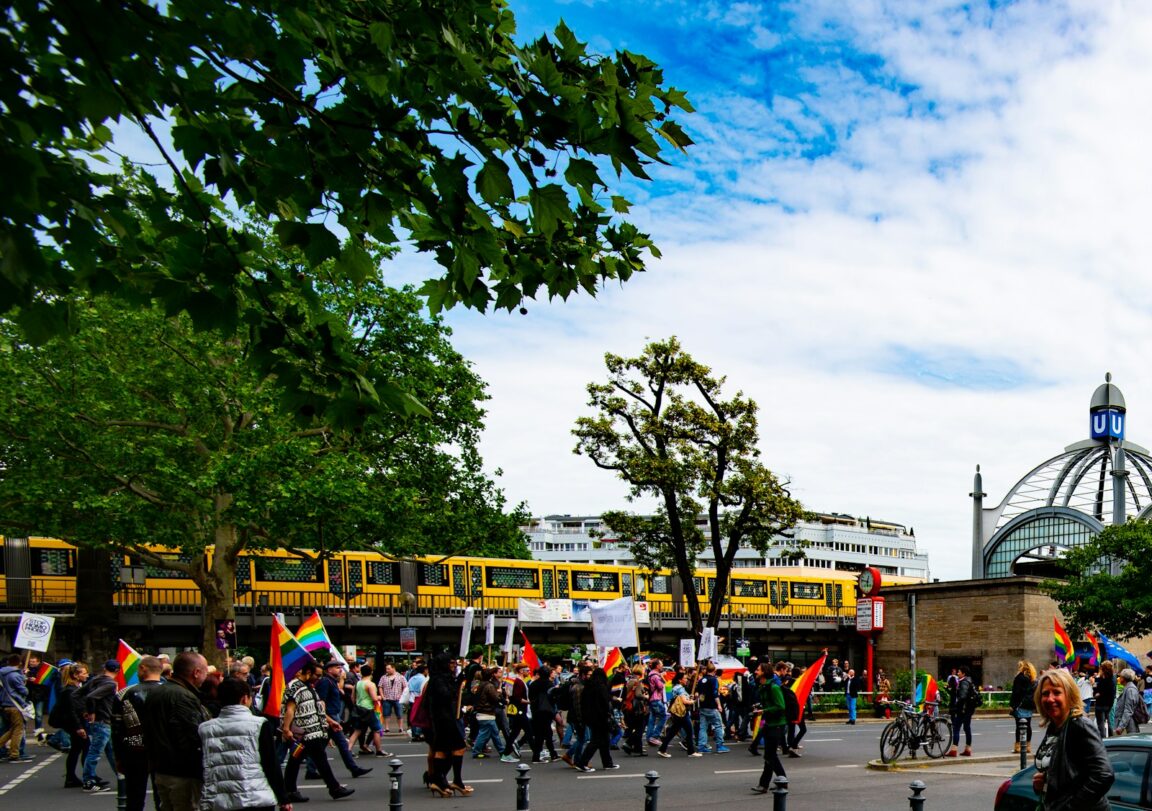
Arrive by U-Bahn and surface at Nollendorfplatz, where four lines meet under one of Berlin’s most recognisable station buildings. The glass dome above the elevated station has been illuminated in rainbow colours since 2013, a permanent statement rather than a Pride week gesture, and the pink triangle memorial is mounted on the station itself. The theatre building facing the square, opened as the Neues Schauspielhaus in 1906, has lived several lives as theatre, cinema and the famous Metropol nightclub, and it still anchors the square visually.
Use the square as an orientation point rather than a destination. The quarter’s life runs south and west from it: down Maaßenstrasse to Winterfeldtplatz, with its twice weekly market, and along Motzstrasse and Fuggerstrasse, where the bars concentrate. Everything in this guide is within a ten minute walk of the station, which is what makes Schoneberg such an easy base: the sightseeing city is a U-Bahn ride away, and the quarter itself asks nothing of you but evenings.
Motzstrasse, Fuggerstrasse and the bars
The Rainbow Quarter’s bar scene is old school in the best sense: a walkable strip of long running gay bars, many of them open since long before Berlin became a global nightlife brand, serving a crowd that mixes locals, regulars and visitors without much ceremony. The pattern of a Schoneberg night is a crawl rather than a single venue: a first drink on Motzstrasse, a move to Fuggerstrasse, a late decision about whether the night ends in the quarter or continues east to the big clubs. Bars here generally open in the afternoon or early evening and build slowly; arriving at 9pm expecting a peak hour crowd misunderstands a scene that warms up towards midnight.
The quarter also holds the everyday infrastructure of a lived in gay neighbourhood: queer bookshops with decades of history, cafés that function as daytime living rooms, and small shops serving the community year round. That mix is the real distinction between Schoneberg and a nightlife district. You can spend a whole day inside the quarter without entering a bar: coffee, the Winterfeldtplatz market, the bookshops, the memorial at the station, and dinner on Goltzstrasse, where the restaurant strip runs a few streets south. For a central Berlin base that pairs with Schoneberg evenings, our guide to the Hotel Adlon Kempinski Berlin covers the classic luxury option by the Brandenburg Gate, and our three days in Vienna itinerary pairs naturally with Berlin on a Central European trip.
The Lesbian and Gay City Festival and Pride season
Each July the quarter closes its streets for the Lesbian and Gay City Festival, one of the largest LGBTQ+ street festivals in Europe, spread across the Motzstrasse and Fuggerstrasse area with stages, community stalls and the bars spilling outdoors. It runs in the build up to Berlin Pride, the Christopher Street Day demonstration, which crosses the city later in July and passes through the Schoneberg area on its route. Festival weekend is the quarter at maximum: book accommodation early, expect the bars to be full from afternoon, and plan daytime hours for the festival itself rather than sightseeing across town.
Outside July, the calendar still delivers. Folsom Europe brings the leather community to the same streets in September, the quarter hosts an LGBTQ+ Christmas market season around Nollendorfplatz in winter, and the bars run theme nights all year. Schoneberg’s advantage over trend driven districts is that its calendar is institutional: these events return on the same streets, run by the same community, decade after decade.
Safety, rights and practical judgment
Berlin is a low risk destination for LGBTQ+ travellers. Same sex marriage has been legal across Germany since 2017, anti discrimination law covers employment and services, and Schoneberg’s queer identity is officially promoted by the city itself. Couples hold hands in the quarter without a thought, and the main judgment calls are the standard Berlin ones: keep an eye on drinks in crowded bars, use the U-Bahn or licensed taxis late at night, and be ready for the door policies of the famous clubs, which are selective for reasons of capacity and crowd balance rather than identity, and which reward arriving in small groups, knowing the event you are attending, and not arguing at the door.
One local sensitivity deserves respect. The pink triangle memorial and the quarter’s other sites of remembrance sit inside a living nightlife district, and visitors sometimes treat them as photo stops on a bar crawl. Pause properly or not at all. The quarter’s whole claim on your attention is that celebration and memory share the same streets; behaving as if you understand that is the fastest way to be welcomed by the people who keep it running.
Where to stay
Stay in Schoneberg itself if the quarter is the point of the trip: hotels and guesthouses around Nollendorfplatz and Wittenbergplatz put the bars, the market and four U-Bahn lines on your doorstep, and the ride to Museum Island or the East Side Gallery is short. Stay near Zoo Station or in Mitte if your days are heavy on sightseeing and your Schoneberg time will be evenings only. Either way, book Schoneberg for the quarter and not for a pool or a spa, because the neighbourhood itself is the amenity you came for. July festival dates and September’s Folsom weekend sell out the quarter first, so those trips are booked by neighbourhood, not by star rating.
Frequently Asked Questions
Why is Schoneberg called the Rainbow Quarter?
The streets around Nollendorfplatz, known locally as the Regenbogenkiez or Rainbow Quarter, have been the centre of Berlin’s LGBTQ+ life since the 1920s. The name reflects both that history and the rainbow lit dome of Nollendorfplatz station.
What is the pink triangle at Nollendorfplatz?
It is a memorial plaque on the U-Bahn station commemorating the homosexual victims of National Socialism. The pink triangle was the badge gay prisoners were forced to wear in concentration camps, and the memorial reclaims it as a symbol of remembrance.
When is the Lesbian and Gay City Festival?
The festival is held in the Schoneberg quarter each July, in the build up to Berlin Pride. It closes streets around Motzstrasse and Fuggerstrasse for stages, stalls and outdoor bars.
When did Germany legalise same sex marriage?
Marriage equality took effect across Germany in 2017. The wider legal position for LGBTQ+ people in Germany is tracked in the ILGA World database.
Which U-Bahn station serves the Rainbow Quarter?
Nollendorfplatz, served by the U1, U2, U3 and U4 lines. Wittenbergplatz, one stop away, is also convenient for the western end of the quarter.
Photo: A Pride march crossing in front of Nollendorfplatz U-Bahn station in Schoneberg, Berlin, by derek braithwaite on Unsplash.