 Kwame Mensah
Mineral Point is a lead mining town in Wisconsin’s Driftless southwest that Cornish miners rebuilt in stone, and the way to read it is through three things in walking order: the Pendarvis stone cottages on Shake Rag Street, the Shake Rag Alley Center for the Arts a few doors away, and the pasty shops and galleries of High Street above them. Lead drew settlers here in the 1820s, Cornish stone masons gave the town its honey coloured limestone face, and when the mines faded, artists moved into the same buildings. The result is one of the oldest communities in Wisconsin and a historic district that rewards a slow day rather than a drive through.
Quick Facts
- Where: Mineral Point, Iowa County, in the Driftless Area of southwest Wisconsin, a region the last glaciers never flattened.
- Founded on: lead. Settlers arrived in the 1820s for the lead diggings, and Cornish miners and masons followed, building in limestone.
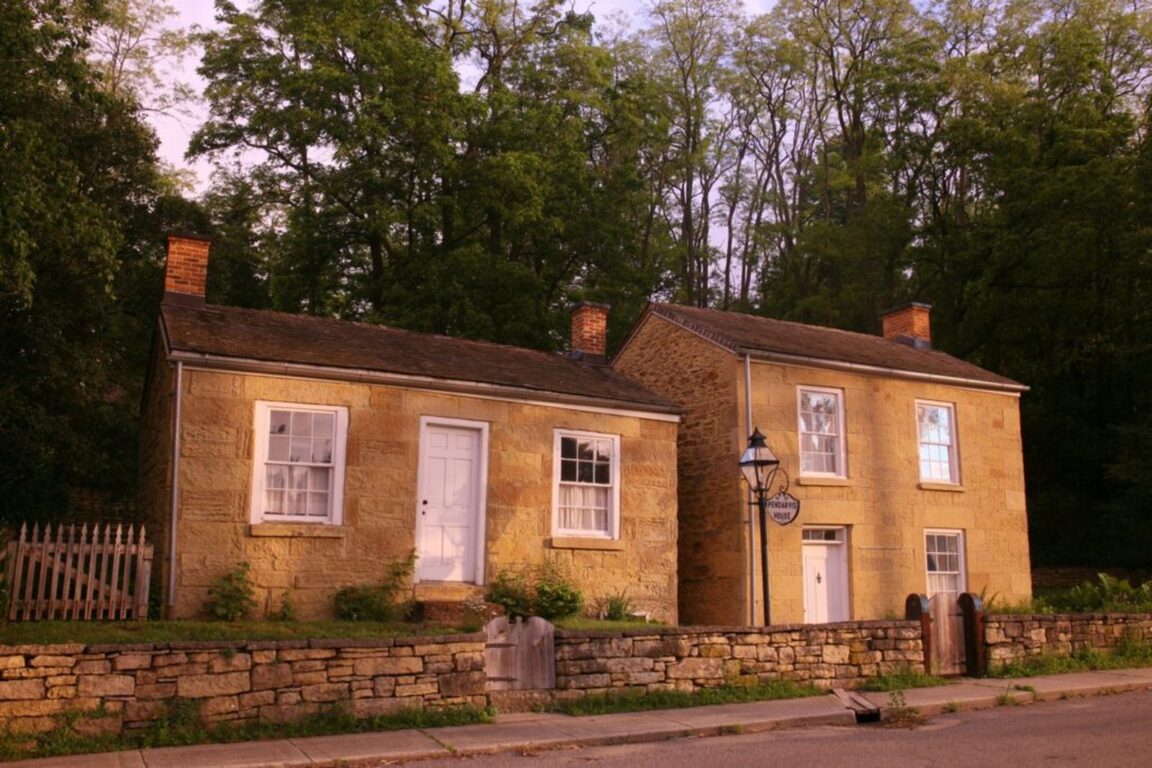
- The anchor site: Pendarvis, at 114 Shake Rag Street, a Wisconsin Historical Society site preserving the Cornish stone cottages saved by Robert Neal and Edgar Hellum.
- Season note: Pendarvis is closed for the 2026 season and reopens for general admission in May 2027, according to the Wisconsin Historical Society. The town, its galleries and Shake Rag Alley run on their own calendars, so check each before you travel.
- The food signature: the Cornish pasty, the miners’ hand held lunch, still served on and around High Street, alongside figgyhobbin pudding.
- The arts layer: Shake Rag Alley Center for the Arts runs workshops and events in historic buildings on the same street as the cottages.
Why did Cornish miners build a Wisconsin town in stone?
The lead rush came first. In the 1820s and 1830s, miners dug shallow pits across these hills, and the diggings gave Wisconsin its Badger nickname, from miners who burrowed into hillsides and lived in rough shelters beside their claims. Cornish immigrants, arriving with hard rock mining and stone masonry skills from Cornwall’s own tin and copper country, changed the town’s fabric. They built cottages and commercial blocks from the local limestone, laid up thick walls, and roofed them low against the winters. Because the stone was durable and the town’s later economy too quiet to demolish it, an unusual share of that Cornish building stock survived intact.
That survival is the town you walk today. High Street and Commerce Street climb the hill in limestone and brick, and the side streets below them, Shake Rag among them, hold the smaller miners’ cottages. Mineral Point’s historic district was among the first in Wisconsin listed on the National Register of Historic Places, and the listing was not for a single monument but for a whole working townscape.
What do you actually see at Pendarvis?
Pendarvis tells the second half of the story: how the cottages were saved. In the 1930s, partners Robert Neal and Edgar Hellum began buying and restoring the crumbling stone buildings on Shake Rag Street, opening a restaurant that served Cornish food and drew visitors from across the Midwest. Their preservation work, decades before historic preservation was fashionable, kept the cluster standing until the Wisconsin Historical Society took the site on. Today the site interprets both layers at once, the Cornish mining families who built the cottages in the 1830s and 1840s, and the two men who rescued them a century later.
The visit combines the restored cottages and log structures with the Merry Christmas Mine Hill trails and prairie across the way, where the mining landscape itself is the exhibit. Plan around the season: the Historical Society has closed the site for 2026 and lists reopening for general admission in May 2027, with Mineral Point’s bicentennial celebrations to follow in 2027. If your trip falls outside the season, the cottages are still legible from the street, and the Mine Hill trails and the town carry the visit on their own.
What happens on Shake Rag Alley now?
Shake Rag Alley Center for the Arts occupies the same historic ground and gives the street its present tense. The centre runs workshops in traditional and contemporary crafts, from blacksmithing and pottery to writing and fibre arts, in restored buildings and gardens along the alley. Weekend workshop traffic mixes with gallery visitors in a way that keeps the street a workplace rather than a museum set. Check the centre’s calendar before you go: a workshop weekend changes the feel of the town, filling the cafes and giving the galleries their busiest hours.
The name itself is mining era slang kept alive. Local tradition holds that miners’ wives hung rags on the fence to signal that lunch was ready, and the men came down the hill shaking, or waving, their rags in reply. Whether or not every detail survives scrutiny, the street keeps the story, and it is a useful reminder that this was a lunch pail town long before it was an arts town.
Where do the pasties fit in?
Food is the most direct Cornish inheritance. The pasty, a crimped pastry parcel of beef, potato, onion and rutabaga, was the Cornish miner’s complete underground meal, and Mineral Point’s cafes and bakeries still build menus around it. The Red Rooster Cafe on High Street is the name most often attached to the tradition, serving pasties and figgyhobbin, a rolled suet pudding with raisins. Order a pasty where the miners’ version is the point of the menu, and treat the rest of High Street, with its galleries, bookshop and brewery taproom in the old stone blocks, as the afternoon that follows lunch.
Small towns built on one industry and remade by hand skills are a pattern across the regions we cover. The German stone Sunday houses of Fredericksburg, Texas tell a parallel story of immigrant building craft becoming a town’s identity, and Paducah, Kentucky shows the same second act as Mineral Point, a working river town whose historic blocks now hold a nationally serious arts institution.
How should you sequence a day in Mineral Point?
Start on Shake Rag Street while the light is on the stone, walk the Pendarvis grounds and Mine Hill if the season allows, then climb to High Street for a pasty lunch and the galleries in the afternoon. Leave an hour for the Mineral Point Railroad Museum in the old depot, which explains the line that finally connected the lead country to outside markets, and for the side streets, where the cottage stock continues well beyond the famous few doors. Mineral Point pairs naturally with a Driftless loop: the hills, ridge roads and small farm towns around it are the scenery the glaciers skipped, and they make the drive between stops part of the trip rather than a transfer.
Frequently Asked Questions
When is Pendarvis open?
Pendarvis is seasonal. The Wisconsin Historical Society states the site is closed for the 2026 season and reopens for general admission in May 2027. Check pendarvis.wisconsinhistory.org for tour times and admission before travelling, and note that Shake Rag Alley and the town’s businesses keep separate hours.
What is a Cornish pasty and where should I eat one?
A pasty is a crimped, hand held pastry filled with beef, potato, onion and rutabaga, carried underground by Cornish miners as a complete meal. In Mineral Point, look for it on High Street cafe menus, where the Red Rooster Cafe is the best known name attached to the tradition.
Why is the area called the Driftless?
The Driftless Area escaped the glaciers that flattened much of the upper Midwest, so it keeps steep hills, ridge lines and stream valleys rather than glacial plains. Mineral Point’s hilly streets and the mining landscape around it are direct results of that geology.
How long do I need in Mineral Point?
A full day covers Pendarvis, Shake Rag Alley, High Street and the railroad museum at an unhurried pace. Add a second day if you are taking a Shake Rag Alley workshop or looping the wider Driftless country.
Image: The Pendarvis stone cottages on Shake Rag Street, Mineral Point. Photo via the Wisconsin Historical Society, Pendarvis official website (pendarvis.wisconsinhistory.org), used with credit.