 Aiko Tanaka
The reliable way to plan Japan in April for cherry blossom is to build flexibility into every booking from the start: choose a travel window rather than a single peak date, follow the official forecasts as they are updated through winter and spring, hold a later-blooming northern city as a genuine fallback, and pay for refundable rates on the parts of the trip most likely to move. Blossom timing shifts by days and sometimes by more than a week from year to year, so a plan that can slide north, swap days, or extend by a night will almost always see better blossom than a fixed plan built around one predicted date.
Quick Facts
Season shape: Blossom moves from south to north, typically from the latter half of March into early May, according to the Japan National Tourism Organization (JNTO).
Two dates that matter: Kaika is first bloom, declared when five or six flowers open on a city’s designated sample tree. Mankai is full bloom, when about 80 percent of that tree’s buds are open, usually about a week later.
Who forecasts: The Japan Meteorological Agency (JMA) stopped issuing blossom forecasts in 2010 and now records the official observed dates. Forecasts come from private forecasters, including the Japan Meteorological Corporation, Weathernews and the Japan Weather Association, whose forecast JNTO publishes.
Typical averages, not predictions: On the long-term averages JNTO publishes, first bloom falls around 24 March in Tokyo, in late March in Kyoto and Osaka, around 8 April in Sendai, around 22 April in Aomori and around 1 May in Sapporo.
Booking rule: Refundable or changeable rates matter most for the northern leg and for the final three or four nights of the trip.
Forecast process checked 25 November 2026. All windows here are long-term averages, not predictions for 2026 or 2027.
Why should an April blossom trip be planned around a window, not a date?
Cherry blossom is a short event in any one place. In a typical year the interval between first bloom and full bloom is about a week, and the best viewing then lasts about another week before petals fall in earnest. That means a city offers roughly ten to fourteen good days, and the centre of that window moves with the weather. A cold spell in February and March can hold buds back. A warm spell can pull them forward quickly, and once the flowers open, rain and wind can shorten the display.
A window-based plan designs around that uncertainty. It asks how many days can be spent inside the likely window, which second city blooms a week or two later, and which reservations can be changed without penalty when the forecast sharpens in March.
How are Japan’s cherry blossom forecasts issued and updated?
Understanding who issues what helps a traveller use forecasts without over-trusting the earliest ones. Two different jobs are involved, and they belong to different organisations.
The first job is observation, and it belongs to the Japan Meteorological Agency. The JMA maintains designated sample trees, usually Somei Yoshino cherry trees, in cities across the country. Its local offices watch those trees and declare the official dates. Kaika, first bloom, is declared when five or six flowers have opened on the sample tree. Mankai, full bloom, is declared when about 80 percent of the buds on that tree are open. Those declarations are the official record for the season, and they are made only when the event actually happens. Tokyo’s sample tree, for example, stands at Yasukuni Shrine, so the capital’s official dates describe that tree, with individual parks and riverside plantings close behind or ahead depending on their microclimate.
The second job is prediction, and since 2010 it has belonged to private forecasters. The Japan Meteorological Corporation, Weathernews and the Japan Weather Association each publish their own forecasts for large numbers of cities and viewing spots. JNTO’s English language forecast page republishes the Japan Weather Association forecast, with the clear note that the forecast is subject to change due to weather conditions. That note is not boilerplate. It is the central fact about blossom forecasting.
The forecasts begin early and are revised repeatedly. First nationwide forecasts typically appear in January, built from autumn and winter temperatures, because buds need a period of cold to break dormancy and then accumulated warmth to develop. As winter turns to spring, forecasters feed in observed temperatures and short-range weather forecasts, and the predicted dates move, sometimes by several days between updates. Updates continue through the season, growing more frequent and more precise as each city’s bloom approaches, and spot-level information accumulates for well-known viewing places as reports come in.
For planning, the practical reading is this. A January forecast is a useful guide to the shape of the season and a poor basis for locking in a non-refundable night in a specific city. A forecast in early March is firmer. A forecast inside the final two weeks, combined with the JMA’s actual kaika declarations from cities just to the south, is the closest thing to ground truth a traveller gets. Build the trip so that the decisions get easier, not harder, as that information improves: fixed long-haul flights, flexible internal order, and cancellable rooms in the cities where a two or three day shift would change everything.
How does full bloom typically progress from south to north?
The blossom front, often called the sakura front, travels the length of the country. JNTO describes the season as running from the latter half of March to as late as early May, beginning in Kyushu in the southwest and progressing northward, with late viewing in mountain areas and in Tohoku and Hokkaido. Okinawa, far to the south and planted with a different cherry variety, blooms much earlier, in winter, and sits outside the April planning picture for most travellers.
Read as typical averages rather than promises, the progression looks like this. Southern and central cities come first: Fukuoka, Hiroshima, Nagoya, Tokyo, Kyoto and Osaka all typically record first bloom in the second half of March, with full bloom following around the end of March and the first days of April. Cities further north and at higher elevation follow in early April, including Kanazawa and Niigata. Northern Honshu then takes over through April: Sendai’s average first bloom is around 8 April, with other Tohoku cities spread across the middle of the month. Aomori, at the northern tip of Honshu, averages around 22 April for first bloom. Hokkaido comes last, with Hakodate typically opening in late April and Sapporo averaging first bloom around 1 May, full bloom several days later.
The gaps matter more than the dates. Tokyo and Kyoto are usually only a few days apart, so swapping between them rarely rescues a mistimed trip. The gap to Tohoku is roughly one to two weeks, and to Hokkaido larger again, which is where real fallback value lives. Northern cities also move from first bloom to full bloom faster, sometimes in four or five days, so watch a northern fallback closely once its kaika is declared.
For the shape of an April trip, see First Time in Tokyo: A 5-Day Itinerary, Where to Stay and Mistakes to Avoid, which works as the capital base this plan assumes.
Which later-blooming cities make the best fallback plan?
A fallback city only works if it is somewhere worth visiting in its own right, reachable without heroic logistics, and late enough to matter. Four options meet that test for an April trip.
Sendai, Miyagi. The largest city in Tohoku typically blooms about two weeks after Tokyo, with an average first bloom around 8 April and full bloom in mid April. That timing makes Sendai the natural second chance for a traveller whose early April dates just miss the capital, and it is an easy shinkansen ride north from Tokyo. Parks and riverside plantings in and around the city, and the nearby coastal scenery of Matsushima, mean a Sendai leg does not feel like a consolation prize.
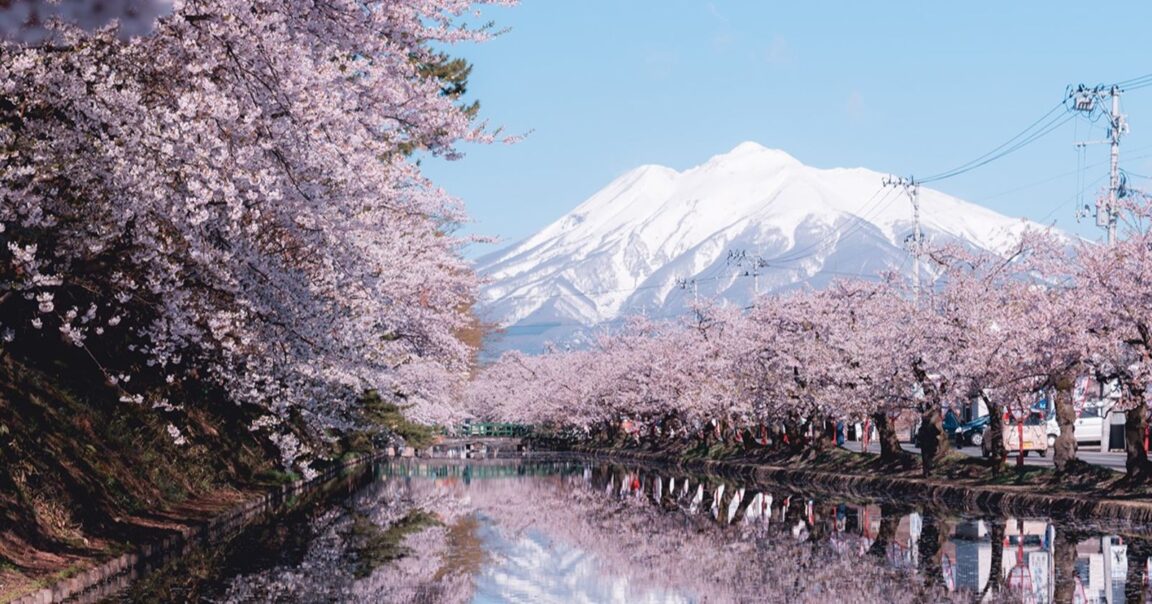
Aomori and Hirosaki, Aomori. This is the strongest late April fallback on Honshu. Aomori’s average first bloom is around 22 April, and Hirosaki Park, about 40 minutes from Aomori city, holds roughly 2,600 cherry trees of many varieties around Hirosaki Castle, according to JNTO’s Tohoku viewing guide. Different varieties extend the display, and when petals fall they cover the castle moats in the pink rafts known as hanaikada, so Hirosaki still rewards a visit a few days after full bloom. The town’s cherry blossom festival runs from late April into early May. Access is straightforward: shinkansen to Shin-Aomori, then a local train to Hirosaki.
Hakodate and Sapporo, Hokkaido. The final fallback is Hokkaido. Hakodate, with the star-shaped Goryokaku fort and its moat ringed with cherry trees, typically blooms in late April. Sapporo, the island’s capital, averages first bloom around 1 May and full bloom in the days after, which makes it a genuine early May option for a trip that starts in late April. Two cautions apply. First, those dates overlap Golden Week, the cluster of national holidays from late April into early May when domestic travel peaks and trains and hotels fill, so Hokkaido rooms for that week should be booked early, on cancellable terms. Second, in an early season Hokkaido can bloom well ahead of its average, as it did in the recent season JNTO records, so even the last fallback needs the forecast check in the final fortnight.
Which refundable rates are actually worth paying for?
Flexibility is not free, and paying for it everywhere wastes money. The skill is placing it where a forecast shift would otherwise hurt most.
Pay for flexibility on accommodation in the fallback cities. A cancellable room in Sendai, Hirosaki or Sapporo that may never be used is the core insurance policy of this whole plan, and a modest premium over the non-refundable rate is usually worth it there. The same applies to the final nights of the main base: if Tokyo or Kyoto peaks early, the ability to leave a day sooner and head north without forfeiting those nights is what turns a forecast update into an itinerary change instead of a loss. Read the cancellation deadline, not just the label. A rate that is refundable only until a month before arrival gives little protection against a March forecast shift, so prefer deadlines measured in days before check-in.
Pay less for flexibility where the plan is already robust. The first nights in the arrival city rarely need to move, because a long-haul arrival date is fixed anyway and early or late blossom still leaves a city full of things to do. Internal rail travel in Japan is comparatively forgiving: reserved seats on shinkansen can generally be changed before departure, and a route that follows the front northward uses ordinary point-to-point tickets or a pass whose value does not depend on one exact day. What deserves care is any prepaid, date-specific product, such as a timed-entry attraction ticket or a special event, which should be booked late, once the order of cities settles, rather than early for a small discount.
Keep a short written version of both variants, with cancellation deadlines beside each booking, so a March update becomes a quick decision. For carrying kit across a shifting multi-city itinerary, see What to Pack for Japan in Spring: A Carry-On System for Cherry Blossom Season.
What does a flexible April itinerary actually look like?
One workable structure for a first April trip runs like this. Arrive in Tokyo for four or five nights in late March or the first days of April, on a rate that allows the stay to be shortened by a night. Hold Kyoto as an optional two or three night extension rather than a fixed second base, since its timing is close to Tokyo’s and it adds little insurance. Book Sendai for two nights in the second week of April on cancellable terms, as the first fallback. Then hold two further nights that can be placed in Hirosaki or Sapporo in late April, booked cancellable and confirmed or released once the Tohoku forecasts firm up in March.
In an average season, that structure catches Tokyo near full bloom, uses Sendai as a second, distinct city rather than an emergency, and ends with a northern display. In an early season, the Tokyo stay shortens, Sendai moves forward, and the northern nights are used earlier or released. In a late season, Tokyo and Kyoto fill the extra days comfortably, and the northern leg still lands inside its window. The point is not the specific cities. It is that no single forecast, early or late, breaks the trip.
Frequently Asked Questions
When do Japan’s cherry blossom forecasts come out?
Private forecasters, including the Japan Meteorological Corporation, Weathernews and the Japan Weather Association, typically publish their first nationwide forecasts in January and update them repeatedly through the season. JNTO republishes the Japan Weather Association forecast in English. The Japan Meteorological Agency no longer issues forecasts; it records the official observed first bloom and full bloom dates.
What is the difference between kaika and mankai?
Kaika is first bloom, declared when five or six flowers have opened on a city’s designated sample tree. Mankai is full bloom, declared when about 80 percent of that tree’s buds are open. Full bloom usually follows first bloom by about a week, a little faster in the north, and the best viewing runs from around full bloom for roughly a week, weather permitting.
Where can I still see cherry blossom in late April?
Typically in northern Honshu and Hokkaido. Aomori and Hirosaki average first bloom around 22 April, Hakodate follows in late April, and Sapporo averages first bloom around 1 May. These are long-term averages, not predictions, and an early season can pull each of them forward, so check the updated forecast before committing to the journey north.
Is it worth paying for refundable hotel rates for a blossom trip?
For the fallback cities and the final nights of the main base, generally yes, because those are the bookings a forecast shift is most likely to move. Check the cancellation deadline as well as the headline rate: protection that expires a month before arrival does little against a March update. For the first nights in the arrival city, a cheaper fixed rate is a more reasonable gamble.
Can I rely on the long-term average dates when I book?
Use them to choose the shape of the trip, not to fix a single day. Averages such as 24 March for Tokyo’s first bloom or 1 May for Sapporo’s describe the centre of a range. Individual seasons have run a week or more early, and others late, which is why this guide pairs the averages with fallback cities and cancellable bookings rather than presenting any average as a promise.
Image: Cherry blossom lining the water at Hirosaki, Aomori, with snow-capped Mount Iwaki behind. Photo via the Japan National Tourism Organization (JNTO, japan.travel), used with credit.