 Kwame Mensah
A Lake Placid winter weekend works because everything is close: the Olympic Center and its museum on Main Street, the speed skating oval in front of the school, Mirror Lake’s ice a few steps from the shops, and the ski jumps, bobsled track and Whiteface Mountain all within a short drive. This is the only place in North America to have hosted two Winter Olympics, in 1932 and 1980, and unusually, the venues never became ruins. They are working sports sites you can skate on, ride down and ride up, wrapped around a small Adirondack village that knows how to feed and warm you between them. Plan two days around the venues, keep the lake ice for the hours in between, and let the mountains set the edges of the trip.
Quick Facts
Village: Lake Placid, in the Adirondack Park, New York, on the shore of Mirror Lake. The larger Lake Placid lake lies just north of the village.
Olympic history: Host of the 1932 and 1980 Winter Olympic Games. The 1980 Herb Brooks Arena inside the Olympic Center is the site of the Miracle on Ice hockey game.
Legacy sites: The Olympic Center and museum, the Olympic Jumping Complex, Mt Van Hoevenberg, and Whiteface Mountain, managed as the Lake Placid Legacy Sites by the Olympic Regional Development Authority (ORDA).
Money saver: New York State’s Olympic sites pages promote an Olympic Sites Passport giving access to every Olympic site; check the current price and inclusions before you go.
Mirror Lake ice: In winter the frozen lake carries skating areas, hockey, dog-sled rides and the toboggan chute when ice conditions allow. Conditions decide, every week.
Getting there: A scenic drive on State Routes 73 and 86 for most visitors. Adirondack Regional Airport at Saranac Lake is the nearest commercial airport.
Day one: the Olympic Center, the oval and Main Street
Start at the Olympic Center, because it orients everything else. The complex holds the 1980 Herb Brooks Arena, the 1932 Jack Shea Arena and the Lake Placid Olympic Museum, and the village’s official Lake Placid Olympic sites guide is the right first read for what is open on your dates. The museum does the memory work: torches, uniforms and memorabilia from both Lake Placid Games, in the building where the 1980 United States hockey team beat the Soviet Union in the Miracle on Ice. Give it a proper hour rather than a lap. Outside the front door, the James C. Sheffield Speed Skating Oval is where Eric Heiden won five gold medals in 1980, and public skating on the oval, under the lights in the evening, is the single most Lake Placid thing a visitor can do. Skating where the Games happened, on a full-size oval rather than a rink, recalibrates what you thought skating felt like.
Main Street carries the rest of the day without effort. It runs along Mirror Lake, so lunch, gear shops and coffee all come with the lake in view, and the winter rhythm is simple: venue in the morning, street and lake in the afternoon, oval or a game in the evening. Travellers stringing Lake Placid into a longer upstate trip will find the village pairs naturally with the Finger Lakes winter gorge trails to the west and the Hudson Valley three-day rail itinerary on the way back toward the city.
Day two: the jumps, the mountain and the track
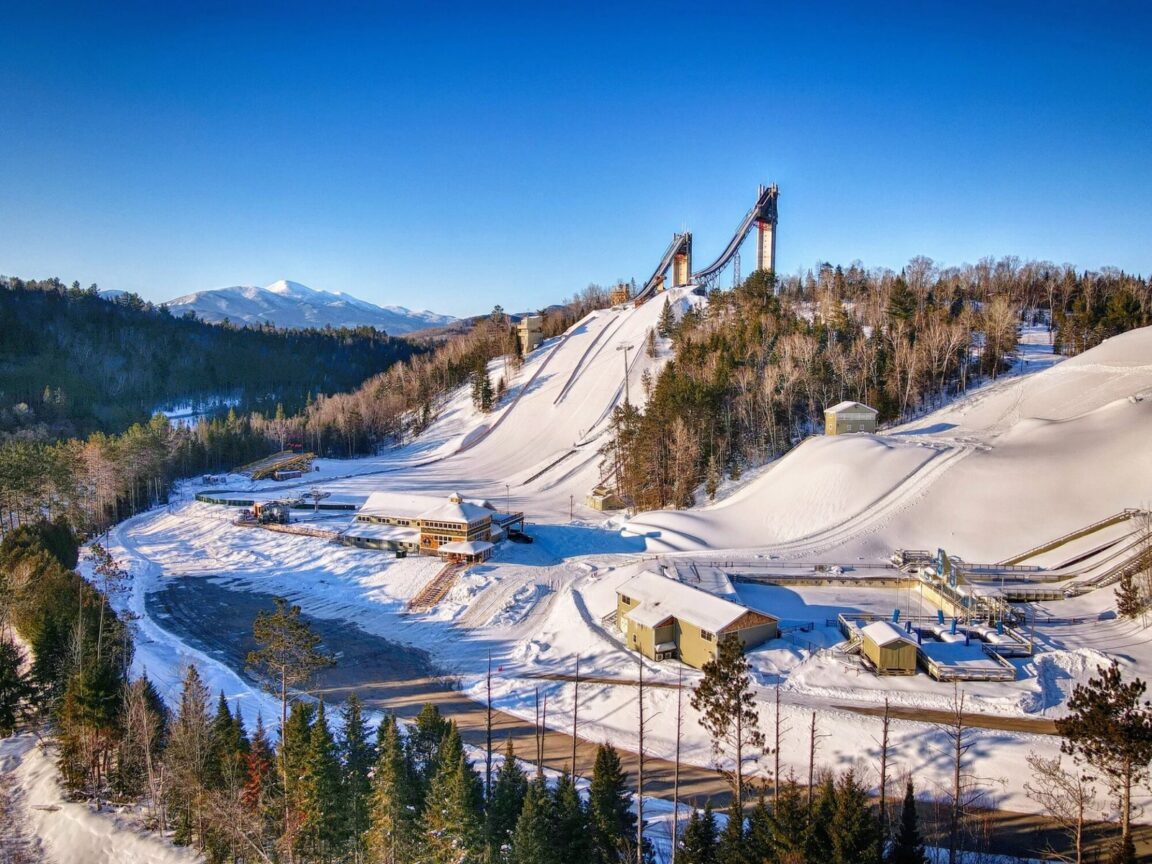
The Olympic Jumping Complex is the weekend’s vertical moment. The twin ski jumps rise outside the village, and the complex pairs a gondola ride up the landing hill with an elevator to the top of the tallest tower, where the view down the jump, across to Whiteface Mountain, explains ski jumping better than any broadcast. New York State’s Olympic and ski areas pages list the jumping complex alongside the state’s other Olympic venues and promote the passport that bundles them. In winter, training and competition schedules mean you may watch jumpers fly rather than only imagine them; check the calendar before you fix your day.
Mt Van Hoevenberg, the Olympic Sports Complex, is the adrenaline site: the combined bobsled, luge and skeleton track, cross-country ski trails, and winter experiences that put visitors on the track with professional drivers. The village’s Olympic Sports Complex pages carry the current experience list and booking. Whiteface Mountain, the 1980 alpine venue a short drive away in Wilmington, is the ski day: steep, icy in the honest eastern way, and crowned by views over the High Peaks and Lake Placid itself. A weekend visitor should choose between a Whiteface ski day and a venues day rather than compressing both, and groups splitting the difference can borrow the cost-sharing approach from our Catskills group friends trip guide, or base the mountain half at a lodge in the style of Scribner’s Catskill Lodge further south.
The lake ice, and the Adirondacks beyond the venues
Mirror Lake is the village’s winter living room. When the ice is thick enough, and local authorities judge that weekly, the lake carries cleared skating areas, pond hockey, dog-sled rides along the shore and the toboggan chute, a converted ski jump that sends sleds out onto the lake ice from the Main Street side. None of it is guaranteed on a given weekend, and that is the correct way to hold it: plan the venues as certainties and the lake as the bonus that fills the gaps. The walk around Mirror Lake, about 2.7 miles on the sidewalk loop, works in any conditions and gives you the village, the ice and the High Peaks in one circuit.
For the Adirondack half of the title, winter hiking here is a serious undertaking, not a stroll: High Peaks trails in winter demand snowshoes or skis, traction, short daylight planning and genuine cold-weather competence. The rewarding middle ground is snowshoeing and cross-country skiing on the groomed trail systems around the village and at Van Hoevenberg, where the effort is real and the margin for error is humane. Baseball-minded travellers detouring in summer should note Cooperstown beyond the Hall of Fame for the return trip, and anyone connecting through the city in snow should read our New York winter transport guide before they trust a tight connection.
Where to stay, and how the weekend fits together
Stay in the village, on or just off Main Street, and the whole weekend becomes walkable: the Olympic Center, the oval, the museum, the toboggan chute and the Mirror Lake loop are all within an easy stroll, and the legacy sites run shuttles and short drives from there. Lakefront properties on Mirror Lake put the ice outside your window; the village’s larger resort hotels add pools and spas for the post-venue hours; and smaller inns on the side streets trade facilities for quiet. Book early for the marquee winter weekends, when hockey tournaments, skating events and ski races can fill the village, and check the Legacy Sites calendar before you choose your dates, because a competition weekend changes both the crowds and the chance to watch athletes rather than empty venues. Eat where the village eats: Main Street carries the full range from diners and pubs to the fine-dining rooms of the lakefront resorts, and a weekend is long enough to work through a farm-to-table dinner, a brewery lunch and at least one pancake breakfast without repeating yourself. Build the two days loosely: venues in the mornings when they are quietest and the light is best on the jumps, the lake and the street in the afternoons, and the oval or an evening event after dark. That rhythm, more than any single sight, is what makes Lake Placid feel like a winter capital rather than a museum of two famous winters.
Frequently Asked Questions
How many days do you need in Lake Placid in winter?
Two full days covers the Olympic Center and museum, the oval, the jumping complex and either a Whiteface ski day or the Mt Van Hoevenberg experiences, with Mirror Lake filling the gaps. Three days lets you add a proper snowshoe or cross-country day.
What is the Olympic Sites Passport?
A bundled pass promoted on New York State’s Olympic sites pages, giving access to every Olympic site. Prices and inclusions change, so verify the current offer before your trip and compare it with the single-site tickets for the venues you will actually visit.
Can you skate on Mirror Lake?
When ice conditions allow, yes: cleared skating areas, hockey and other lake activities operate in mid-winter, alongside dog-sled rides and the toboggan chute. Ice is judged locally and weekly, so treat lake activities as conditions-dependent.
Where was the Miracle on Ice played?
In the arena inside the Olympic Center on Main Street, now named the Herb Brooks Arena, during the 1980 Winter Olympics. The Lake Placid Olympic Museum is in the same complex.
Is Lake Placid only about the Olympics?
No. The venues anchor the weekend, but the village itself, Mirror Lake, Whiteface and the surrounding Adirondack trail systems carry a trip on their own. The Olympics are the frame, not the whole picture.
Featured image: The Olympic ski jumps in winter at the Lake Placid Olympic Jumping Complex, with Whiteface Mountain behind, via Lake Placid’s official visitor site (lakeplacid.com).