 Kwame Mensah
From Port Douglas, snorkel the outer reef, not the fringing shore: the boats that leave the Crystalbrook Superyacht Marina each morning run to ribbon reefs and platform sites on the outer Great Barrier Reef, where the coral, the visibility and the fish life are in a different class from anything reachable from the beach. For a first trip, choose a full-day outer reef boat with a stable platform or a small-group snorkel vessel, go between May and October if your dates are flexible, and treat seasickness prevention as part of the ticket price, because the crossing, not the snorkelling, is where most first days go wrong.
Quick Facts
Departure point: Crystalbrook Superyacht Marina, Port Douglas, Queensland, about an hour north of Cairns by road.
Where the boats go: Outer reef sites, including the Agincourt ribbon reefs, reached in roughly 45 to 90 minutes offshore.
Best season: The dry season, May to October, with calmer crossings and visibility often exceeding 20 to 30 metres on the outer reef.
Stinger season: Roughly November to May in tropical North Queensland. Operators supply stinger suits; the risk is concentrated in inshore waters, not the outer reef.
First-timer format: A platform day gives you snorkelling plus a semi-submersible, an underwater observatory and a stable base. A small snorkel-only boat gives you more sites and fewer people.
Seasickness rule: Take medication before departure, not after the swell starts. Once you feel ill on the crossing, options narrow fast.
Why Port Douglas, and why the outer reef
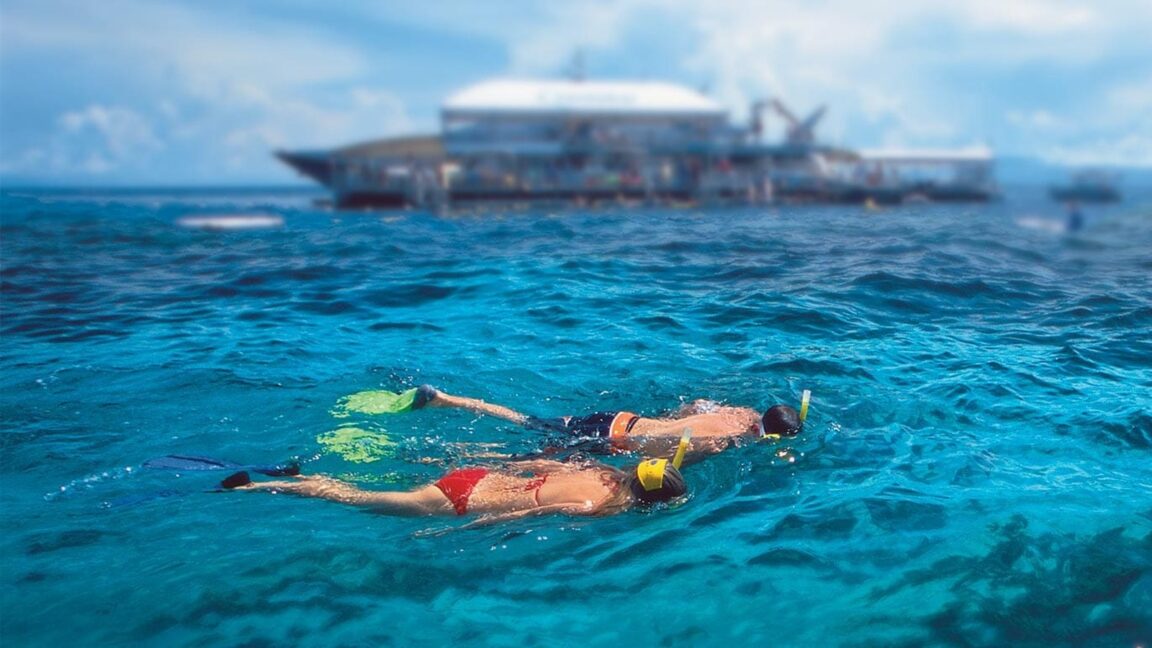
Port Douglas earns its reef reputation on geography. The town sits closer to the outer reef edge than Cairns does, and its fleet, led by long-running operators such as Quicksilver’s Port Douglas reef tours, runs to the Agincourt ribbon reefs, a chain of small, pristine reefs along the continental shelf edge. Ribbon reefs matter to a snorkeller because the water moving along the shelf keeps them clear and well fed: hard coral gardens in shallow water, drop-offs for confident swimmers, and regular encounters with turtles, reef sharks at a respectful distance, and dense schools of reef fish. Quicksilver’s own description of Agincourt calls it a jewel-like ribbon reef on the very edge of the Great Barrier Reef, and its platform there is the classic first-timer setup: a spacious activity platform moored at the reef, with snorkelling straight off it, a semi-submersible coral viewer, an underwater observatory and lunch served on board the platform.
The alternative formats suit different swimmers. Small-group snorkel vessels visit two or three outer sites in a day and keep numbers low, which strong swimmers usually prefer. Low Isles, the coral cay much closer to shore, offers a gentler, shallower day with a beach and a lagoon, and is the honest recommendation for nervous beginners and young families. What all of these share is the outer reef principle: the further from the coast, the clearer the water and the healthier the coral tends to be. Travellers building a wider Queensland and New South Wales coast trip can pair a reef day with the Byron Bay hinterland rail trail further south, and anyone extending to Sydney should time the Sydney Opera House tour for a clear morning.
Choosing your reef sites like a snorkeller, not a brochure
Ask three questions before you book. First, how many sites? Two or three distinct sites beat one long stop for most snorkellers, because reef character changes fast: a coral garden, a bommie field and a sandy lagoon edge can sit within a short boat ride of each other. Second, who is in the water with you? A marine biologist on board, guided snorkel tours at the site, and a proper reef talk on the way out all raise the value of the day far more than a slightly bigger lunch. Third, what is the platform for? A moored platform is not a lesser experience; it is a different one. It gives non-swimmers the semi-submersible and observatory, gives everyone a stable base in a swell, and still puts snorkellers on excellent reef. Pure snorkel boats skip the platform and spend the saved time in the water.
Conditions should have the last word. Visit Port Douglas’s reef visitor information sets out the seasonal pattern plainly: the dry season, May to October, usually brings calmer crossings, lower humidity and the best visibility, while the wet season, November to April, brings warmer water, more rain and more variable seas. Neither season closes the reef. Tours run all year, and a fine wet-season day can be superb. The practical move is to book your reef day early in your stay, leaving a spare day to rebook if the weather turns, a habit worth copying from our Overland Track walking guide, where Tasmanian weather makes the same argument.
Stinger season, explained without the scare stories
Marine stinger season in tropical North Queensland runs roughly from November to May, when box jellyfish and Irukandji jellyfish are most prevalent in warm, shallow, inshore waters. The key fact for a Port Douglas snorkeller is the geography of the risk: stingers concentrate in coastal and inshore water, and box jellyfish are far less common on the outer reef, where your tour actually goes. Irukandji can occur around the reef and islands too, which is why the protocol exists rather than being optional. In season, reef operators provide full-body stinger suits, also called lycra suits or dive skins, and wearing one is simply what you do, in the same spirit as a seatbelt. The detailed safety guidance collected in the Great Barrier Reef stinger season guide, which follows Surf Life Saving Queensland and Queensland Health advice, adds the mainland rules: swim inside stinger enclosures at beaches in season, and know that vinegar, stocked at patrolled beaches, is the first response for a tropical sting while emergency help is called.
Outside the water, the same season logic shapes the rest of a Port Douglas stay. Four Mile Beach is for walking and sunrise in stinger season unless the netted enclosure is operating and you stay inside it. Your hotel pool will do heavy work from November to April. None of this should cancel a wet-season trip; it should just be priced into it, the way travellers weigh the seasons in our New Zealand month-by-month guide before committing to dates.
Seasickness smarts: the crossing decides your day
The reef sits 45 to 90 minutes offshore, and the Coral Sea does not always lie flat. Seasickness is the single most common reason a first reef day disappoints, and it is largely preventable. Take anti-seasickness medication before the boat leaves, following the product’s timing, rather than waiting to see how you feel. Eat a plain breakfast, avoid a heavy night before, and claim a seat outside in the fresh air, mid-ship where the boat moves least, with your eyes on the horizon. Ginger helps some travellers as a supplement, not a substitute. On board, the warning signs are quietness, yawning and a sudden indifference to the reef talk; act at the first one by getting outside and looking at the horizon. Crew see this daily and would rather help early than late.
Once you are in the water, most people feel better fast: floating flat with your face down is a stable, horizon-free position, and the snorkelling itself is the cure for the crossing. If you know you are badly susceptible, choose the platform format on the biggest, fastest catamaran available, travel in the dry season when crossings are calmest, and consider the Low Isles day, which shortens the open-water leg considerably. Working holiday travellers planning a longer Queensland base should also read the current rules in our Australia working holiday visa explainer before they build a season around reef work, and solo travellers will find the after-dark transport judgment in our Melbourne solo women’s laneways guide transfers well to a Port Douglas evening.
Frequently Asked Questions
What is the best month to snorkel the Great Barrier Reef from Port Douglas?
June to October, in the heart of the dry season, offers the calmest crossings and the clearest water. May and October are excellent shoulder months. The reef operates all year, but November to April adds stinger suits, warmer water and less predictable seas.
Do I need to wear a stinger suit?
In stinger season, roughly November to May, yes: operators provide lycra stinger suits and expect snorkellers to wear them. The main risk is inshore, but Irukandji can occur at the reef, so the suit is standard practice, not a warning sign.
Platform tour or small snorkel boat for a first timer?
Confident swimmers usually get more from a small-group snorkel boat visiting several outer sites. Nervous swimmers, mixed groups and anyone travelling with non-swimmers get more from a platform day, where the semi-submersible and observatory keep everyone on the reef.
How do I avoid seasickness on a reef trip?
Medicate before departure, sit mid-ship outside, watch the horizon, eat lightly and speak to the crew at the first symptom. Booking in the dry season and leaving a spare day to move your trip in bad weather both help.
Can beginners snorkel the outer reef?
Yes. Flotation aids, guided snorkel tours, rest stations and shallow coral gardens close to the platform or boat make the outer reef accessible to beginners, and crew are in the water with you. Low Isles is the gentlest alternative.
Featured image: Snorkellers over the reef at Agincourt Reef with the Quicksilver platform behind them, via Quicksilver Cruises (quicksilver-cruises.com), the Port Douglas reef operator’s official website.