 Jonas Lindqvist
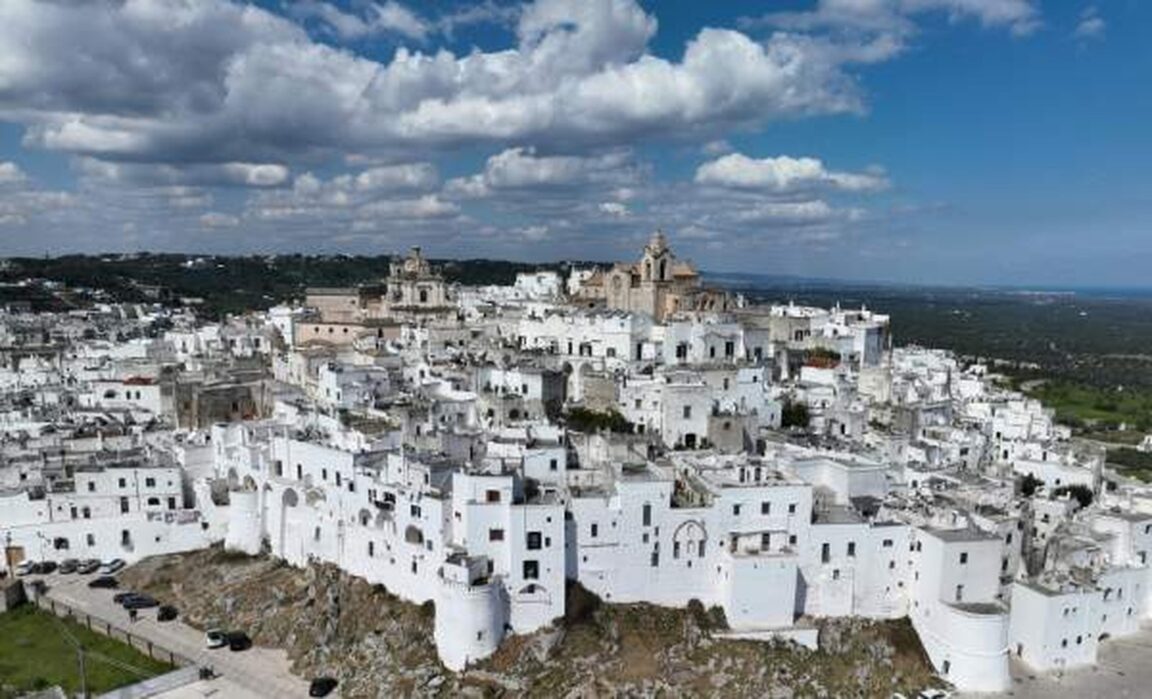
Go to Ostuni because it is the most complete hill town base in this part of Puglia: a whitewashed old town stacked on a hill above one of Italy’s great olive plains, a 15th century cathedral with a rose window of 24 carved rays at its summit, and an Adriatic coast of dune beaches, rocky coves and a protected marine reserve about 8 kilometres below. Stay in the old town or in a masseria among the olives, spend mornings in the lanes before the heat builds, and treat the sea as a daily excursion rather than a walk. The honest caveat comes first: Ostuni is not a beach town, and anyone who books it expecting to stroll to the sand has misread the map.
Quick Facts
- The nickname: La Citta Bianca, the White City, for the lime washed old town maintained by local practice and ordinance, visible across the olive plain from kilometres away.
- The setting: A hilltop old town in the province of Brindisi, about 8 kilometres inland from the Adriatic, above a plain of olive groves at the edge of the Valle d’Itria.
- The cathedral: The Concattedrale di Santa Maria Assunta, rebuilt in Gothic style in the 15th century, completed in 1495, with one of the largest rose windows in Italy, carved with 24 rays.
- The museum piece: The Dama di Ostuni, a Palaeolithic burial of a young woman dated to about 25,000 years ago, found in 1991 in the Santa Maria d’Agnano cave and displayed in the town’s museum of pre classical civilisations.
- The beaches: Pilone for dunes and shallow water, Rosa Marina for organised beach clubs, Costa Merlata for rocky coves, and Torre Guaceto for a protected, undeveloped reserve shoreline.
- Driving rule: The old town is a limited traffic zone, a ZTL. Park outside the walls and walk in.
- Nearest airport: Brindisi, roughly 30 to 40 minutes by road, with Bari as the larger alternative about an hour north.
Why is Ostuni white, and why does it matter?
The whitewash is functional before it is photogenic. Lime wash made from local stone reflects the fierce Puglian summer heat, keeps interiors cooler, and has natural antiseptic properties that made it a public health tool in past centuries, including plague years. The practice hardened into identity and then into local rules, so the historic centre is still repainted as one composition: walls, lanes and staircases in a dozen tones of white that shift from blue white in morning shade to gold in the last hour of light.
That single colour is what makes the town legible. From the plain below, Ostuni reads as one white object on its hill, cathedral at the apex, rings of houses cascading down. Inside, the same whiteness turns the old town into a light trap where every coloured door, geranium pot and cafe awning stands out. Photographers should plan around it: the lanes are at their best before about 09:00 and the town seen from outside is at its best in the last hour before sunset, while the midday hours flatten everything into glare.
What should you see in the old town?
Start at Piazza della Liberta, the main square at the foot of the old town, with the town hall in a former monastery, the church of San Francesco d’Assisi and the baroque column of Sant’Oronzo, the town’s patron saint. From there, Via Cattedrale is the one street that climbs directly to the cathedral, lined with shops selling olive oil, wine and local craft. Everything else is a defensive spiral of lanes, arches and dead ends built without a modern plan, and getting briefly lost in it is the correct way to see it.
At the top, the cathedral rewards the climb. The Concattedrale di Santa Maria Assunta was rebuilt in Gothic style in the 15th century, a hybrid facade of Gothic bones with Romanesque and Byzantine detail in pale limestone that deliberately stands apart from the whitewash around it. The rose window, with 24 finely carved rays around a central Christ, is among the largest in Italy and is the single finest piece of stonework in town. Entry has been reported as free, but current opening hours could not be confirmed from a primary source, so check locally on the day and do not build a tight schedule around getting inside. Pass through the Arco Scoppa, the decorative arch linking the bishop’s palace and the seminary, on your way to the viewpoints along the old walls, where the olive plain runs to a thin line of Adriatic.
Allow time for the Museo di Civilta Preclassiche della Murgia Meridionale, the town museum in the former Carmelite monastery complex. Its headline exhibit is the Dama di Ostuni, the roughly 25,000 year old burial of a young pregnant woman discovered in 1991 in the Grotta di Santa Maria d’Agnano outside town, one of the most significant Palaeolithic finds in Europe. It is the sight that lifts Ostuni from pretty to important, and it is the one many day visitors miss entirely.
How do the olive plains shape a stay?
Below the walls, the plain is a working landscape of olive groves, some of the trees centuries old and massive, farmed for oil that has been Puglia’s wealth for far longer than tourism. The masseria, the fortified farmhouse of the region, is the rural counterpart to the town house: thick walls, a courtyard, and groves running to the horizon. Many masserie now take guests or serve meals, and an olive oil tasting or a lunch among the trees is the essential countryside half day from Ostuni, best booked directly with the property.
Choosing where to sleep is therefore a real decision. The old town offers atmosphere, restaurants on your doorstep and no need for a car in the evenings, at the cost of stairs, ZTL parking logistics and summer noise. A masseria offers space, a pool and the grove setting, at the cost of driving in for dinner. Either base works, and the same slow base logic used for the eastern Algarve base at Tavira applies here: pick the base that matches your evenings, then day trip for the rest.
Which beach should you choose?
Ostuni’s coast begins about 8 kilometres from the old town, so every beach is a short drive or bus ride, and each stretch suits a different day. Pilone, the closest of the main options, is a dune backed sandy beach with shallow, clear water that suits families and long swims. Rosa Marina is the organised shore of beach clubs, lidos and facilities. Costa Merlata is the rocky alternative, an indented coast of small coves and deeper, very clear water better for confident swimmers and snorkellers than for toddlers.
Torre Guaceto, about 20 minutes up the coast, is the standout for nature: a protected marine and land reserve of dunes, Mediterranean scrub and an old coastal watchtower, with no beach club strip and restrictions that protect the shoreline. In peak season the reserve manages access and parking, so arrive early and check the reserve’s current arrangements before setting out. Travelers who enjoy the protected citadel atmosphere of Sighisoara in Romania will find the same principle at work here, applied to a coastline instead of a town.
How do you shape a day in Ostuni?
Walk the lanes early, while they are empty and the light is sideways, and be at the cathedral square before the day groups. Take coffee in Piazza della Liberta, visit the museum late in the morning, then choose your afternoon: the beach, with a swim at Pilone or Torre Guaceto, or the groves, with a masseria lunch and oil tasting. Return for the passeggiata hour, when the white lanes cool, the viewpoints along the walls catch the last light over the plain, and the restaurants along Via Cattedrale and around the square fill. With a second day, the Valle d’Itria towns are the natural circuit: Cisternino and Locorotondo are close, and the trulli of Alberobello, a UNESCO World Heritage Site, are roughly 40 minutes by car.
Frequently Asked Questions
Is Ostuni on the beach?
No. Ostuni sits on a hill about 8 kilometres inland. Its coast, with Pilone, Rosa Marina and Costa Merlata, is a short drive or bus ride away, and the Torre Guaceto reserve is about 20 minutes by road.
Why is Ostuni called the White City?
Because the entire old town is lime washed white, a practice rooted in heat reflection and the antiseptic properties of lime, maintained today by local custom and ordinance. The white mass of the town on its hill is visible across the olive plain.
What is the one sight not to miss?
The cathedral and its rose window of 24 carved rays at the top of the old town, and the Dama di Ostuni in the town museum, a Palaeolithic burial dated to about 25,000 years ago and found in a cave near the town in 1991.
Can you drive into the old town?
No. The historic centre is a limited traffic zone, a ZTL, enforced by cameras. Park outside the walls and walk in, and expect stairs and steep lanes inside.
Is Ostuni a good base for Puglia?
Yes, for the Valle d’Itria and the Brindisi coast. Alberobello is roughly 40 minutes by car, Cisternino and Locorotondo are closer, Brindisi airport is roughly 30 to 40 minutes, and Bari is about an hour north.
Facts checked 15 November 2026 against current Ostuni guides and reference material, including the cathedral’s 15th century Gothic rebuild and 24 ray rose window, the 1991 discovery and dating of the Dama di Ostuni, and published beach and distance references. Cathedral opening hours could not be confirmed from a primary source and are deliberately not stated.