 Elena Vasquez
Stay in Durnstein itself if your Wachau plan is the abbey, the castle ruin and slow evenings on the Danube, and stay in Krems if you want trains, choice and lower prices. That is the short answer to where to stay in Durnstein and the Wachau: the valley is only about 40 kilometres long between Krems and Melk, so your base decides your evenings and your logistics far more than your sightseeing, which is shared across the same string of wine villages either way. This guide matches each base to the trip it suits.
Quick Facts
- Setting: Durnstein is a small wine town on the north bank of the Danube in the Wachau Cultural Landscape, a UNESCO World Heritage Site since 2000.
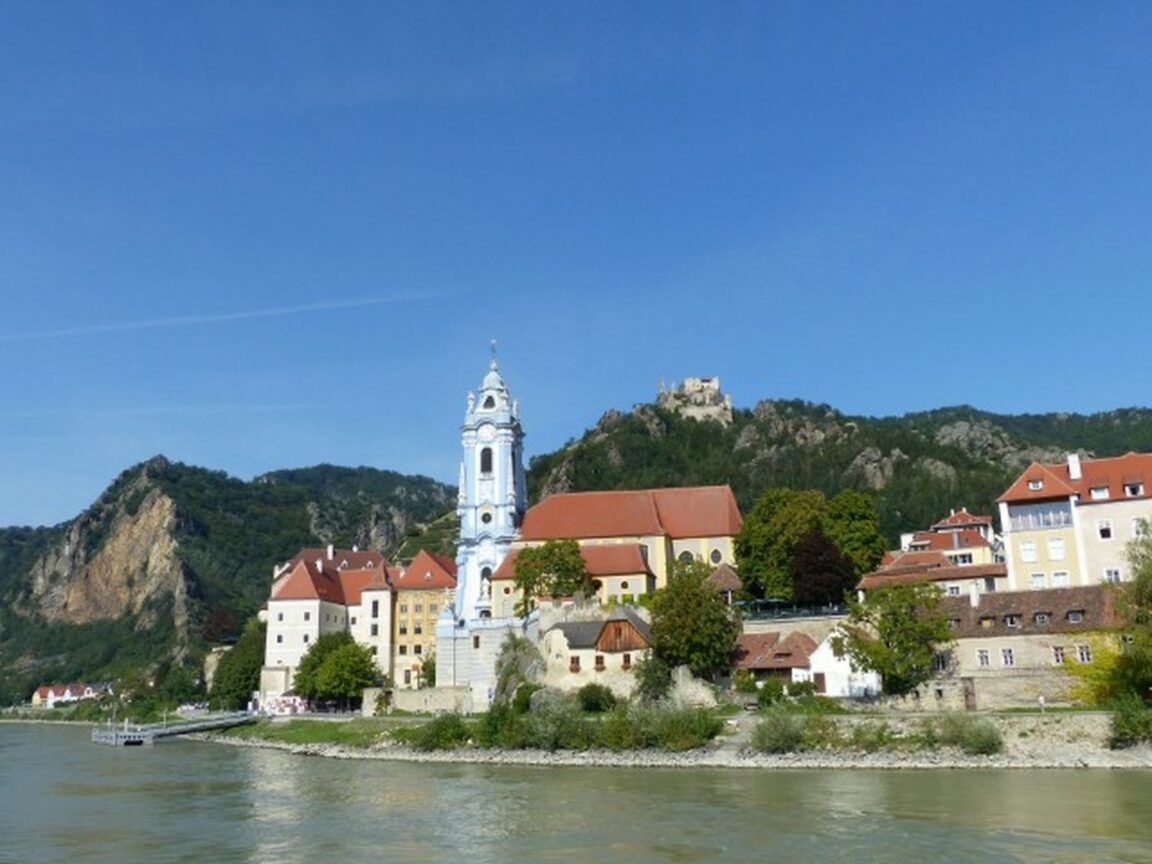
- Landmarks: The blue and white tower of Durnstein Abbey, founded by Augustinian canons in 1410 and rebuilt in Baroque style, and the ruined castle above the town where Richard the Lionheart was held in 1192 to 1193.
- Valley length: About 40 kilometres between Krems an der Donau and Melk, with no road bridges across the Danube inside the valley itself; crossings are by small ferries.
- Wine: Steep terraced vineyards producing mainly Gruner Veltliner and Riesling, classified under the Steinfeder, Federspiel and Smaragd categories, plus famous Wachau apricots.
- Getting around: The Danube cycle path runs through the town, the Wachau railway links Krems with the valley villages, and river cruise ships call in season.
- Best bases: Durnstein for atmosphere, Weissenkirchen and Spitz for village quiet and wine taverns, Krems for transport and choice, Melk for the abbey and onward trains.
What is it like staying in Durnstein itself?
Durnstein is the postcard base: one main lane of wine coloured houses under the blue abbey tower, vineyards rising behind the roofs and the castle ruin on its rock above. Staying here means the day trip and cruise crowds leave you the town in the early morning and evening, which is when the lane, the abbey terrace and the riverside path are at their best. The premium address in town is Hotel Schloss Durnstein, a former Renaissance castle on the river with a terrace over the Danube, and there is a small stock of family hotels, guesthouses and apartments in and just above the old lanes.
The trade offs are real and worth naming. Durnstein is tiny, so dinner choice is short, parking is limited and charged at the edge of town, and in high season the single main street is busy from mid morning to late afternoon. Prices inside the town run above the valley average for comparable rooms. Choose Durnstein if the place itself is the point of the trip, if you are walking or cycling the valley in stages, or if you have one or two nights and want the Wachau outside your window. For a longer stay with day trips beyond the valley, one of the larger bases below usually works better.
Why do many Wachau visitors base in Krems instead?
Krems, at the eastern gate of the valley about ten minutes drive from Durnstein, is the working town of the Wachau: a population in the tens of thousands, a main rail station with direct trains toward Vienna, supermarkets, a full restaurant scene and a much deeper bench of hotels at every price. Its own old town and neighbouring Stein have wine taverns, the Kunstmeile gallery quarter and a Friday market life that Durnstein cannot match. From Krems, Durnstein is a short bus, taxi, cycle or Wachau railway hop, so you lose little sightseeing and gain easy arrivals and departures.
Krems suits travellers arriving by train, anyone stitching the Wachau into a longer Austria itinerary, and visitors who want to eat somewhere different every night. It is also the sensible base in winter and early spring, when several Durnstein properties close and the valley villages go very quiet. If you are planning a Danube town stay as part of a wider European route, our 3 days in Coimbra itinerary shows the same base logic applied to a Portuguese university city.
What about Weissenkirchen, Spitz and the middle valley?
Weissenkirchen, a few minutes west of Durnstein, is the connoisseur compromise: a genuine wine village with a fortified church, excellent Heurigen wine taverns and guesthouses among the vines, at prices below Durnstein and with more local life in the evenings. Spitz, further west where the valley bends, has a similar profile with its Tausendeimerberg vineyard hill in the middle of the village, a shipping museum and ferry across the Danube to the south bank cycle path. Both villages reward travellers who plan to taste seriously, since many Wachau wine estates are family houses in exactly these villages, pouring their own Federspiel and Smaragd bottles yards from the vines.
Stay in the middle valley if you are cycling the Danube path in short stages, if wine is the main event, or if Durnstein is booked out on your dates, which happens quickly in the apricot blossom weeks of spring, the summer cruise season and the autumn harvest. The honest limit of both villages is transport: buses and the seasonal Wachau railway need checking against your arrival time, and a car makes life noticeably easier here.
Is Melk a good base for Durnstein?
Melk, at the western end of the valley, works for one specific pattern: a trip built around Melk Abbey, the huge Baroque monastery above the town, with the Wachau as a day excursion by boat, bus or bike toward Krems, calling at Spitz, Weissenkirchen and Durnstein in that order. Melk has main line trains, a compact old town under the abbey and a good spread of mid range hotels. River cruises between Melk and Krems are one of the classic Wachau experiences and pass directly below the Durnstein abbey tower and castle ruin, so a Melk base still gives you the defining view of the town, from the water.
Choose Melk if you are travelling between Vienna and Salzburg and can only spare the valley a day, or if abbey visiting ranks above wine village evenings. Skip it if Durnstein itself is your headline, because the last return connections can cut your evening in the town short. For another small town that punches far above its size, see our guide to 2 days in Bergen and its Bryggen waterfront base.
How do the seasons change the choice?
Spring brings apricot blossom, usually around late March into April, and the first full opening of abbey, taverns and cycle hire. Summer is cruise and cycling high season, when Durnstein day crowds peak and booking ahead in every base is essential. Autumn is harvest, with grape picking in the terraces, new wine in the Heurigen and the valley at its most colourful; many Wachau regulars rate it the best season of all. Winter is the quiet exception: the abbey and castle ruin remain striking in low light, but many hotels and taverns close, ferries and the Wachau railway run reduced services, and Krems or Melk become the only bases with a full choice of open doors.
Two practical checks apply in every season. First, confirm whether your property is inside the old lanes, where cars are restricted, or above the town near the car parks, because that decides your luggage walk. Second, if you plan to use the Durnstein ferry or the south bank cycle path, confirm operating days before you build a route around them, since valley ferries are seasonal and weather dependent.
Frequently asked questions
How many nights do you need in Durnstein?
Two nights is the sweet spot: one full day for the abbey, castle ruin and lanes, and one for cycling or cruising to neighbouring villages. One night works as a stop between Vienna and Melk, and three or more suit a wine focused stay based in the middle valley.
Can you visit Durnstein without a car?
Yes. Trains reach Krems and Melk, with buses, the seasonal Wachau railway, river cruises and the Danube cycle path covering the valley between them. A car adds flexibility for the middle valley villages, especially outside summer.
What is Durnstein Abbey and why is its tower blue?
Durnstein Abbey is the former Augustinian monastery founded in 1410 at the edge of the town, rebuilt in Baroque style in the early 18th century. Its blue and white tower, restored to the blue documented in Baroque era records, is the recognised symbol of the whole Wachau.
Why was Richard the Lionheart held at Durnstein?
Richard I of England was captured on his return from the Third Crusade and held in the castle above Durnstein in 1192 to 1193 by Duke Leopold V of Austria, before being handed to the Emperor and ransomed. The castle is now a ruin, reached by a steep path from the town, with wide views over the Danube.
What should you taste in the Wachau?
Dry Gruner Veltliner and Riesling from the terraced vineyards, labelled Steinfeder, Federspiel or Smaragd by ripeness and weight, and apricot everything in season: dumplings, jam, juice and schnapps from the orchards around the villages.
Featured image: Durnstein on the Danube, showing the blue tower of Durnstein Abbey and the castle ruin above the town. Photo by Gabriele Strasky on Unsplash, via the captioned hosted copy at Baboo Travel Stories. Unsplash License.