 Jonas Lindqvist
Five days in Slovenia work as one clean loop with no backtracking: start in Ljubljana, drive northwest to Lake Bled, continue to quieter Lake Bohinj, then turn south to the karst caves, giving Postojna and Škocjan separate days, and finish with a last night in Piran on the short Adriatic coast before the drive back to the capital. Slovenia is small enough that no single leg in this plan is long, which is exactly why the order matters more than the distance: the lakes belong together, the caves do not, and the coast earns its place at the end, when a swim and a slow evening are the right reward for four days of castles, gorges and underground rivers.
Quick Facts
- Route: Ljubljana, Lake Bled, Lake Bohinj, Postojna Cave and Predjama Castle, Škocjan Caves, Piran, in that order.
- Nights: One in Ljubljana, one in Bled, one in the Bohinj valley, one near Postojna or in the karst, and the final night in Piran.
- Driving: Ljubljana to Bled is about 55 km, Bled to Bohinj about 25 km, and Ljubljana to Postojna about 53 km. Check live times before each leg; mountain and summer traffic stretch all of them.
- Book ahead: Cave tour times at Postojna and Škocjan, the pletna boat and Bled Castle in high season, and Piran parking and accommodation in summer.
- Do not combine: Postojna Cave and Škocjan Caves on the same day. They are different experiences and each deserves its own morning.
- Final night logic: Piran is the trip’s only coastal night, placed last so the loop ends at the sea.
Day 1: Ljubljana, the capital as the hub
Begin in Ljubljana, because the capital is both the natural arrival point and the best orientation the country offers. The old town is compact and largely car free along the Ljubljanica river, and a single day covers its essentials without rushing: the Triple Bridge and Prešeren Square, the Central Market colonnades designed by Jože Plečnik, the cathedral, and the climb or funicular to Ljubljana Castle above the town for the view back over the rooftops to the Alps you will be driving into tomorrow. Plečnik’s works in the city, including the Triple Bridge, the market and the National and University Library, were inscribed on the UNESCO World Heritage List in 2021, and seeing them first gives the whole trip its architectural thread.
Keep the evening simple: dinner along the river, an early night, and the car collected or readied for the morning. Ljubljana will also be your departure point at the end of the loop, so anything missed today can be caught in the final hours before a flight, which removes any pressure to overfill this first day.
Day 2: Lake Bled, before Bohinj
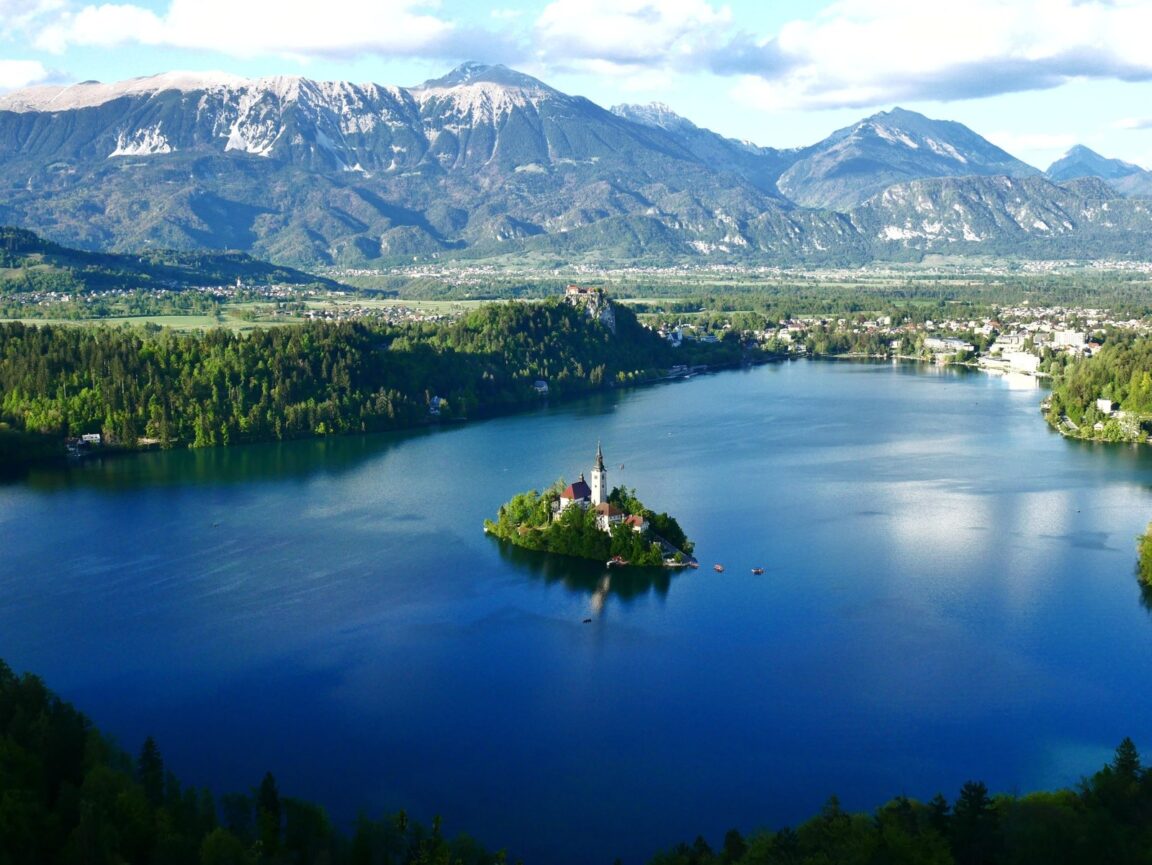
Drive northwest to Bled, about 55 km, and give the famous lake the full day while it is still fresh. The order inside the day matters: walk the lake shore in the morning, take a traditional pletna boat, rowed standing by a local oarsman, out to the island and its Church of the Assumption, then climb to Bled Castle on the cliff above the water for the view that explains the geography of the whole Julian Alps edge. The cream cake known as kremšnita, made in Bled since the 1950s, is the correct afternoon pause, eaten looking at the lake rather than in the car.
Bled before Bohinj is the right sequence for a reason: Bled is the managed, celebrated lake, with its island church and castle doing the postcard work, while Bohinj is the wilder, quieter water inside Triglav National Park. Travellers who reverse them often find Bled anticlimactic. Sleep in Bled tonight so the morning drive is short.
Day 3: Lake Bohinj and the Triglav foothills
Bohinj is about 25 km beyond Bled, and the change of register is immediate: a long glacial lake under steep mountains, the Church of St John the Baptist at its eastern end, and far fewer people. Spend the morning on the lake’s southern shore and at the Savica Waterfall, reached by a stepped path from the western end of the lake, where the Sava Bohinjka emerges from the rock. The Vogel cable car, which rises above the lake’s southern shore, is the fair weather option for the afternoon, giving the high Julian Alps view without a full mountain hike; in poor weather, the lake shore walk and the villages of Stara Fužina and Studor, with their hayracks, are the better plan.
Sleep in the Bohinj valley or begin the turn south in the late afternoon. Tomorrow’s cave day starts near Postojna, and the drive from Bohinj across to the karst is the longest of the trip, so an early start is built into the plan.
Day 4: Postojna Cave and Predjama Castle
Postojna Cave is the first of the two great caves, taken on its own day as the plan requires. The visit runs on the cave’s famous underground railway, in use for well over a century, which carries visitors deep into a system of chambers before the walking section through the stalactite halls, ending with the aquarium that holds the olm, the pale aquatic salamander known locally as the human fish, endemic to this karst. Tours run at set times and the cave keeps a constant cool temperature all year, so carry a layer even in August. Book the tour time in advance on the official Postojna Cave site and check the day’s schedule there.
Pair the cave with Predjama Castle, a short drive away: a Renaissance castle built into the mouth of a cave in a high cliff, which makes the day’s theme, what this limestone landscape does to human building, complete above ground as well as below. Sleep near Postojna or in the karst villages tonight, positioned for tomorrow’s second cave.
Day 5: Škocjan Caves, then the coast at Piran
Škocjan is deliberately a separate day from Postojna, and the difference justifies it within minutes: where Postojna is a decorated cave system toured partly by train, Škocjan is an underground river canyon, where the Reka river runs through a collapsed doline and one of the largest underground chambers in Europe, crossed by a bridge high above the water. It became Slovenia’s first UNESCO World Heritage site in 1986. The guided walk is the only way through, and tour times should be checked on the official Škocjan Caves park site for the day.
From Škocjan the loop turns to the sea. Drive to Piran, the Venetian old town on a narrow point at the top of Slovenia’s short Adriatic coast, for the final night: Tartini Square, the church and bell tower of St George above the rooftops, the walk out to the lighthouse point, and dinner in the lanes behind the harbour. Piran’s old town is effectively car free and parking sits at the town’s edge, so arrive with daylight to spare. The drive back to Ljubljana the following day closes the loop, with the option of a final hour in the capital for anything missed on Day 1. Travellers who like building a European loop in this order, hubs first and the headline sight last, will find the same logic at work in our guide to Córdoba in two days, and the season choosing discipline in our best time to visit Iceland for the northern lights.
Frequently asked questions
Is five days enough for Slovenia?
Yes, for the classic loop: the capital, both alpine lakes, both great caves and the coast fit into five days without a single long drive, because the whole route is only a few hundred kilometres. What five days does not allow is the Soča Valley in depth or the eastern wine country, which need a second trip or two extra days.
Why not do both caves in one day?
Because they are the trip’s two biggest underground experiences and they blur together when combined. Postojna is a show cave with a train and decorated chambers; Škocjan is a wild underground canyon. A day apart, each reads clearly, and the driving also splits naturally.
Should I stay in Bled or Bohinj?
Both, one night each, on this plan. Bled has the castle, the island and the wider choice of places to eat; Bohinj is quieter and sits inside Triglav National Park. Sleeping in only one and day tripping to the other wastes the early morning and evening light that are each lake’s best hours.
Do I need a car for this itinerary?
The loop is designed for a car, and the cave and coast legs are far simpler with one. Ljubljana, Bled and Postojna are all reachable by bus or train, but Bohinj, Škocjan and Piran connect awkwardly by public transport within a five day limit.
When is the best time to go?
Late spring and early autumn give the balance: open mountain roads, swimmable sea at Piran and thinner crowds at Bled and the caves. July and August are fine but need everything booked ahead; winter shortens the Bohinj day and can close high roads.
Where does the trip start and end?
In Ljubljana both times. The loop is drawn so that no leg repeats: northwest to the lakes, south to the caves, west to the coast, then back northeast to the capital.
Featured image: Lake Bled, Slovenia, with its island church. Photo by Jaka Škrlep, via Unsplash (Unsplash License), hosted copy via Traveler Master.