 Kwame Mensah
You can cross most of New York State without a car, and the Hudson Valley in particular is one of the best rail-served landscapes in America, provided you build the trip around the three systems that actually carry it: Metro-North’s Hudson Line from Grand Central to Poughkeepsie for the river towns, Amtrak’s Empire Service from Penn Station for Albany and the run west to Syracuse, Rochester, Buffalo and Niagara Falls, and Trailways and county buses for the mountain and lake towns the trains pass by. The Catskills, the Finger Lakes wine trails and the Adirondacks are all reachable, but each one is a train-plus-bus or train-plus-planning exercise rather than a single seat. This guide maps which routes genuinely work for visitors, where the gaps are, and how to chain the pieces without stranding yourself at a rural station on a Sunday evening.
Quick Facts
The spine: Metro-North Hudson Line, Grand Central Terminal to Poughkeepsie, serving Tarrytown, Croton-Harmon, Cold Spring, Beacon and Poughkeepsie.
The long haul: Amtrak Empire Service, New York Penn Station to Albany-Rensselaer in about two and a half hours, continuing west to Schenectady, Utica, Syracuse, Rochester, Buffalo and Niagara Falls.
The north: Amtrak’s Adirondack runs from New York toward Montreal through Saratoga Springs and along Lake Champlain; the Ethan Allen Express serves Saratoga and continues to Burlington, Vermont.
The gaps: The Catskills interior, most Finger Lakes wine trails and Adirondack trailheads need a bus leg, a tour or a local taxi from the railhead. There is no train to Ithaca, Woodstock or Lake Placid.
The bus layer: Trailways connects Albany with Catskills and Adirondack towns and links the Hudson Valley with the Finger Lakes corridor; county transit fills local gaps on limited schedules.
Last checked: 25 November 2026.
Metro-North and the Hudson Valley: The Easy Win
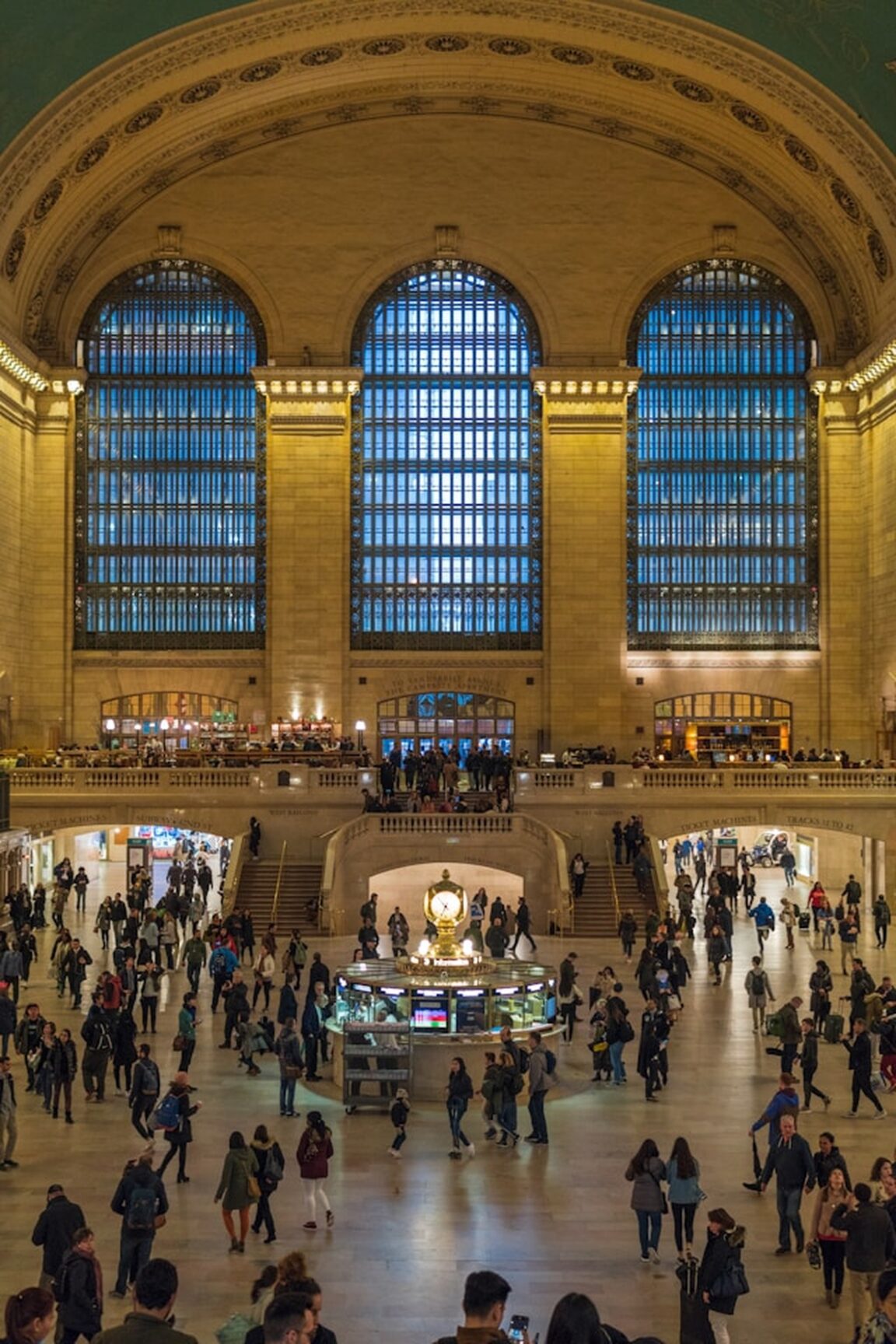
Start where the system is strongest. Metro-North’s Hudson Line leaves from Grand Central Terminal, the MTA’s flagship station, and runs up the east bank of the Hudson through a string of towns that are each a complete day trip: Tarrytown for Sleepy Hollow and the river walks, Cold Spring for the classic main-street-and-mountain pairing under Breakneck Ridge, Beacon for the Dia Beacon art museum and a serious main street, and Poughkeepsie at the end of the line for the Walkway Over the Hudson. Trains are frequent through the day, the ride to Poughkeepsie takes a little under two hours, and off-peak fares undercut Amtrak on the same corridor by a wide margin. For a first car-free weekend, two nights split between Beacon and Poughkeepsie, with the train as your only transport, is the most forgiving itinerary in the state.
The valley rewards a slower structure too. Our three-day Hudson Valley rail itinerary strings the river towns into a single trip, and our Cold Spring day trip guide covers the most popular single-day version in detail. In winter, pair the valley with the city-side advice in our guide to getting around New York in winter, because the same OMNY and ferry logic governs the city ends of these journeys.
Amtrak’s Empire Service: Albany and the Run West
North and west of Poughkeepsie, the trip becomes Amtrak’s. The New York State DOT’s Empire Service page describes the corridor the state supports with Amtrak: multiple trains a day between New York Penn Station and Albany-Rensselaer, stopping at Yonkers, Croton-Harmon, Poughkeepsie, Rhinecliff and Hudson on the way, with services continuing west through Schenectady, Amsterdam, Utica, Rome, Syracuse, Rochester and Buffalo to Niagara Falls. Albany is the hinge of the whole state system. From the Rensselaer station across the river you can reach the capital’s museums and government quarter by bus or taxi, connect north on the Adirondack or Ethan Allen Express, or transfer to Trailways buses for the mountain towns. The Amtrak Empire Service route page carries the current timetables and station lists, and it is worth checking on the day, because Empire Corridor schedules shift with track work.
Hudson, the Amtrak stop in Columbia County, deserves a special note: it is the railhead for one of the valley’s best small cities, with its antiques-and-restaurants main street a short walk from the station, and it is also the practical gateway for travellers continuing into the northern Catskills by taxi or pre-booked car. Rhinecliff serves Rhinebeck the same way. West of Albany, Syracuse and Rochester are both walkable-centre cities where a car-free stay works naturally, and Niagara Falls is the corridor’s easiest car-free finale, with the falls, the gorge and the state park all clustered near the station side of town.
The Catskills, the Finger Lakes and the Adirondacks: The Bus Legs
The mountains are where honest planning starts. The Catskills have no passenger rail. The working pattern is Amtrak or Metro-North to a valley railhead, then Trailways, which runs bus services linking the Hudson Valley and Albany with Catskills towns including Kingston, Phoenicia, Margaretville and Delhi, and connects onward toward Oneonta and the Finger Lakes corridor. Kingston is the easiest Catskills base without a car, reachable by Trailways from the city and from Albany, with a walkable historic core. For a group trip built around a lodge rather than a town, our Catskills group trip guide covers the cost-splitting and the lodge logistics; add a pre-booked transfer from Kingston or Rhinecliff and the format works without anyone driving.
The Finger Lakes split in two. The northern corridor, Geneva, Seneca Falls and Ithaca’s southern neighbours, is stitched to Syracuse and Rochester by bus, and the lakes’ cities are workable bases. The wine trails along Seneca and Cayuga lakes, however, are strung along rural roads between wineries, and no public bus walks you between tastings. The car-free answers are a guided wine tour from Ithaca, Geneva or Watkins Glen, or a base in Ithaca, which is a genuine small city with its own bus system, gorges inside the city limits and Trailways connections. Our guide to Finger Lakes winter gorge trails shows how much of the region’s best walking sits inside or beside its towns. The Adirondacks are the hardest test: the Adirondack train serves Westport on Lake Champlain, from where seasonal shuttles and pre-booked transport reach Lake Placid, and Trailways serves towns including Lake Placid and Saranac Lake from Albany. It works, but every leg must be booked and the last bus of the day is a hard deadline, not a suggestion.
Tickets, Timing and the Rules That Keep the Trip Smooth
Buy Metro-North tickets before boarding, on the TrainTime app or at station machines, because on-board purchase carries a surcharge. Off-peak Metro-North fares are the bargain of the system, and the Hudson Line’s weekend trains are busy in leaf season and on the first warm weekends of spring, so travel earlier in the day. Amtrak rewards the opposite habit: the earlier you book Empire Service, the cheaper the coach fare tends to be, and reserved trains can sell out on holiday weekends. Keep the two New York terminals straight, because they are the most common visitor error in the state: Metro-North leaves from Grand Central on the East Side, Amtrak from Moynihan Train Hall at Penn Station on the West Side, and they are a twenty-minute subway ride or a long walk apart. Finally, respect the rural timetable. County buses and Trailways branches may run a handful of times a day and not at all on Sundays. Screenshot every timetable for the return leg before you set out, and never plan a same-evening connection off the last bus of the day.
Frequently Asked Questions
What is the furthest I can get from New York City by train alone?
Niagara Falls, by Amtrak Empire Service and the Maple Leaf, and Montreal, by the Adirondack, are the long-distance answers. Within the state, Buffalo and Niagara Falls are straightforward single-seat rides, and Saratoga Springs is served by both the Adirondack and the Ethan Allen Express.
Metro-North or Amtrak for the Hudson Valley?
Metro-North for value and frequency to Poughkeepsie and the river towns, from Grand Central. Amtrak for speed, for stops north of Poughkeepsie such as Rhinecliff and Hudson, and for anywhere beyond Albany. Many travellers ride one up and the other back.
Can I visit Catskills towns without a car?
Yes, with a bus leg. Trailways links Kingston and other Catskills towns with New York City, Albany and the Hudson Valley railheads. Kingston is the easiest base. Deeper trailheads still need a taxi or a tour, so book the final leg before you travel.
How do I do Finger Lakes wine country with no car?
Base in Ithaca, Geneva or Watkins Glen, all reachable by bus connections from the Amtrak corridor, and take a guided wine tour for the trail days. Public transport between individual wineries does not realistically exist.
Is Lake Placid reachable without driving?
Yes, but it is the state’s most planning-heavy trip: Amtrak’s Adirondack to Westport with an onward shuttle or pre-booked transfer, or Trailways from Albany. Check seasonal schedules carefully, because the connecting services change with the ski and summer seasons.
Image: The Main Concourse of Grand Central Terminal in New York, departure point for Metro-North’s Hudson Line. Credit: Hugh Stevenson, via Unsplash (unsplash.com/photos/bbic2YjOJA), Unsplash License. File obtained at 640px wide and resized to exactly 1600px wide.
Facts checked 25 November 2026 against Amtrak, the New York State Department of Transportation’s Empire Service pages, the MTA and Trailways.