 Thandiwe Nkosi
Etosha rewards patience over mileage: in the dry season the animals come to the water, so the winning self-drive strategy is to pick a small chain of waterholes, arrive early, park legally at the edge and let elephants, rhino and springbok file in to drink while you sit still. The park, run around a vast salt pan in northern Namibia, opens its gates at sunrise and closes them at sunset, with the exact times shifting week by week and posted at every gate and camp. You must be inside your camp by closing, self-driving after dark is prohibited, and the one legal way to watch wildlife at night is from the floodlit waterholes inside the main camps, or on a night drive run by the camp operator. Build the trip on those rails, camp by camp from Okaukuejo to Namutoni, and a dusty drive becomes a sequence of real encounters.
Quick Facts
The park: Etosha National Park, northern Namibia, roughly 450 km north of Windhoek, centred on the Etosha Pan, a salt pan about 120 km long covering close to a quarter of the park.
The gates: Four entrances: Ombika (Andersson) Gate in the south for Okaukuejo, Von Lindequist Gate in the east for Namutoni, Galton Gate in the south-west for the quieter west, and King Nehale Gate in the north.
The hours: Gates and camps open at sunrise and close at sunset. Times change weekly and are posted at each gate and camp exit; as a guide, opening sits near 06:30 and closing between about 18:00 and 19:30 depending on season.
The camps: Six Namibia Wildlife Resorts camps inside the park: Okaukuejo, Halali, Namutoni, Onkoshi, Dolomite and Olifantsrus. Fuel is sold at Okaukuejo, Halali and Namutoni.
The distances: Andersson Gate to Okaukuejo is 17 km. Okaukuejo to Halali is about 70 km and Halali to Namutoni about 70 to 75 km; allow one and a half to two hours per leg with waterhole stops.
The night rule: No self-driving after gate closing. Night viewing happens at the floodlit camp waterholes, and night drives are run by Namibia Wildlife Resorts from its camps, not by visitors in their own cars.
The fees: Park entry fees are charged per person per day plus a vehicle fee, collected by the Ministry of Environment, Forestry and Tourism at its offices at the gates and main camps. Check the current tariff before you budget, as fees are revised periodically.
Last checked: 25 November 2026.
Gates and the Sunrise-to-Sunset Discipline
Everything in Etosha is scheduled by the sun. Namibia Wildlife Resorts’ Etosha guide states the rule plainly: the park opens at sunrise and closes at sunset, the exact time is posted at the exit gate of each camp, and you should never rely on another visitor’s version of the closing time. In practice the posted times shift by a few minutes each week, opening near 06:10 to 06:30 in the long days of late spring and summer and closing anywhere from around 18:00 in winter to about 19:30 in midsummer. Each gate also applies a latest-entry logic: if you arrive too late to reach your booked camp before closing, you will not be let through, so the last hour before sunset belongs to the road back to camp, not to one more waterhole. The speed limit on main roads is 60 km/h, gravel roads demand less, and distances lie in Etosha because every waterhole stop expands. Plan each leg with a thirty-minute buffer and the discipline becomes relaxing rather than stressful.
Most first visits enter through the southern Ombika, or Andersson, Gate, reached on tar from Windhoek via Otjiwarongo and Outjo, the last town with supermarkets and fuel before the park. Entering by one gate and leaving by another, south to east being the classic, crosses the park instead of retracing it. The eastern Von Lindequist Gate serves Namutoni and the road to Tsumeb. Galton Gate opens the hilly, lightly visited west, historically restricted and still quieter, where Dolomite Camp sits. King Nehale Gate in the north connects toward Ondangwa and the densely settled north of the country, and pairs naturally with Onkoshi Camp on the pan’s northern edge.
The Waterhole Strategy: Sit, Do Not Chase
Etosha’s waterholes are a chain of springs and pumped points along the southern edge of the pan, and the self-drive craft is to work them slowly in the cool hours. Dawn and the first two hours after gate opening are the prime shift, when predators are still active and herbivores come down to drink after the night. The second shift builds from mid-afternoon until gate closing. The midday hours, when animals rest in shade and the light is white and flat, are for the camp pool, lunch and a nap; even the animals schedule around the heat. At each waterhole, park in the designated area, engine off, and give it time. Twenty patient minutes at one good waterhole routinely out-produce two hours of driving between empty ones, because the traffic is coming to the water, not wandering at random.
The named holes earn their reputations. Around Okaukuejo, Okaukuejo’s own floodlit hole is the night star, while Nebrownii, Okondeka and Ombika anchor the nearby day circuit; Okondeka is a long-standing lion waterhole. The road east passes Salvadora and Rietfontein on the way to Halali, whose Moringa waterhole is floodlit and famous for black rhino and leopard after dark, with Goas and Helio further east on the run to Namutoni. Near Namutoni, Chudop and Klein Namutoni are reliable in the dry season, and the Fisher’s Pan circuit north of the camp is the park’s best birding loop in the wet season, when flamingos can gather on the flooded pan. The detailed camp-by-camp picture is maintained in the Namibia Wildlife Resorts Etosha guide, and park fees and regulations sit with Namibia’s Ministry of Environment, Forestry and Tourism, the authority that collects entry fees separately from camp bookings. For the packing half of a safari like this, our guide to safari duffel packing and charter weight limits covers the soft-bag discipline that small safari vehicles and internal flights demand.
Camps: Where to Sleep and Why the Order Matters
Sleep inside the park. Staying at an outside lodge costs you the dawn hour at the gate queue and the entire floodlit-waterhole night, which is half the Etosha experience. The classic first-timer pattern is three or four nights moving west to east: Okaukuejo first for its waterhole and its position 17 km inside the southern gate, then Halali in the centre for rhino country and the densest cluster of mid-park waterholes, then Namutoni in the east, a camp built around a historic fort, for the greener woodland and the Fisher’s Pan loop. Onkoshi, set on stilts on the pan’s edge with no camping and a quieter, more exclusive feel, suits a final-night splurge. Dolomite in the west and Olifantsrus, the camping-only camp with its own hide, reward a second visit. Book camps through Namibia Wildlife Resorts well ahead for the dry season, and note the split of payments on arrival: camp charges go to NWR, while park entry fees are paid to the ministry’s desk, which sits at the gates and at Okaukuejo and Namutoni receptions.
Budget the whole trip with the same realism. Our breakdown of what a safari week costs in fees and extras uses Tanzania as its example, but the structure, park fees per day, vehicle costs, camp tiers and the extras that ambush a budget, is the same arithmetic in Namibia. Travellers combining Etosha with a luxury lodge leg can compare the camp model against the private-reserve model in our Singita Sabora Serengeti camp guide, and those extending into South Africa afterwards will find the same sit-at-water logic working in the parks covered by our Table Mountain hiking guide’s home country guides and our Cape Town guide for solo women travellers.
Night Drives and Floodlit Waterholes: The Legal After-Dark Safari
The title of this guide promises night drives explained, so here is the exact position: visitors may not drive themselves at night in Etosha, at all. What exists instead is better in one specific way. Three of the main camps, Okaukuejo, Halali and Namutoni, maintain floodlit waterholes just outside the camp fence, with bench seating and a silence rule, where black rhino, elephant and lion come to drink metres away through the night. It costs nothing beyond your camp stay, it runs until you go to bed, and on a good night it outperforms any drive. Separately, Namibia Wildlife Resorts runs guided night drives from its camps in its own vehicles with its own guides, bookable at camp reception and priced per person; these are the only night drives in the park, and they are worth booking on arrival because seats are limited. Plan evenings around the pair of them: dinner early, the floodlit benches for the first part of the night, and a booked night drive on one night of each camp stay.
Frequently Asked Questions
What time do Etosha’s gates open and close?
At sunrise and sunset respectively, with exact times that change weekly and are posted at every gate and camp. As a guide, gates open near 06:30 and close between about 18:00 in winter and 19:30 in midsummer. Always read the posted time at your camp before planning the day.
Can I do a night drive in my own car?
No. Self-driving is prohibited outside camp between gate closing and opening. Night wildlife viewing is from the floodlit waterholes at Okaukuejo, Halali and Namutoni, or on a guided night drive run by Namibia Wildlife Resorts and booked at camp reception.
How many nights do I need for a first self-drive?
Three nights is the working minimum, split between Okaukuejo and Namutoni with Halali between them if you can stretch to four. That gives each camp a dawn and a dusk, which is where Etosha’s sightings concentrate.
Do I need a 4×4 for Etosha?
For the main gravel road network in the dry season, a standard high-clearance vehicle is sufficient and most visitors self-drive in ordinary rental cars or SUVs. The roads are gravel and corrugated in places, so drive to the 60 km/h limit or below and keep speeds down for tyres as much as for game.
When is the best season for a waterhole safari?
The dry season, roughly May to October, concentrates game at the waterholes and produces the classic Etosha spectacle. The wet summer months spread animals across green country, fill Fisher’s Pan for flamingos and birding, and make photography lusher but game viewing more dispersed.
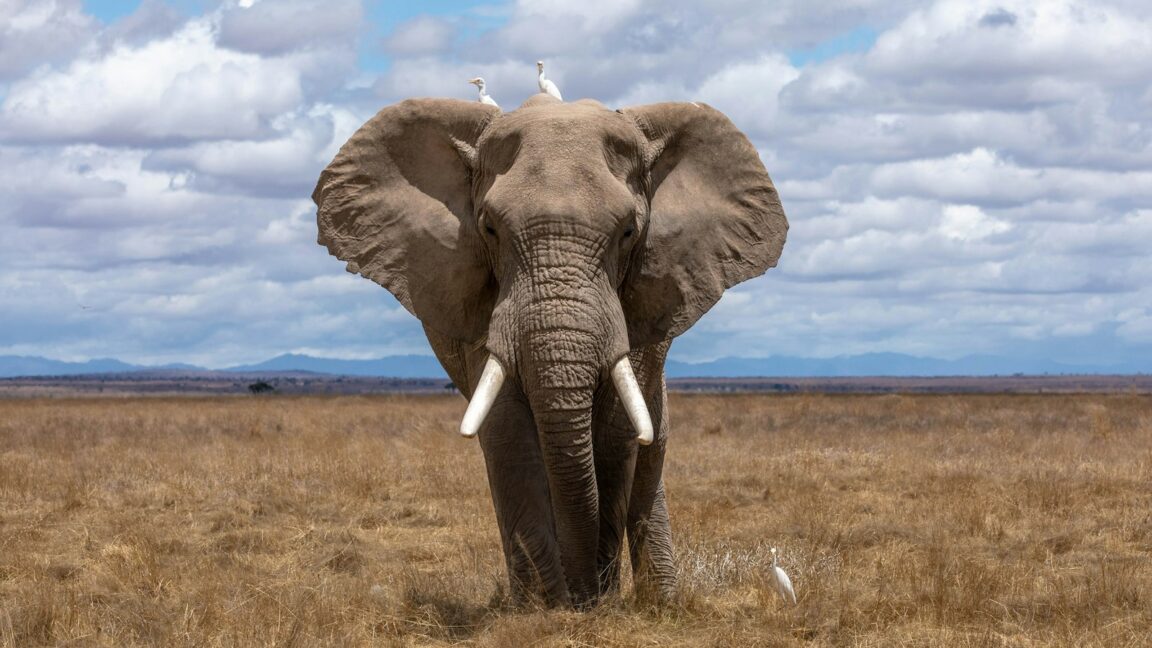
Image: An African elephant standing on dry savanna under a wide sky, the emblematic Etosha sighting at the waterholes of the dry season. Credit: Unsplash contributor, via Unsplash (images.unsplash.com/photo-1557050543-4d5f4e07ef46), Unsplash License. Resized to exactly 1600px wide.
Facts checked 25 November 2026 against Namibia Wildlife Resorts’ official Etosha guide and camp information and Namibia’s Ministry of Environment, Forestry and Tourism.