 Maya Chen
Pack for minus 15 as a system, not as a pile of warm things. A Nordic winter trip usually mixes heated trains, windy city streets, icy pavements and long, still nights outside waiting for the aurora, and the kit that handles all four is three layers deep: a merino wool base layer that manages sweat, an insulating mid layer you can add or shed indoors, and a windproof, waterproof outer shell, finished with insulated boots rated for real cold, a wool hat, liner gloves under mittens, and a scarf or neck gaiter. Everything else is refinement. What you leave behind matters as much as what you bring: cotton, fashion boots with smooth soles, a single heavy coat with nothing under it, and jeans all fail in Scandinavian and Finnish winter conditions, and each one is a common first-timer mistake.
Quick Facts
The system: Base layer, mid layer, shell. Three adjustable layers beat one thick coat in every Nordic winter scenario.
The base layer: Merino wool or synthetic, never cotton. Cotton holds sweat, chills fast and stays cold.
The temperature to plan for: Minus 10 to minus 20 Celsius on aurora nights inland and in Lapland, often milder, around minus 2 to minus 8, in coastal cities such as Oslo, Stockholm and Helsinki.
The boots: Insulated, waterproof, with deep tread and room for a thick wool sock. Ankle height minimum; higher for snow activities.
The aurora rule: You stand still outside for long stretches at night, so the aurora outfit is your warmest combination plus a spare layer, not your daytime city outfit.
The bag strategy: Wear the boots and the mid layer on the plane. Bulky winter kit becomes carry-on friendly the moment the heaviest items are on your body.
Last checked: 25 November 2026.
Start With the Base Layer, Because Everything Sits on It
The layer against your skin decides whether the rest of the system works. Wool, and merino in particular, is the traditional Nordic answer for a reason: it keeps insulating when damp, resists odour across a week of wear, and regulates temperature when you move between a heated museum and a frozen street. Visit Norway’s official winter packing guidance makes the same point to first-time visitors, recommending wool base layers as the foundation of dressing for Norwegian winter. Pack two merino tops, one light and one midweight, and one pair of merino long johns. Two tops rotate across a week without laundry drama, because merino can be aired overnight and worn again. Synthetic base layers are the acceptable budget alternative and dry faster, but they hold odour sooner. Cotton is the one firm no: a cotton t-shirt under a good coat is how travellers end up cold at a bus stop, because the fabric absorbs sweat from the walk to the stop and then refrigerates it against the skin.
Socks follow the same logic. Bring three or four pairs of wool hiking socks in graduated weights, including one genuinely thick pair reserved for aurora nights and snow activities. If you are building a wider cold-weather kit, the layering approach in our guide to packing for alpine hut-to-hut trekking translates directly: the fabrics and the order of layers are the same, only the shell and boots change.
The Mid Layer Is Where Warmth Actually Lives
Trapped air insulates, and the mid layer’s job is to trap it. A fleece or a lightweight insulated jacket in down or synthetic fill does this work, and the smart move is to bring one of each in different weights if your itinerary spans city days and far-north nights. In Oslo or Stockholm you may spend the day in a fleece under your shell. In Tromsø, Rovaniemi or Kiruna at minus 18, you will want fleece plus insulated jacket plus shell, all three, before you feel overdressed, and you will not be. Travellers timing a trip around the lights should read the month-by-month trade-offs in our guide to the best time to visit Iceland for the northern lights, because the same darkness-versus-daylight maths applies across the Nordic north, and the coldest, darkest weeks are exactly when your mid layers earn their space.
Legs need a mid layer too on the coldest days. A pair of softshell or fleece-lined trousers, or your merino long johns under ordinary travel trousers, covers city sightseeing. For snowmobiling, dog sledding and ice fishing, tour operators across Finnish and Swedish Lapland typically supply a thermal overall, boots and mittens as part of the excursion, which is worth confirming at booking: if the overall is provided, your own kit only needs to get you through town days and aurora watches, and you can pack lighter.
The Shell: Windproof First, Waterproof Second
Nordic winter cold is usually dry cold, and wind is the enemy that turns minus 8 into something that bites through a fashionable wool coat in minutes. Your outer layer should be a windproof jacket, ideally waterproof as well for the wet snow and sleet of the coastal cities, long enough to cover the tops of your thighs, with a hood that fits over a hat. Visit Finland’s official dressing guidance stresses the same sequence for Finnish winter: wool next to the skin, insulation in the middle, and a protective outer layer against wind and moisture. A ski jacket you already own is ideal. A long padded parka works for pure city trips. What does not work is a thin rain jacket over a jumper, or a smart coat with no hood in a Helsinki harbour wind.
Check the weather like a local once you arrive. Norway’s Yr forecast service, run by the Norwegian Meteorological Institute and NRK, is the forecast Norwegians themselves use, and its hour-by-hour temperature and wind readings are the honest basis for choosing the day’s layers. Wind chill, not the headline temperature, should decide whether the extra mid layer goes on.
Boots: The Single Most Important Item in the Bag
More Nordic winter trips are spoiled by footwear than by any coat failure. Pavements in Nordic cities are managed with grit and packed snow rather than cleared to bare asphalt, so you walk on snow and ice all day, every day. Boots need four things: insulation, a waterproof membrane or treated leather, a sole with deep, soft rubber tread that still grips when cold, and enough volume for a thick sock without squeezing, because tight boots restrict circulation and make feet colder. Removable felt or wool insoles add real warmth. Smooth-soled fashion boots and trainers are leave-behind items, full stop.
Break boots in before the trip, wear them on the plane to save bag space, and pack a lightweight pair of indoor shoes or hotel slippers as your second footwear, because Nordic homes, cabins and many hotels run warm indoors and you will live in socks inside. If your route includes Iceland as well as the mainland, the boot and layer logic in our Iceland ring road guide pairs well with this one, since Icelandic winter wind is the harshest in the region. Travellers continuing to another cold destination afterwards can compare systems with our South Korea winter packing guide, where the layering is similar but the cold is drier and the indoor heating fiercer.
Head, Hands and the Small Items That Decide Comfort
A wool or insulated hat that covers the ears is non-negotiable, and a neck gaiter or scarf that can be pulled over the chin transforms comfort on windy bridges and harbour fronts. For hands, copy the Nordic habit: thin liner gloves for phones, cameras and ticket machines, worn inside proper insulated mittens for standing still. Mittens are warmer than gloves because fingers share heat, and on aurora nights that difference is the whole evening. Chemical hand warmers weigh nothing and rescue photography sessions. Sunglasses sound like a summer item, but low winter sun reflecting off snowfields and frozen lakes is genuinely blinding on clear days, and a lip balm with SPF earns its pocket space. A headlamp is the other small hero: December daylight in the far north is a few hours of twilight, and a headlamp keeps hands free on icy paths between cabin and sauna.
What to Leave Behind
Leave the jeans, or bring one pair strictly for indoor evenings: denim is cotton, slow to dry and cold when wet. Leave the umbrella; wind makes it useless and Nordic winter precipitation is mostly snow you brush off. Leave the second heavy coat and the just-in-case formal shoes. Leave the cotton hoodie, the smooth-soled boots and the thin fashion scarf. Every one of those spaces converts into the items that actually decide the trip: the spare merino top, the thick socks, the mittens. Travellers who want the general method behind this kind of ruthless edit will find it in our month-by-month guide to New Zealand as well, in reverse: the habit of packing for the conditions of the specific weeks you travel, not for a generic season, is the whole skill.
Frequently Asked Questions
How cold does it actually get in Nordic cities in winter?
Capital-city winters are milder than most visitors fear, commonly between about minus 2 and minus 10 Celsius, with colder snaps. The far north and inland Lapland are a different climate, where minus 15 to minus 25 is unremarkable in mid-winter. Pack for the coldest place on your itinerary, not the first.
Can I manage a Nordic winter trip with carry-on only?
Yes, if you wear the boots and mid layer on the plane, choose merino pieces that rotate, and confirm whether activity operators provide thermal overalls. The system in this guide fits a carry-on plus personal item for most travellers.
Are jeans really that bad in Nordic winter?
For outdoor days, yes. Denim absorbs moisture, dries slowly and feels cold against the legs in wind. Wool or synthetic trousers, with long johns beneath on the coldest days, are warmer and lighter to pack.
Do I need crampons or ice grips?
Slip-on ice grips are cheap, light and widely used by locals on icy pavements, especially in Iceland and hilly Norwegian towns. They are worth packing if you plan to walk a lot, and they come off easily indoors where they would damage floors.
What should I wear for an aurora tour?
Your maximum combination: merino base, fleece, insulated jacket, shell, long johns under insulated trousers, thick socks in your warmest boots, hat, gaiter and mittens over liners. Standing still generates no heat, so dress for at least ten degrees colder than the forecast.
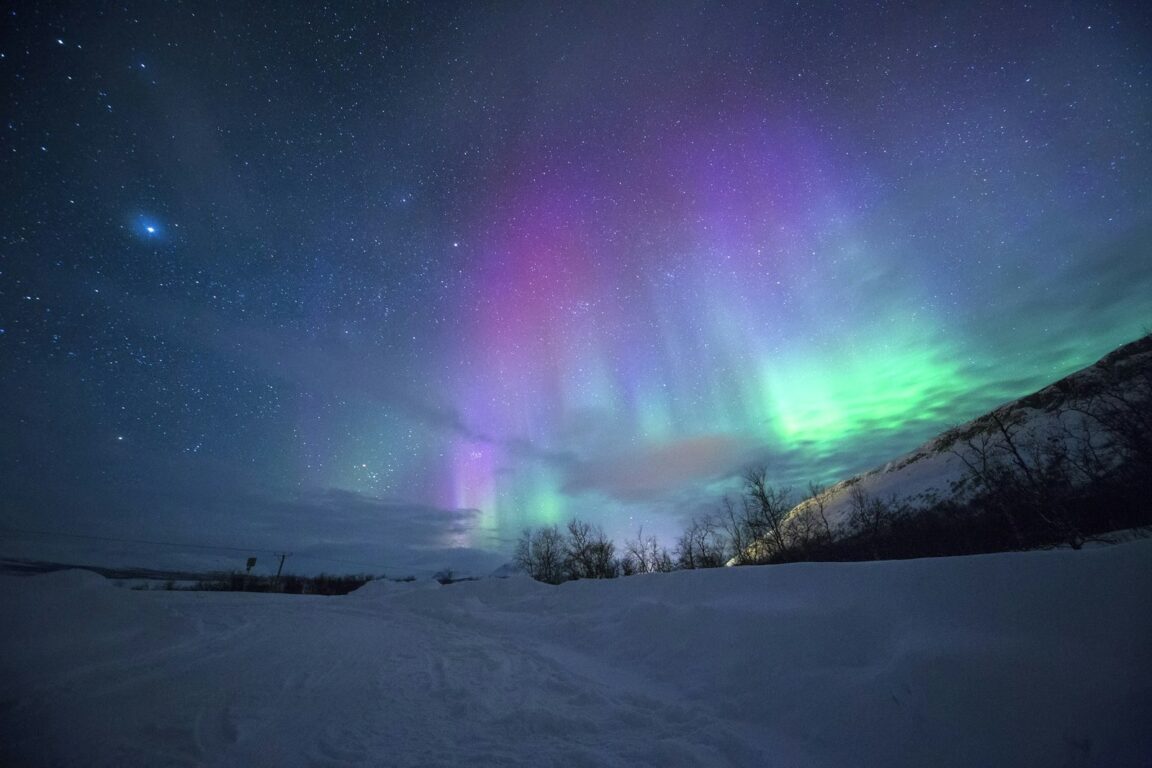
Image: The northern lights over a snow-covered Nordic landscape on a clear winter night. Credit: Unsplash contributor, via Unsplash (images.unsplash.com/photo-1531366936337-7c912a4589a7), Unsplash License. Resized to exactly 1600px wide.
Facts checked 25 November 2026 against Visit Norway, Visit Finland and Yr (Norwegian Meteorological Institute and NRK).