 Aiko Tanaka
Upopoy, in the town of Shiraoi on the shore of Lake Poroto in Hokkaido, is Japan’s national centre for the history and culture of the Ainu, the Indigenous people of the northern Japanese archipelago. It combines the National Ainu Museum, the open air National Ainu Park and a Memorial Site in one lakeside complex, about an hour by train from Sapporo and about 40 minutes from New Chitose Airport. The visit rewards preparation. Go knowing why the centre was built, start with the museum’s own account of Ainu history told from an Ainu perspective, and leave time to listen to performances, talks and demonstrations in the park rather than treating the site as a photo stop between trains.
Quick Facts
What it is: Upopoy (National Ainu Museum and Park), the national centre for learning about and promoting Ainu history and culture, in Shiraoi, Hokkaido.
Opened: July 2020, as a symbolic space for ethnic harmony, following the recognition of the Ainu as an Indigenous people by Japan’s National Diet in 2008.
The name: Upopoy is an Ainu word meaning singing together in a large group.
Opening hours: 9:00am to 6:00pm from April to October, and 9:00am to 5:00pm from November to March. Last entry to the park is one hour before closing, and last entry to the museum is 30 minutes before closing.
Closed: Mondays (or the next business day when Monday is a holiday), from December 28 to January 4, and from February 27 to March 8.
Admission: Adults 1,200 yen, high school students 600 yen, junior high school students and younger free. One admission covers both the park and the National Ainu Museum’s permanent exhibition.
Getting there: About a ten minute walk, roughly 500 metres, from the North Exit of JR Shiraoi Station. The official site puts the journey at about one hour from Sapporo and about 40 minutes from New Chitose Airport.
Hours, closures and prices checked against the official Upopoy website on 25 November 2026.
What is Upopoy, and why was it built?
Upopoy is not a theme park and not a reconstruction put on for tourists. The official About page explains the reasoning plainly: the Ainu language and traditional crafts are in crisis as the number of people able to pass them on declines, and understanding of Ainu history and culture remains low. In July 2009, the Council for Ainu Policy Promotion, chaired by Japan’s Chief Cabinet Secretary, proposed a symbolic space for ethnic harmony as a key part of policy built on recognising the Ainu as an Indigenous people. Upopoy is the result, and its stated purpose reaches beyond display. It is a base for revitalising and expanding Ainu culture, and a symbol of a society in which Indigenous people are treated with respect and dignity, without discrimination.
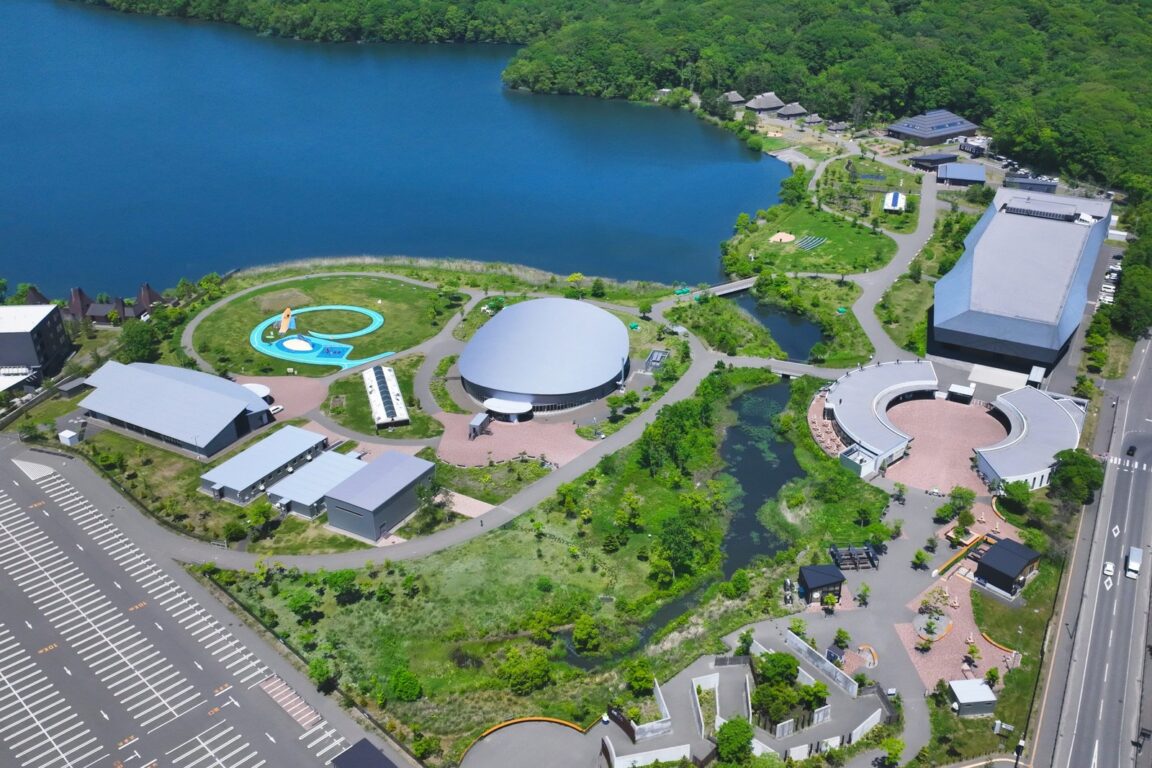
The complex has three parts, and knowing which is which helps a visitor move through it in the right spirit. The National Ainu Museum holds the exhibitions and research function. The National Ainu Park is the open air area where culture is practised and shared through performances, talks and hands on programs. The Memorial Site, set on high ground on the east side of Lake Poroto, is where Ainu memorial services are held. The first two are for learning and encounter. The third is for quiet respect, and it should be approached that way.
Who are the Ainu?
The Ainu are an Indigenous people of the northern region of the Japanese archipelago, predominantly Hokkaido, with a distinctive culture that includes the Ainu language, which is unrelated to Japanese, traditional dances performed at gatherings, patterned embroidery and carved wooden work. Government of Japan background material describes a worldview in which spirits, called kamuy, are present throughout the natural world, and a way of life shaped by hunting, fishing and gathering in a demanding northern environment. Place names across Hokkaido carry that history: a large share of the island’s community names derive from the Ainu language, so most travellers have been reading Ainu words on station signs since they arrived.
Two points matter for how a visitor behaves. First, this is a living culture, not a vanished one. Ainu people live in Hokkaido and across Japan today, and Upopoy exists in large part so that Ainu culture is carried forward by Ainu people themselves. Second, the history includes real harm. Colonisation and assimilation policies suppressed the language and customs for generations, which is precisely why transmission is now fragile and why a national centre framed around dignity and coexistence was created. A visitor does not need to master that history before arriving, but arriving willing to hear it, including the difficult parts, is the difference between visiting with context and simply looking.
What will you see inside the National Ainu Museum?
Start here. The museum is a one minute walk from the entrance gate, and its permanent exhibition gives the framework that makes everything in the park legible. The exhibition is organised around six themes, presented from the Ainu perspective: Language, Universe, Lives, History, Work and Exchange. The Government of Japan’s overview notes around 700 exhibits on display, drawn from a collection of about 10,000 items, with hunting tools, clothing, craftwork and art among them.
The Language section deserves slow time. It introduces the Ainu language itself, its oral storytelling tradition and the place names it left across the north, along with current efforts to keep the language in use. The Universe section explains spirituality and the idea that ramat, or spirit, exists all around us. History and Exchange place Ainu life in its real setting: a people who traded and interacted with neighbours in every direction, not a community sealed off from the world. Reading the exhibition in this order, language and worldview before objects, is the single best preparation for the park outside.
Support for non Japanese speakers is built in. Museum panels, signage and audio guidance are available in up to eight languages, including Ainu, Japanese and English, and the audio guide can be used through a free app, according to the Government of Japan’s official feature on Upopoy. Check the museum pages of the official site before you go for the current special exhibition, since special exhibitions sit outside the standard admission arrangement.
What happens in the National Ainu Park?
The park is where the museum’s framework becomes sound, movement and conversation. The official homepage states that more than 20 Ainu cultural experience programs run daily across the park, spread between the Cultural Exchange Hall, the Kotan (Traditional Ainu Village), the Crafts Studio and the Workshop. The museum is one minute from the gate, the Crafts Studio and Cultural Exchange Hall about five minutes, the Workshop about seven and the Kotan about eight, so the grounds are walkable but large enough that checking the day’s program timetable on arrival is worthwhile.
In the Cultural Exchange Hall, traditional Ainu dance and music are performed, including the mukkuri, a mouth harp with a sound unlike anything else in Japanese music. Traditional Ainu dance is inscribed on UNESCO’s Representative List of the Intangible Cultural Heritage of Humanity, and seeing it performed by Ainu practitioners, in a hall built for the purpose, carries a different weight from watching a clip online. Performances at the hall use free seat tickets distributed at the venue, and capacity is limited, so collect yours early rather than assuming a seat will remain.
The Kotan is a group of reconstructed cise, traditional Ainu houses, where visitors can step inside a dwelling, hear how a household was organised around its hearth, and listen to talks and storytelling from staff. The Crafts Studio and Workshop run the hands on side of the program: craft making, cooking and instrument sessions of the kind listed in the daily timetable. Some programs are free, some carry an additional fee, and some need a numbered ticket or advance booking, so read the conditions on the official tickets page and the day’s timetable before building your plan around one session.
How should a visitor behave at the Memorial Site?
Quietly. The Memorial Site stands on high ground on the east side of Lake Poroto and exists so that Ainu memorial services can be held there. It is part of the complex, and visitors may encounter it on the paths around the lake, but it is not an attraction and not a viewpoint in the sightseeing sense. Lower your voice, do not treat ceremonies or offerings as a spectacle, and follow any guidance from staff or signage on the day. The same principle applies across Upopoy: ask before photographing people, especially performers and craftspeople, and remember that you are a guest in a space built first for Ainu people and only second for visitors.
How do tickets and reservations work?
Admission is straightforward. The official tickets page lists a date specific one day ticket at 1,200 yen for adults and 600 yen for high school students, with junior high school students and younger admitted free, and group rates of 960 yen and 480 yen. Tickets can be bought at the ticket desk on the day or in advance through the website, and buying online currently takes 200 yen off, bringing the adult price to 1,000 yen. A cheaper ticket for admission from 2:00pm costs 600 yen for adults, and a one year passport costs 2,000 yen for adults and 1,000 yen for high school students, which pays for itself on a second visit. Entry to the permanent exhibition is included in admission; special exhibitions and fee based programs cost extra.
Reservations operate at two levels. The first is the ticket itself: online tickets are tied to a chosen date, and buying ahead is the safer choice on busy days, since entry can be limited when the park reaches capacity. The second is inside the park, where hall performances use seat tickets and certain programs need numbered tickets or advance booking. None of this is complicated, but it does mean the visit should be planned the night before rather than improvised at the gate. Confirm the day you have in mind is an opening day on the official opening hours page, which lists the seasonal hours, the Monday closure pattern and the two longer closures each year, over the New Year period and again from late February into early March.
How do you get to Upopoy from Sapporo or the airport?
The train is the natural route. Upopoy sits at 2-3 Wakakusa-cho in Shiraoi Town, about a ten minute walk of roughly 500 metres from the North Exit of JR Shiraoi Station, as set out on the official access page. The official site gives journey times of about one hour from Sapporo and about 40 minutes from New Chitose Airport, which makes Upopoy a realistic day trip from a Sapporo base or a meaningful first or last stop on a Hokkaido itinerary. Because Shiraoi is a smaller station, check which trains actually stop there before you travel, using the timetable search on the JR Hokkaido website, and note the times of return trains before you enter the park, not after.
That Sapporo base pairs naturally with the city’s winter calendar, so it is worth reading our Sapporo Snow Festival planning guide alongside this one if your trip falls in February, and checking the closure dates above with extra care, since the late February to early March closure can collide with festival season travel. If your Hokkaido days sit inside a longer Japan trip, our Tokyo five day district itinerary and Kyoto in five days itinerary cover the classic bookends, while the old town mornings in our Takayama Hida old town and morning markets guide make a useful contrast in how historic districts present living traditions. Travelling with checked bags between regions, the Japan shinkansen oversized baggage reservation guide explains the seat and luggage rules that catch people out.
Drivers are also catered for. The access page lists Parking 1 with 246 spaces at 500 yen per visit, plus temporary parking at the same price, with entry from 8:30am until one hour before closing. Parking is free for additional visits on the same day if you show your receipt at the ticket desk.
How long should you allow, and how should the day be ordered?
Allow at least half a day, and a full day if the programs matter to you. A sensible order is the museum first, while the six themes are fresh, then the park with the timetable in hand: a hall performance, time inside the cise at the Kotan, and one hands on session at the Crafts Studio or Workshop. Build in unhurried time as well. The lakeside setting is part of the teaching here, since Ainu life developed in close relationship with this landscape of lake, river and forest, and the paths around Lake Poroto reward a slower pace.
In winter, plan around the 5:00pm close and the earlier last entries: into the park by 4:00pm and into the museum by 4:30pm at the latest, and realistically much earlier to catch daytime programs. Dress for standing outdoors between buildings. In the longer April to October season, the 6:00pm close gives the day more room, but the Monday closure still catches out travellers who build their week around a free Monday, so check the calendar before fixing your Hokkaido route.
Frequently Asked Questions
Do I need to book Upopoy in advance?
Tickets can be bought at the ticket desk on the day, but the official site sells date specific tickets in advance at a 200 yen discount, and advance purchase is the safer option on busy days because entry may be limited at capacity. Separately, some things inside the park, including seats for Cultural Exchange Hall performances and certain experience programs, use seat tickets, numbered tickets or advance booking, so check the day’s program timetable as soon as you arrive.
Is the National Ainu Museum included in the admission price?
Yes. One admission covers entry to Upopoy, including the National Ainu Museum and its permanent exhibition, which is organised around the six themes of Language, Universe, Lives, History, Work and Exchange. Special exhibitions at the museum and fee based experience programs in the park cost extra, and the one year passport also excludes those additional charges.
How long does a visit to Upopoy take?
Half a day is the minimum for the museum plus a first look at the park, and a full day is better if you want a hall performance, time in the Kotan and a hands on program as well. The grounds are compact enough to walk, at one to eight minutes between the main buildings from the entrance gate, but programs run to a timetable, so the day is shaped by session times rather than distance.
Can I visit Upopoy on a Monday?
Usually not. Upopoy closes on Mondays, or on the next business day when Monday is a holiday, and it also closes from December 28 to January 4 and from February 27 to March 8. The official opening hours page lists specific Mondays when the park does open, so check your exact date there before travelling to Shiraoi.
Is Upopoy suitable as a day trip from Sapporo?
Yes. The official site puts the train journey at about one hour from Sapporo and about 40 minutes from New Chitose Airport, and the park is about a ten minute walk from JR Shiraoi Station. Check stopping patterns and return times with JR Hokkaido before you set out, since not every service on the line stops at Shiraoi, and winter closing at 5:00pm makes the last useful return train worth knowing in advance.
What should I do at Upopoy if I know nothing about Ainu culture?
Start at the museum and take the permanent exhibition in order, beginning with Language and Universe, so the objects and performances that follow have their context. Then choose listening over collecting sights: sit through a full performance at the Cultural Exchange Hall, join a talk at the Kotan, and let Ainu staff and performers set the terms. That willingness to be taught, rather than to browse, is exactly what the centre was built to make possible.
Image: Aerial view of Upopoy on the shore of Lake Poroto in Shiraoi, Hokkaido, showing the National Ainu Museum, the Cultural Exchange Hall and the Kotan. Photo via the official Upopoy website (ainu-upopoy.go.jp), the subject’s own official website, used with credit.